
Heritage & Bridge
Mehmed Paša Sokolović Bridge
Višegrad · Eastern Bosnia
QUICK INFORMATION
- CATEGORY
- Heritage & Bridge
- COUNTRY
- Bosnia & Herzegovina
- REGION
- Višegrad · Eastern Bosnia
- DURATION
- 1–2 days
ABOUT THIS ATTRACTION
The Mehmed Paša Sokolović Bridge is the monument around which Višegrad is built. It was commissioned in the late 16th century by Mehmed Paša Sokolović, the Grand Vizier of the Ottoman Empire who was born in the Višegrad area, and it was completed in 1577 to the design of the imperial architect Mimar Sinan and his workshop. The bridge crosses the Drina in eleven masonry arches, rising and falling gently over the river for close to 180 metres, with a characteristic profile that lifts toward the central span — a feature that has made it one of the most recognised works of classical Ottoman bridge architecture in the Balkans. The bridge was the principal crossing of the Drina at Višegrad for more than four centuries, and it has carried the traffic, trade and history of the town across the river since the Ottoman period. In 2007 it was inscribed on the UNESCO World Heritage List as a masterpiece of Ottoman engineering and a landmark of the region’s cultural landscape. The bridge is also inseparable from the writing of Ivo Andrić, whose novel “The Bridge on the Drina” takes it as its subject and narrator, tracing four centuries of Višegrad’s history through the life of the crossing. For a visitor, the bridge is the single thing that defines Višegrad — the reason the town is on the map, and the structure around which every walk through the town is organised.
HISTORY & BACKGROUND
The story behind it
The bridge was built between 1571 and 1577 on the orders of Mehmed Paša Sokolović, a native of the Višegrad region who rose to become Grand Vizier under three Ottoman sultans, and it was designed by Mimar Sinan, the chief imperial architect of the classical Ottoman period. It was constructed to carry the road across the Drina at the narrowest point of the valley, replacing an earlier ferry and timber crossing, and it became the fixed point around which the Ottoman town of Višegrad grew. The bridge stood through the Ottoman, Austro-Hungarian and Yugoslav periods, carrying traffic and trade across the Drina, and it survived the wars and upheavals of the region largely intact, though it was damaged at times and repeatedly repaired. During the 1990s war the bridge was the site of violence against the town’s Bosniak civilians, a history that is part of its meaning today alongside its architectural and literary significance. In 2007 the bridge was inscribed on the UNESCO World Heritage List, recognised both as a masterpiece of Sinan’s architecture and as a landmark of the cultural landscape of the Drina valley. It is now conserved as a pedestrian monument, no longer carrying road traffic, and it remains the visual and symbolic centre of Višegrad.
WHAT TO SEE
What to see here
The eleven stone arches — the full profile of the bridge as it rises and falls across the Drina, the defining view of Višegrad from both banks.
The central span and the kapia — the raised central platform where the bridge widens, historically a meeting place and the seat of the “kapia” around which Andrić set much of his novel.
The masonry and construction — the dressed stone and the Ottoman engineering of the bridge, the work of Mimar Sinan’s workshop in the classical period.
The bridge from the riverbanks — the view of the crossing from below and from the Drina’s edge, the way the bridge sits in the valley between the hills.
The bridge in its town — the crossing as the fixed point of Višegrad, read together with the old streets on either bank and the Drina itself.
WHY IT MATTERS
Why it matters
The Mehmed Paša Sokolović Bridge is the reason Višegrad is known. It is a UNESCO World Heritage Site, a masterpiece of Ottoman architecture, and the bridge of one of the most widely read novels of the Balkans. For a visitor it is the single monument that gives the town its meaning — the structure around which the history, the literature and the geography of Višegrad are all read.
PRACTICAL INFORMATION
Before you go
MAP & LOCATION
Mehmed Paša Sokolović Bridge
Mehmed Paša Sokolović Bridge, Višegrad, Eastern Bosnia, Bosnia & Herzegovina
43.7820, 19.2890
MORE ATTRACTIONS
More to see in Višegrad


THINGS TO DO
Things to do nearby
FOOD & DRINK
Where to eat nearby
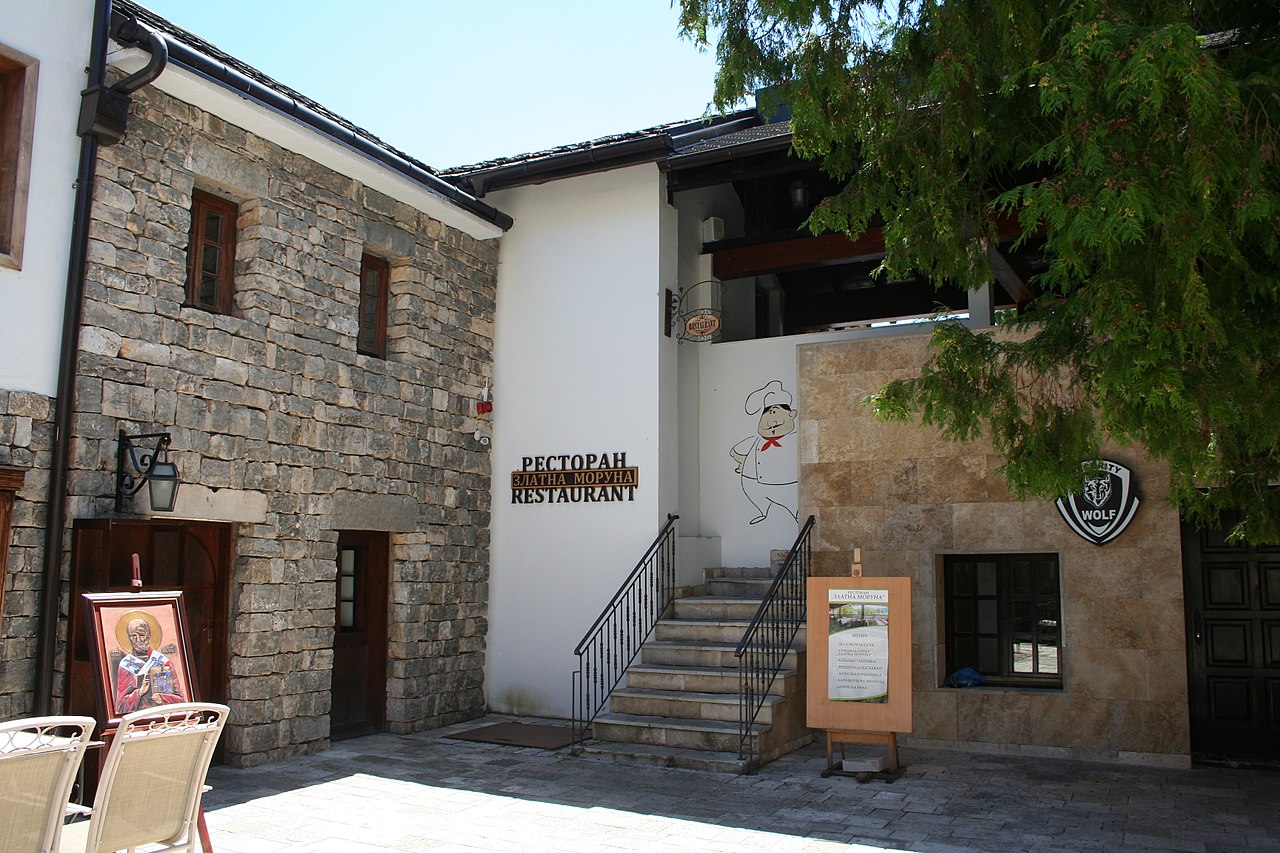
Višegrad town centre and the riverside — small restaurants and cafés near the bridge and the Drina banks
Andrićgrad — cafés and eateries within the stone complex at the Rzav–Drina confluence
HOTELS & STAYS
Where to stay nearby
Višegrad town — small hotels and guesthouses near the bridge and the riverfront, the natural base for a visit
Riverside lodges along the Drina — quieter accommodation close to the bridge and the confluence
ITINERARIES
Day-by-day routes


NEARBY DESTINATIONS
Continue the journey


INTERESTS
Explore by what you love
PART OF
Keep exploring
The atlas goes on — more attractions, destinations and stories from every corner of the world.