 Detailed coverage
Southwest Grenada
1 destinations
St. George’s & Grand Anse
COUNTRY GUIDE
A volcanic Caribbean island country where spice-growing hills, rainforest lakes, waterfalls and historic harbour towns descend to reef-lined beaches and the Grenadine islands.
ABOUT THE COUNTRY
Grenada is a sovereign Caribbean island country formed by Grenada, Carriacou, Petite Martinique and smaller islands. St. George’s and Grand Anse anchor the southwest coast, while the volcanic rainforest interior holds waterfalls and crater lakes, the northern settlements reach into spice-growing landscapes, and the Grenadine islands stretch north toward the rest of the chain. The country is far more than its beaches and resorts: it is a working landscape of nutmeg and cocoa, mountain forest and historic harbour towns. Tropical weather, hurricane-season planning, changing sea conditions and inter-island transport shape travel throughout the year, and access or services cannot be guaranteed.
4 destinations and growing — every one with guides, maps and local detail
Documented on Destination360 — a selection of practical stops we have records for, not every location in the country
THE COUNTRY, UP CLOSE
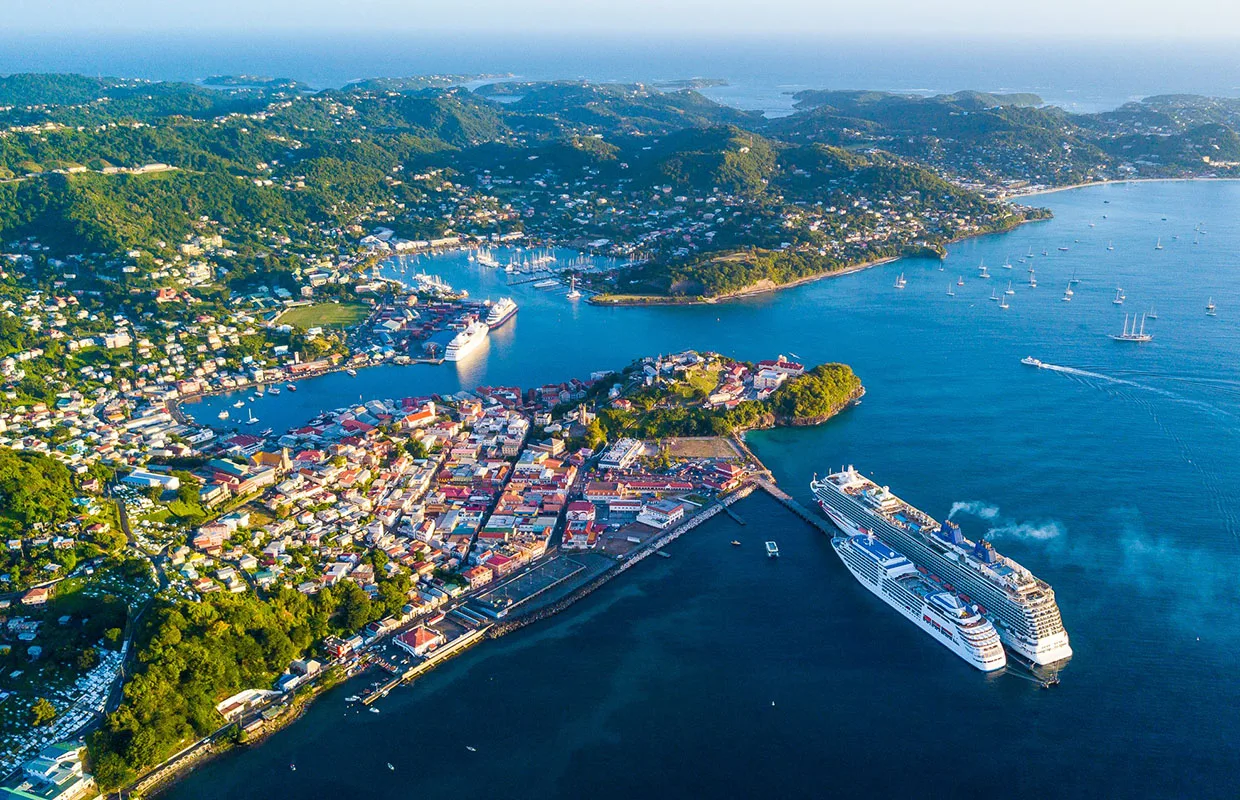
St. George’s wraps its pastel houses around the Carenage harbour beneath Fort George; Grand Anse is the two-mile beach opposite. Inland, Grand Étang crater lake and the Annandale and Seven Sisters falls sit in rainforest reserve; the north holds Sauteurs’ Levera beach — leatherback nesting ground — and the nutmeg estates around Gouyave. A short ferry opens Carriacou’s kite-surf bays and Petite Martinique’s boat-building culture. Start with the picks below — each opens a full guide.
EXPLORE THE COUNTRY
REGIONS
Detailed coverage1 destinations
St. George’s & Grand Anse
 Detailed coverage
1 destinations
Grand Étang & Central Highlands
 Detailed coverage
1 destinations
Sauteurs & Levera
 Detailed coverage
1 destinations
Carriacou & Petite Martinique
FEATURED DESTINATIONS
ATTRACTIONS
THINGS TO DO
FOOD & DRINK
The Carenage and the streets immediately above it have cafés, bakeries and small restaurants suited to a flexible lunch between the harbour and the fort viewpoints. Compare current menus and opening hours rather than assuming every venue serves throughout the afternoon, and carry water for the steep climbs.
Grand Anse beachfront has the widest choice of casual and hotel restaurants along the southwest coast, but availability, prices and reservations vary with the season. Beachfront terraces can be convenient for lunch or dinner, but confirm current opening rather than relying on a fixed schedule.
The Market Square area and the side streets of St. George’s offer local food at lower prices than the beachfront, suited to an early lunch before the afternoon heat. No individual restaurant is named or guaranteed here; choose from what is open on the day.
Food options within the highland cluster are limited and informal, concentrated near the Grand Étang Lake area and along the main interior road; confirm current opening before relying on a meal stop, and carry water and snacks for the trails and the steep drives.
The small communities of the central parishes have local food at modest prices, often tied to spice processing, cocoa and roadside produce; choose from what is open on the day rather than assuming a fixed schedule, and carry cash (Eastern Caribbean dollars) for small services.
Most visitors base themselves in the southwest around St. George’s and Grand Anse and take meals there before or after a highland excursion; plan the day around a packed lunch or a return to the coast for a reliable meal rather than counting on interior restaurants.
Food options within the northern cluster are limited and informal, concentrated in and around Sauteurs town and along the main northern road; confirm current opening before relying on a meal stop, and carry water and snacks for the dispersed drives and the coastal walks.
The small communities of the northern parishes have local food at modest prices, often tied to fishing, cocoa and roadside produce; choose from what is open on the day rather than assuming a fixed schedule, and carry cash (Eastern Caribbean dollars) for small services.
PLACES TO STAY
Grand Anse has the largest concentration of hotels, guesthouses and visitor services on the island and the easiest access to the airport, the capital and the southern coastal road. Confirm beachfront versus inland location, parking and noise before booking.
Staying in or near St. George’s places the Carenage, the markets and the fort viewpoints within walking distance, but accommodation choice is more limited, the streets are steep, and vehicle access and parking can be constrained by the town’s narrow layout.
The settlements between St. George’s and Grand Anse, including the L’Anse aux Épines and Point Salines area, offer quieter coastal options that require a vehicle or arranged transport to reach the capital and the beachfront. Check road access and transport arrangements before booking.
Most visitors base themselves in the southwest around St. George’s and Grand Anse, where the widest choice of hotels, guesthouses and visitor services and the easiest airport access are found, and reach the highland sites by planned road transfers; treat the highlands as a day excursion from a coastal base rather than an overnight destination.
A small number of guesthouses and eco-lodges in the central parishes and near the forest reserve offer a quieter highland base, but choice is limited, road access can be steep and narrow, and transport to and from the airport and the coast must be arranged in advance; confirm location, access and parking before booking.
Staying in or near the spice-growing communities places visitors closer to the interior trails and waterfalls but requires a vehicle or arranged transport for every movement; check road conditions, night driving and return connections before committing to an interior base.
Most visitors base themselves in the southwest around St. George’s and Grand Anse, where the widest choice of hotels, guesthouses and visitor services and the easiest airport access are found, and reach the northern sites by planned road transfers; treat the northern coast as a day excursion from a coastal base rather than an overnight destination.
A small number of guesthouses and eco-lodges in and around Sauteurs and the northern parishes offer a quieter northern base, but choice is limited, the roads are narrow and winding, and transport to and from the airport and the coast must be arranged in advance; confirm location, access and parking before booking.
ITINERARIES
Routes
GOING DEEPER
Grenada is the Caribbean’s working “Spice Island” — nutmeg and cocoa plantations still climb the volcanic hills above a capital whose horseshoe harbour is the prettiest in the Antilles. Beyond the sand of Grand Anse lie crater-lake rainforests with waterfalls you swim under, a submerged sculpture park, leatherback turtles nesting in the north, and the laid-back Grenadine sister islands of Carriacou and Petite Martinique — a country you can circle in a day yet spend a week exploring.
Grenada sits south of the main hurricane belt, making it one of the safer Caribbean bets in the official season, though June–November stays greener and wetter; December–April is the dry, busy high season. The airport sits minutes from Grand Anse; minibuses loop the island cheaply, and the Osprey ferry runs to Carriacou. The Eastern Caribbean dollar is local (US dollars widely taken), English is official, and nutmeg, cocoa and rum make the souvenirs worth carrying home.
INTERESTS
START EXPLORING
Regions, cities, destinations and full travel guides — start anywhere below.


