Landmark
Cathedral of Santa Maria del Fiore (the Duomo)
Florence · Tuscany
QUICK INFORMATION
- CATEGORY
- Landmark
- COUNTRY
- Italy
- REGION
- Florence · Tuscany
- DURATION
- 2 days
ABOUT THIS ATTRACTION
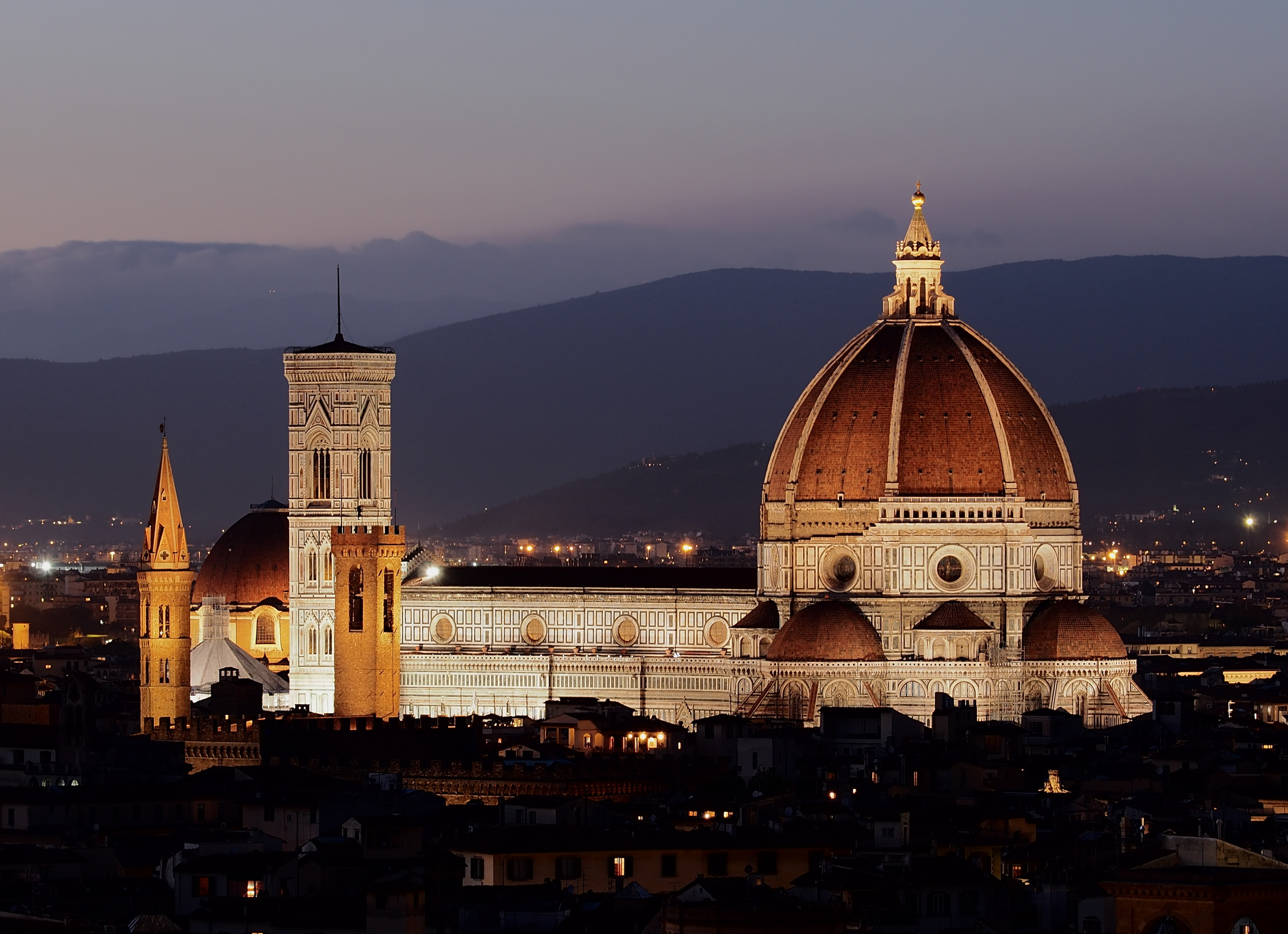
The Cathedral of Santa Maria del Fiore, the Duomo, is the symbol of Florence and the building that announced the Renaissance. Begun in 1296 on the site of the old cathedral of Santa Reparata, it was built large enough to overshadow every church in Tuscany, but its dome — a span of 45 metres over an octagonal base — was left unfinished for more than a century because no one knew how to build it. Filippo Brunelleschi solved the problem between 1420 and 1436 with a double-shell brick dome built without centring, an engineering feat that was the first major construction of the Renaissance and remains the largest brick dome ever built. The cathedral, Giotto’s campanile and the baptistery form a single UNESCO-listed complex at the heart of the city.
HISTORY & BACKGROUND
The story behind it
The new cathedral was begun in 1296 to a design by Arnolfo di Cambio, who planned it on a scale that would make it the largest church in Tuscany. The nave and apse were built over the 14th century, and Giotto began the campanile in 1334. But the octagonal crossing was left open: Arnolfo’s plan called for a dome wider and higher than any since Rome’s Pantheon, and for over a century no one could work out how to build it without a wooden form that would have used most of Tuscany’s timber. In 1418 the city announced a competition; Filippo Brunelleschi won it and, between 1420 and 1436, built the double-shell dome with a herringbone brick pattern and no internal centring, an achievement that effectively launched Renaissance architecture. The façade was finished in the 19th century in the neo-Gothic style seen today.
WHAT TO SEE
What to see here
Brunelleschi’s dome — climb the 463 steps between the two shells to the lantern for the closest view of the brickwork and a panorama over Florence.
The marble-clad basilica — the green, pink and white marble revetment of the exterior, and the vast interior with its frescoed dome interior by Vasari and Zuccari.
Giotto’s campanile — the 85-metre bell tower, begun by Giotto in 1334 and completed by Gaddi, clad in the same marble as the cathedral.
The Baptistery of San Giovanni — the 11th-century octagonal building opposite the cathedral, with its bronze doors by Ghiberti (the “Gates of Paradise”) and the gold mosaics of the interior.
WHY IT MATTERS
Why it matters
The Duomo is the building in which the Renaissance began. Brunelleschi’s dome was the first construction since antiquity to match Roman engineering, and the way he built it — without centring, with new machines of his own invention, on a scale no one had attempted for a thousand years — broke the technical deadlock that had held back Florentine architecture. For a visitor, climbing between the dome’s shells is the most direct way to understand both the audacity of the project and the city that could conceive it.
PRACTICAL INFORMATION
Before you go
MAP & LOCATION
Cathedral of Santa Maria del Fiore (the Duomo)
Cathedral of Santa Maria del Fiore (the Duomo), Florence, Tuscany, Italy
43.7731, 11.2559
MORE ATTRACTIONS
More to see in Florence
FOOD & DRINK
Where to eat nearby
Trattoria Sostanza — a historic trattoria since 1869, famous for its butter chicken and artichoke tortino, book ahead
All’Antico Vinaio — the city’s famous schiacciata bread sandwich, queues around the block
Trattoria Mario — a no-reservations lunch-only trattoria near the Mercato Centrale, honest Tuscan cooking
Osteria delle Tre Panche — a tiny wine bar serving the best maccheroni in the city, a few tables only
Ristorante Cibrèo — the classic Florentine restaurant, the place for ribollita and the chicken liver pâté
HOTELS & STAYS
Where to stay nearby
Hotel Lungarno — a riverside boutique hotel overlooking the Ponte Vecchio, with a private art collection
Hotel Brunelleschi — a hotel built around a Byzantine tower in the historic centre, steps from the Duomo
Hotel Torre Guelfa Palazzo Acciaiuoli — a medieval tower hotel near the Ponte Vecchio, with a rooftop terrace
Hotel Cellai — a charming garden hotel in the San Lorenzo quarter, good value for a central stay
NEARBY DESTINATIONS
Continue the journey

PART OF
Keep exploring
The atlas goes on — more attractions, destinations and stories from every corner of the world.