THINGS TO DO
Cross to the Oltrarno and the Boboli Gardens
The artisan quarter across the Arno — the Palazzo Pitti, the Boboli Gardens and the workshops of the Oltrarno, where gilders, restorers and frame-makers still work behind open doors.
Cities & Culture
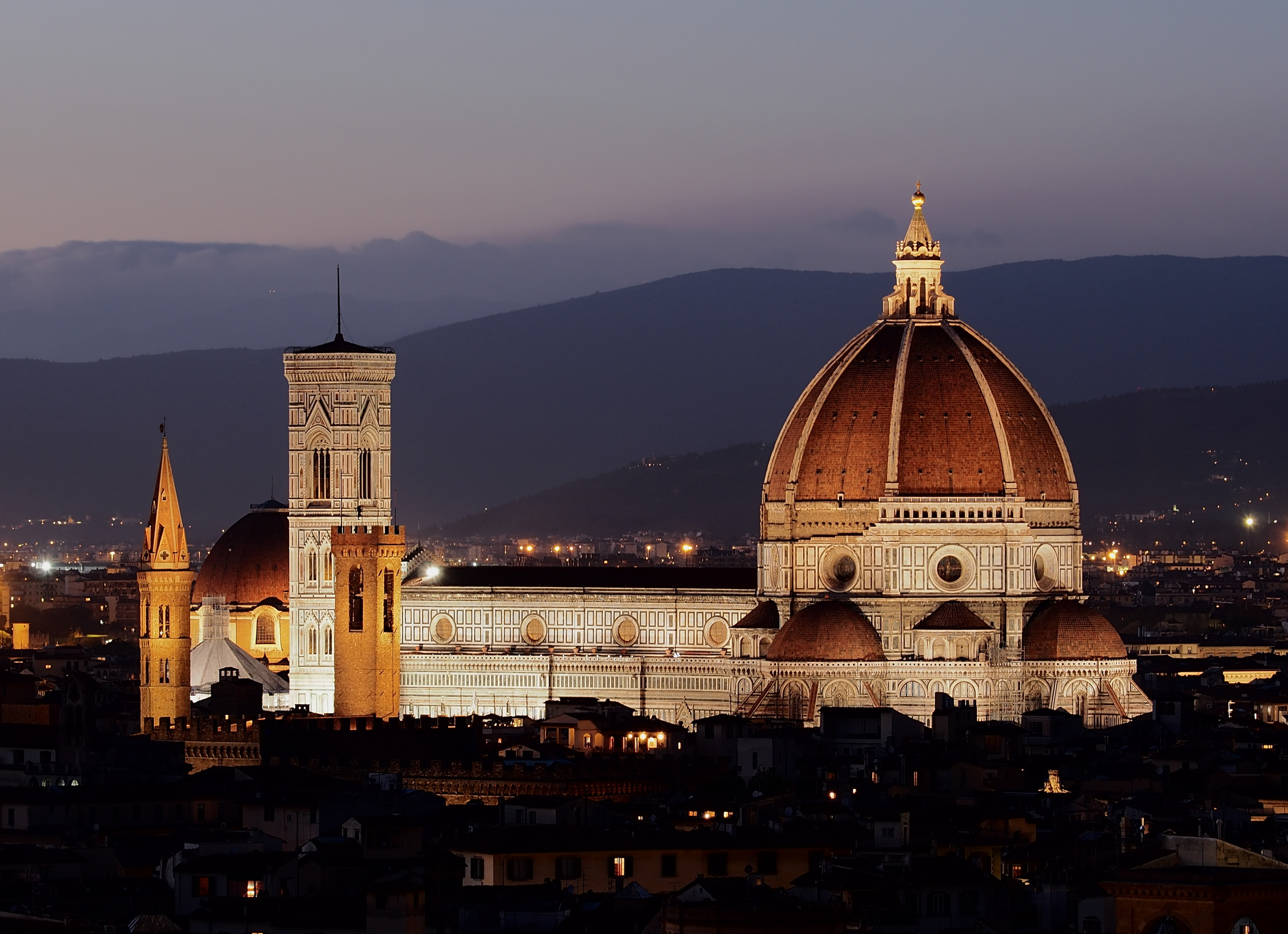
The cradle of the Renaissance — the Duomo, the Uffizi and the Ponte Vecchio on the Arno.
Florence is the capital of Tuscany and the birthplace of the Renaissance, a city of Brunelleschi’s Duomo, the Uffizi Gallery and the Ponte Vecchio on the Arno. The Medici city of Michelangelo, Botticelli and Leonardo remains one of the world’s great art capitals, its historic centre a UNESCO World Heritage Site.
MAP & LOCATION
HISTORY & CULTURE
Florence was a Roman settlement on the Arno that grew into a medieval commune and then, under the Medici, into the cradle of the Renaissance. The city’s wealth came from banking and the wool trade — the florin, minted from 1252, was the most trusted currency in Europe — and that wealth paid for the buildings and the art that define the city. Brunelleschi raised the dome of the cathedral, Donatello and Ghiberti remade sculpture, Masaccio and then Botticelli, Leonardo and Michelangelo remade painting. The Medici bankrolled much of it, first as the city’s richest family and then, from Cosimo il Vecchio onward, as its rulers; the Grand Dukes of Tuscany from the 16th century. The republic that produced the Renaissance ended when the Medici became hereditary dukes, but the art stayed, and the historic centre is now a UNESCO World Heritage Site that holds more of the Renaissance than anywhere else on earth.
TOP THINGS TO DO
TOP ATTRACTIONS
FOOD & DRINK
Trattoria Sostanza — a historic trattoria since 1869, famous for its butter chicken and artichoke tortino, book ahead
All’Antico Vinaio — the city’s famous schiacciata bread sandwich, queues around the block
Trattoria Mario — a no-reservations lunch-only trattoria near the Mercato Centrale, honest Tuscan cooking
Osteria delle Tre Panche — a tiny wine bar serving the best maccheroni in the city, a few tables only
Ristorante Cibrèo — the classic Florentine restaurant, the place for ribollita and the chicken liver pâté
HOTELS & STAYS
Hotel Lungarno — a riverside boutique hotel overlooking the Ponte Vecchio, with a private art collection
Hotel Brunelleschi — a hotel built around a Byzantine tower in the historic centre, steps from the Duomo
Hotel Torre Guelfa Palazzo Acciaiuoli — a medieval tower hotel near the Ponte Vecchio, with a rooftop terrace
Hotel Cellai — a charming garden hotel in the San Lorenzo quarter, good value for a central stay
ITINERARIES
NATURE & WILDLIFE
Florence sits in a basin of the Arno valley, ringed by the hills of Careggi, Fiesole and Arcetri that give the city its framed skyline. The Boboli Gardens behind the Palazzo Pitti are the great formal garden within the city, with their avenues, grottos and statuary; the Cascine park along the Arno is the city’s largest green space; and the walk up to Piazzale Michelangelo and the abbey of San Miniato climbs through olives and cypresses to the broadest view. Beyond the walls, the Tuscan countryside of the Chianti hills and the Mugello begins within minutes of the centre.
PLAN YOUR VISIT
Florence is reached by air via Florence Peretola airport (a tram to the centre) or Pisa airport (a train to Florence). High-speed trains run to Santa Maria Novella station from Rome (1h30), Milan (1h40), Venice (2h) and Bologna (35min). The station is at the edge of the historic centre, a 10-minute walk from the Duomo.
Book the Uffizi, the Accademia and the Duomo combined ticket online with timed slots well in advance — they are the three things that sell out. The Palazzo Pitti and the Boboli Gardens can usually be booked on the day.
Allow two full days minimum. The Duomo, the Uffizi and the Accademia alone fill a day and a half, and the Oltrarno and the views deserve another. A third day lets you reach the Tuscan hill towns.
April to June and September to October are ideal — mild, bright and less crowded than July and August, when the heat and the queues at the Uffizi and the Accademia combine to make the city hard work. Winter is quiet, cool and cheap, with shorter queues.
Comfortable shoes for the cobbles, a refillable water bottle, and modest clothing for churches — shoulders and knees covered for the Duomo. Book the Uffizi, the Accademia and the Duomo climb before you travel.
The historic centre is largely cobblestoned and flat, with some pedestrian streets; the Duomo and campanile climbs are stairs only and not accessible. The Uffizi and the Accademia have lifts, and accessible routes are mapped by the museums.
WEATHER
Forecast data from Open-Meteo. Updated regularly.
TRAVEL GUIDES · STORIES
More here soon — the road is still being mapped.
NEARBY DESTINATIONS
INTERESTS
REGIONS
COUNTRIES
MORE TO EXPLORE
The atlas goes on — more destinations, stories and road trips from every corner of the world.
