THINGS TO DO
Walk the Old Olive Groves
Wander the groves between the coast and Stari Bar, home to the Old Olive (Stara Maslina), a tree estimated at over 2,000 years old.

Cities & Culture
A working coastal port and a fortified old town above the olive groves of the southern Adriatic.
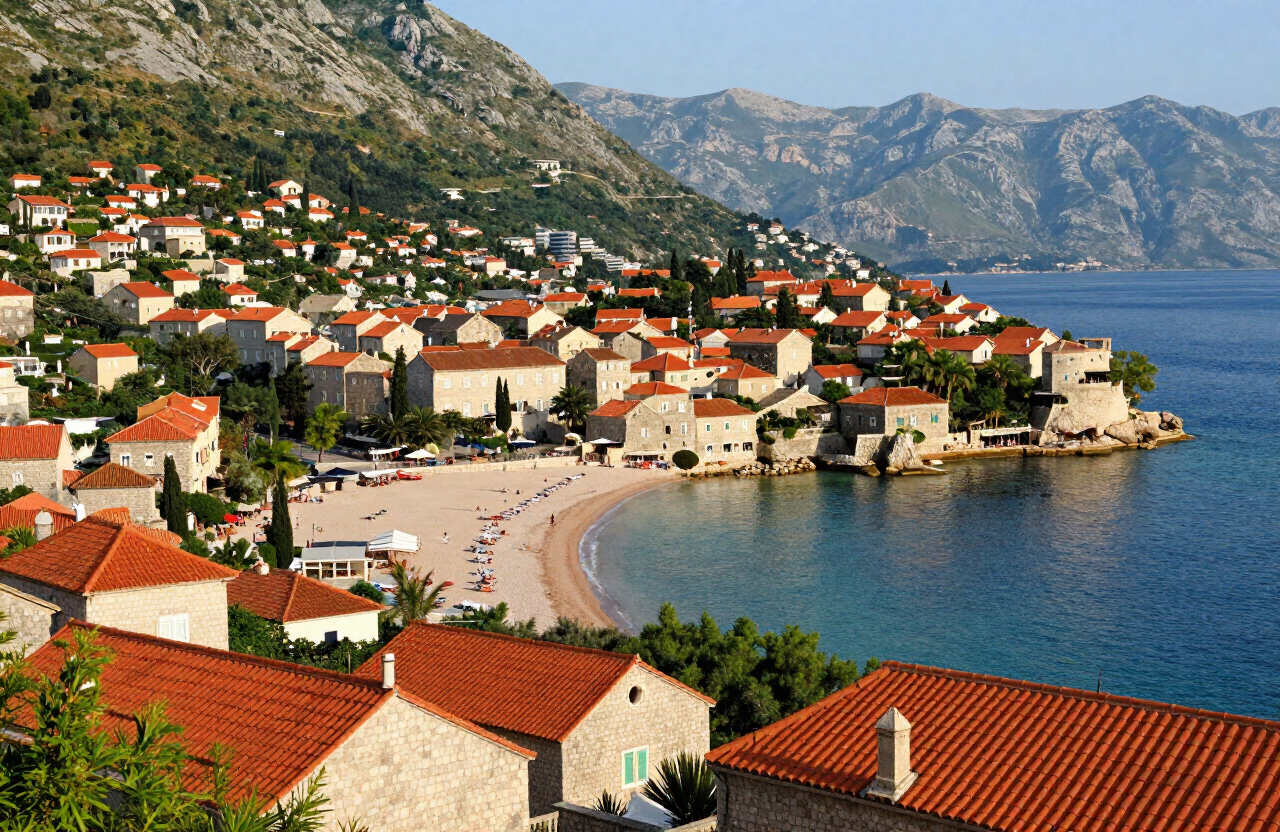
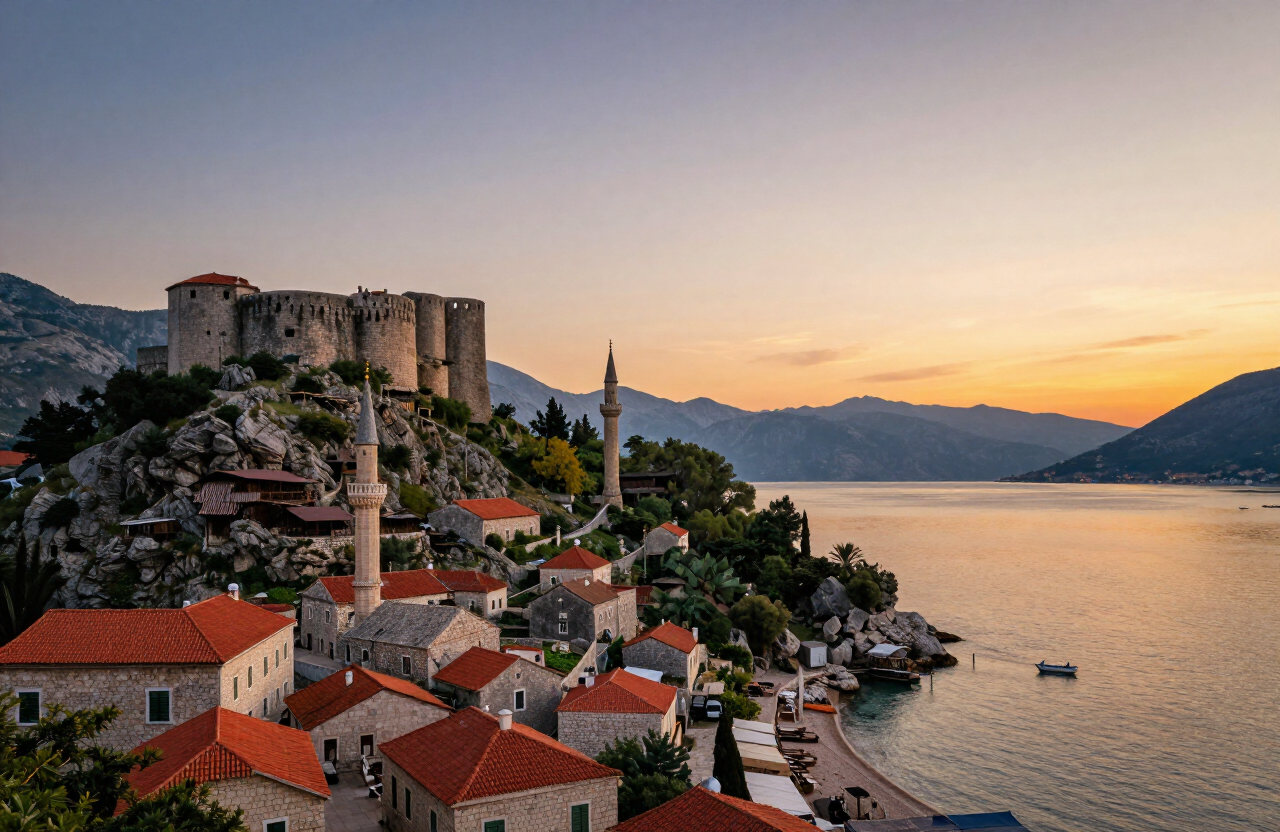
Bar is two connected but distinct places. Modern Bar is a lived-in coastal city, a working port and a transport hub on the southern Adriatic, with a long waterfront promenade, a rail link and a ferry terminal. Several kilometres inland, at the foot of Mount Rumija, stands Stari Bar — the historic fortified settlement of stone houses, churches, mosques and an aqueduct that was the town of Bar for centuries. Visitors commonly combine the modern waterfront, the heritage complex of Stari Bar and the old olive landscape around Stara Maslina, the protected Old Olive tree. King Nikola’s Palace, the former summer residence of the Montenegrin ruler, is part of modern Bar’s historical identity and now houses a local museum. Bar is best understood as a working town and a heritage site rather than primarily as a resort.
MAP & LOCATION
THROUGH THE LENS


HISTORY & CULTURE
Bar was a medieval Serbian and Venetian town on its hilltop before the Ottoman conquest in 1571. During the Montenegrin siege of 1877–1878 much of the fortified town was damaged, and Bar was transferred to Montenegro following the Congress of Berlin. Over the following decades the population shifted down to the coast, and the modern city and port of Bar grew up around the harbour and its transport links. The historic core on the hill has been partly conserved as a heritage site. The 1979 Montenegro earthquake damaged the old town and destroyed its aqueduct before restoration work continued.
TOP THINGS TO DO
TOP ATTRACTIONS
FOOD & DRINK
Konoba Stari Mlin — traditional Montenegrin dishes on the road up to Stari Bar, a natural stop between the modern town and the old town
Bar waterfront and port restaurants — grilled fish, seafood and Montenegrin home cooking along the promenade and around the marina in modern Bar
Stari Bar cafés and konobas — small family-run places among the restored stone houses of the old town, serving grilled meat, local cheese and wine from the Rumija foothills
Olive-oil producers of Stara Maslina area — tastings and local products (oil, honey, wine) sold directly by growers around Mirovica and the old olive groves
HOTELS & STAYS
Hotel Princess — a four-star resort base on the Bar seafront, with pools and direct promenade access
Stari Bar guesthouses — small stone-house rooms and apartments in and around the old town, quiet and several degrees cooler than the coast in summer
Modern Bar apartments and marina stays — self-catering apartments near the waterfront, port and rail station, practical for arriving by bus or train
Sutomore and Čanj coast — beach resorts and apartment camps a short ride north, a cheaper base within easy reach of Bar by the coastal road or rail line
ITINERARIES
PLAN YOUR VISIT
Bar sits on the Adriatic corridor and is the southern terminus of the Belgrade–Bar railway, so it can be reached by road (E65/E80 coastal and inland routes), by intercity bus from Podgorica, Budva, Herceg Novi and Ulcinj, by train from Podgorica and the north, and in season by ferry line across the Adriatic. Tivat and Podgorica airports are both roughly an hour away by road. Summer traffic on the single coastal road is heavy in July and August; the scenic but slow old road over the mountains is a poor substitute in bad weather. Verify current train, bus and ferry schedules locally before relying on any specific service.
Modern Bar is a working city spread along the coast — the promenade, port, marina and King Nikola’s Palace are all walkable in the seafront strip, but Stari Bar, Stara Maslina and the olive groves, Haj Nehaj and Ratac lie several kilometres away and need separate transport. Local buses run between the town centre and Stari Bar, taxis are inexpensive by regional standards (agree the fare before setting out), and a private vehicle is the most practical way to combine the coast with the hill sites in one day. Parking at Stari Bar is signed below the walls; the site itself is explored entirely on foot.
April to June and September to October give warm walking weather, working ports and quiet heritage sites; July and August bring beach season, full coastal traffic and punishing heat in the exposed ruins and olive groves — visit Stari Bar early or late in the day. Winter is mild but many waterfront businesses close and mountain weather over Rumija can be wet and windy. Check opening hours for the palace museum and any event calendars locally, as the cultural programme is seasonal.
Sun protection, water and footwear with grip are essential — Stari Bar contains uneven stone surfaces, slopes, steps and exposed sections with little shade, and the olive groves are hot and dry in summer. Modest dress is appropriate for church and mosque interiors in and around the old town. Some cash (EUR) is useful for small konobas, gate fees and local taxis, and a light layer helps on the Rumija ridge, where weather changes quickly even in summer.
Modern Bar’s waterfront promenade is level and step-free, and the palace museum area is reachable on paved paths. Stari Bar, by contrast, is an excavated hilltop complex of uneven stone, slopes, steps and exposed sections — step-free access cannot be promised anywhere inside the walls, and the aqueduct walk involves narrow, rough ground. The olive groves follow gravel and earth tracks that are firm but unpaved. Visitors with mobility concerns should plan the heritage site with care, allow more time and check current access arrangements locally before visiting.
WEATHER
Forecast data from Open-Meteo. Updated regularly.
TRAVEL GUIDES · STORIES
More here soon — the road is still being mapped.
NEARBY DESTINATIONS
INTERESTS
REGIONS
COUNTRIES
MORE TO EXPLORE
The atlas goes on — more destinations, stories and road trips from every corner of the world.