
Literature & Heritage
Ivo Andrić’s Literary Heritage in Višegrad
Višegrad · Eastern Bosnia
QUICK INFORMATION
- CATEGORY
- Literature & Heritage
- COUNTRY
- Bosnia & Herzegovina
- REGION
- Višegrad · Eastern Bosnia
- DURATION
- 1–2 days
ABOUT THIS ATTRACTION
Ivo Andrić’s connection to Višegrad is literary and cultural rather than a single physical site, and it is best understood as the heritage that ties the writer to the town where he spent his childhood and which he made the setting of his most famous work. Andrić, who was born in 1892 in Dolac near Travnik, was raised in Višegrad as a child, and the town, its bridge and the Drina became the material of “The Bridge on the Drina” (“Na Drini ćuprija”), the novel he published in 1945 and for which, together with his wider body of work, he received the Nobel Prize in Literature in 1961. The novel takes the Mehmed Paša Sokolović Bridge as its subject and its narrator, tracing four centuries of Višegrad’s history — Ottoman, Austro-Hungarian and modern — through the life of the crossing and the people who gather around it. There is no single “Andrić house” or museum at the centre of Višegrad; the heritage is read instead through the bridge itself, through the old streets and riverbanks that the novel describes, through the modern Andrićgrad complex built around the writer’s name, and through the relief and monuments to Andrić that mark the town. For a visitor, Andrić’s Višegrad is a way of reading the town — a literary layer laid over the real bridge and river, in which the crossing becomes the witness to the long, often difficult history of the place.
HISTORY & BACKGROUND
The story behind it
Ivo Andrić lived in Višegrad as a child, and the town left a deep mark on his writing. He published “The Bridge on the Drina” in 1945, in the immediate aftermath of the Second World War, as one of the novels through which he set out the long history of Bosnia and Herzegovina; the book follows the Mehmed Paša Sokolović Bridge and the town of Višegrad across four centuries, from the bridge’s Ottoman construction to the early 20th century, and it became one of the most widely read works of literature in the region. In 1961 Andrić was awarded the Nobel Prize in Literature, the first writer from Bosnia and Herzegovina to receive it, recognised for the epic force with which he traced the history of his country. The novel fixed Višegrad in the literary imagination as the town of the bridge, and in the decades since, the town has increasingly foregrounded its Andrić heritage — most visibly in the modern Andrićgrad complex and in the monuments and relief dedicated to the writer. The relationship between the novel’s vision of Višegrad and the town’s real, often painful history, including the violence at the bridge during the 1990s war, is part of how the heritage is read today.
WHAT TO SEE
What to see here
The bridge of the novel — the Mehmed Paša Sokolović Bridge read as the narrator and subject of “The Bridge on the Drina,” the structure at the heart of Andrić’s Višegrad.
The old streets and riverbanks — the town as the setting of the novel, the places around the bridge where the book’s life of the crossing is staged.
The relief and monuments to Andrić — the markers and sculpture dedicated to the writer in Višegrad, the visible record of the town’s literary heritage.
Andrićgrad — the modern complex built around Andrić’s name and work, the place where the literary heritage is most deliberately gathered.
The Drina and the wider landscape — the river and valley that frame the novel as much as the bridge, the setting of Andrić’s vision of the town.
WHY IT MATTERS
Why it matters
Andrić’s literary heritage is the lens through which Višegrad is known far beyond the Drina valley. “The Bridge on the Drina” made the town’s crossing one of the most recognised bridges in European literature, and the Nobel Prize that crowned Andrić’s work fixed the connection. For a visitor, reading Višegrad through Andrić is the way the town’s long, layered history becomes legible — a literary heritage rather than a single site, gathered around the bridge and the river.
PRACTICAL INFORMATION
Before you go
MAP & LOCATION
Ivo Andrić’s Literary Heritage in Višegrad
Ivo Andrić’s Literary Heritage in Višegrad, Višegrad, Eastern Bosnia, Bosnia & Herzegovina
43.7830, 19.2890
MORE ATTRACTIONS
More to see in Višegrad


THINGS TO DO
Things to do nearby
FOOD & DRINK
Where to eat nearby
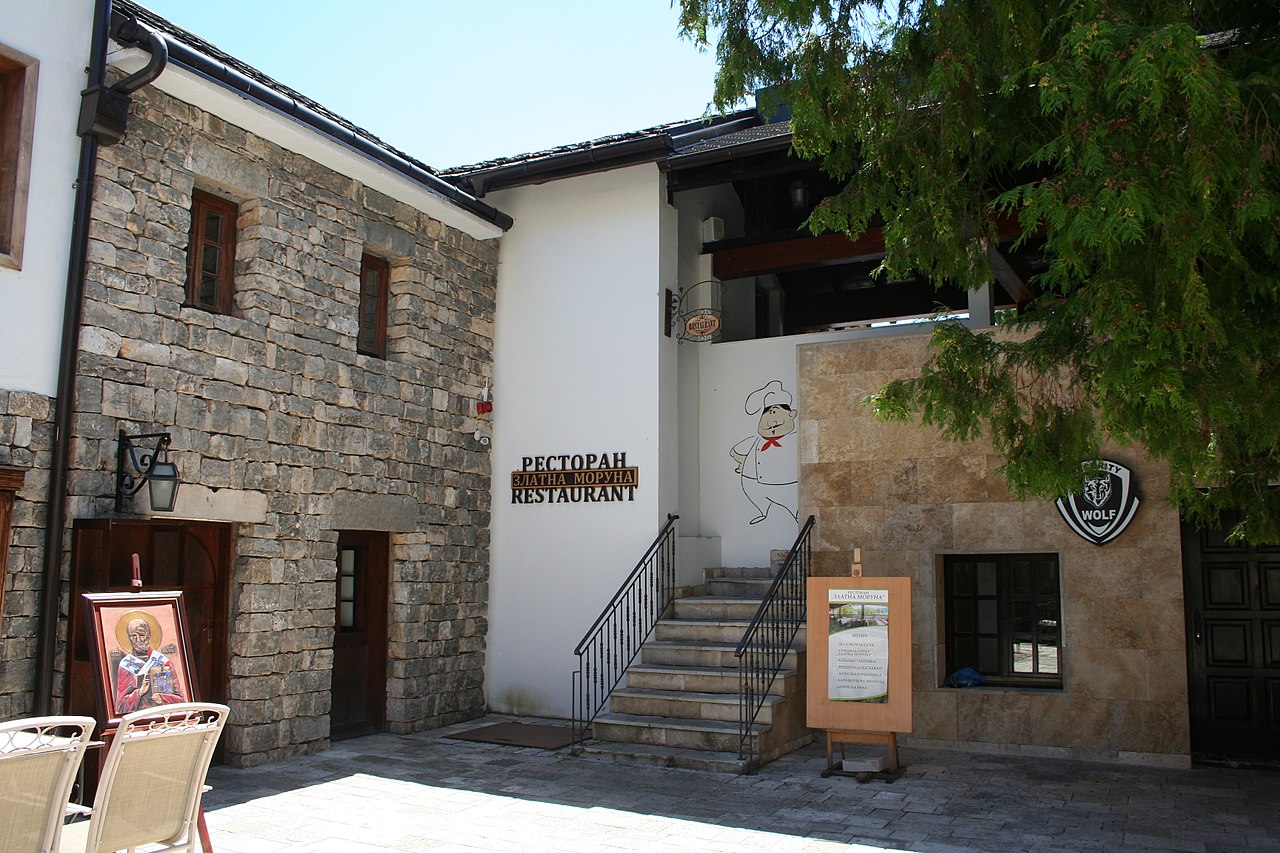
Višegrad town centre and the riverside — small restaurants and cafés near the bridge and the Drina banks
Andrićgrad — cafés and eateries within the stone complex at the Rzav–Drina confluence
HOTELS & STAYS
Where to stay nearby
Višegrad town — small hotels and guesthouses near the bridge and the riverfront, the natural base for a visit
Riverside lodges along the Drina — quieter accommodation close to the bridge and the confluence
ITINERARIES
Day-by-day routes
NEARBY DESTINATIONS
Continue the journey


INTERESTS
Explore by what you love
PART OF
Keep exploring
The atlas goes on — more attractions, destinations and stories from every corner of the world.