THINGS TO DO
Walk the Tvrđa and the Drava
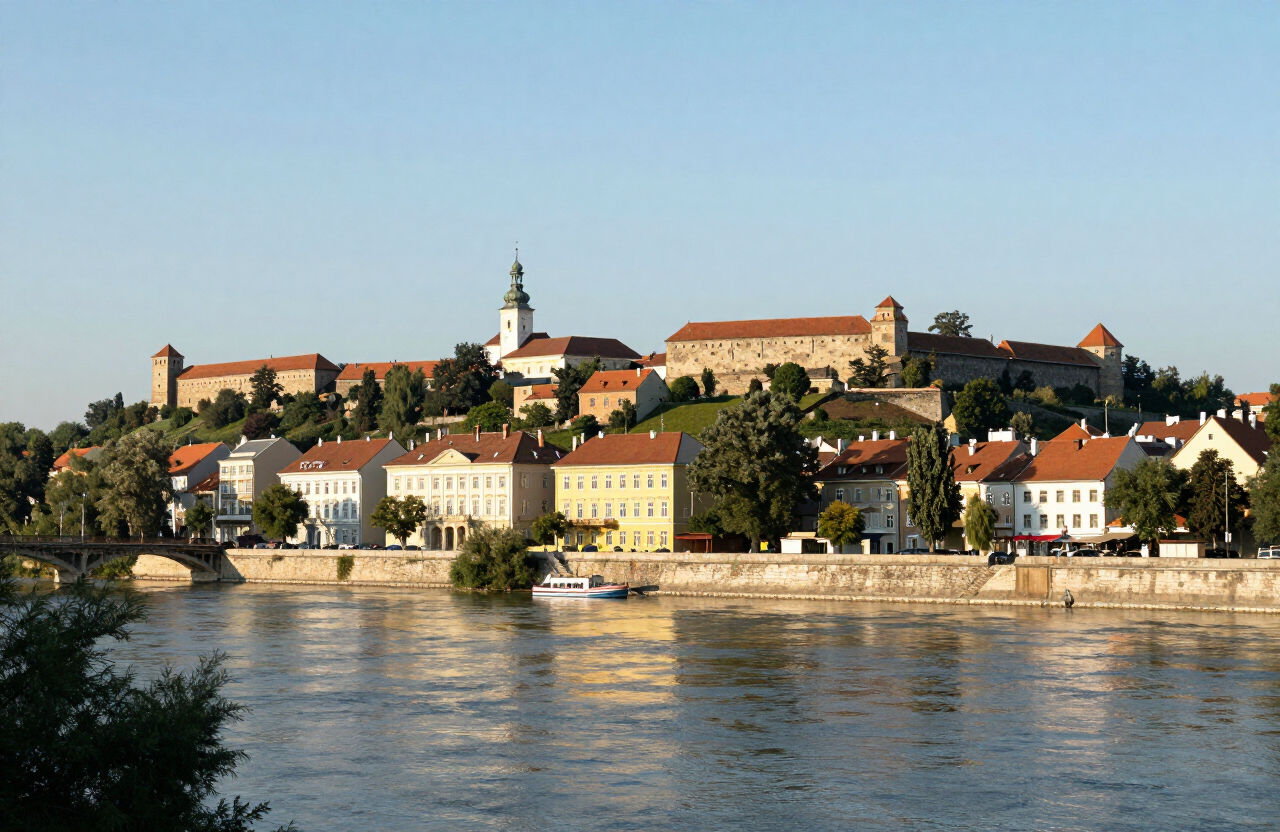
Walk the baroque fortress quarter of Tvrđa and continue along the Drava promenade in a single circuit of old Osijek.
Cities & Culture
Slavonia’s capital on the Drava — a baroque old town and a riverside gateway to the east.
Osijek is the largest city in Slavonia and the economic centre of eastern Croatia, a city on the Drava river with an 18th-century Habsburg fortress quarter, the Tvrđa, at its heart. It is a relaxed, leafy city of promenades, baroque squares and the gateway to the Baranja wetlands and the Kopački Rit nature park — a Central European river city that feels closer to the Pannonian plain than the Adriatic.
MAP & LOCATION
THROUGH THE LENS
HISTORY & CULTURE
Osijek grew from a Roman and medieval settlement on the Drava into a Habsburg fortress city, and the Tvrđa was built in the 18th century as a star fortress against the Ottomans, on the site of the Ottoman town that had stood here for 150 years. The city was heavily damaged in the 1990s war and has since been rebuilt as the centre of eastern Croatia, with the Tvrđa restored building by building as a cultural quarter.
TOP THINGS TO DO
TOP ATTRACTIONS
FOOD & DRINK
Konoba Kod Ruže — Slavonian cooking
Tvrđa’s cafés and wine bars
HOTELS & STAYS
Hotel Osijek — riverside hotel on the promenade
Boutique hotels in the Tvrđa
ITINERARIES
NATURE & WILDLIFE
Osijek’s nature is the river and the wetland. The Drava runs through the city and its promenade leads to the river beaches and the upstream woods, and just north lies Kopački Rit — one of the largest wetland reserves in Europe, a floodplain of channels, lakes and reedbeds at the confluence of the Drava and the Danube. The reserve shelters hundreds of bird species, white-tailed eagles, deer and a herd of wild horses, and it is the great wildlife sight of eastern Croatia, on the city’s doorstep.
PLAN YOUR VISIT
Osijek has its own airport with seasonal flights, and is about 4 hours from Zagreb by car via the A5 motorway, or 3 hours by train. Direct buses run from Zagreb, and international buses connect to Budapest and Belgrade.
The centre, the Tvrđa and the Drava promenade are walkable; Kopački Rit is a 15-minute drive north, best by car or organised tour.
One day covers the Tvrđa and the promenade. A second day adds Kopački Rit and the Baranja wine hills.
Spring and autumn for walking and the wetlands; summer for the river beaches.
WEATHER
Forecast data from Open-Meteo. Updated regularly.
TRAVEL GUIDES · STORIES
More here soon — the road is still being mapped.
NEARBY DESTINATIONS
REGIONS
COUNTRIES
MORE TO EXPLORE
The atlas goes on — more destinations, stories and road trips from every corner of the world.