
MAGAZINE STORY · History & Nature
Jajce — Between the Waterfall, Fortress and Pliva Lakes
Discover Jajce as a town where a waterfall, medieval royal history, underground monuments and the quiet Pliva Lakes fit into one layered landscape.
THE STORY
Discover Jajce as a town where a waterfall, medieval royal history, underground monuments and the quiet Pliva Lakes fit into one layered landscape.
- Published
- September 24, 2026
- Read time
- 9 min read
Meet a town built around falling water
Jajce is organised around one of the most unusual urban landscapes in Bosnia and Herzegovina. The Pliva reaches the end of its course in the centre of town and drops into the Vrbas below, while the historic streets and fortress rise above the confluence.
The waterfall is more than a standalone attraction. It explains the geography of Jajce: water below, defensible high ground above and a compact settlement arranged between the two. Begin at a recognised viewpoint, then climb through the town so that the relationship becomes clear from more than one level.
Water volume, spray and viewpoint conditions change with weather and river levels. Stone near the lower viewing area can be wet or slippery, so use grippy footwear and follow current access instructions rather than approaching unofficial edges.
Climb through the royal town to the fortress
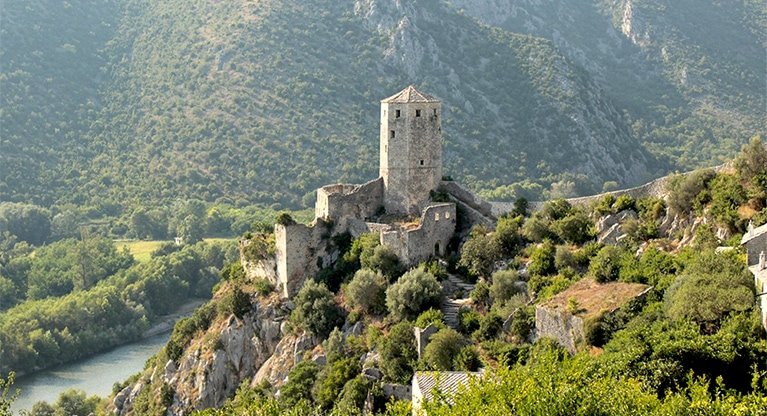
The old town climbs steeply from the rivers toward Jajce Fortress. Gates, walls, religious monuments and later buildings preserve several historical layers in a small area, but the medieval Bosnian kingdom gives the upper town its strongest identity.
Jajce became an important royal and defensive centre in the final period of the medieval Bosnian state. The fortress above the town is the best orientation point, with views that connect the old streets, the rivers and the surrounding central-Bosnian landscape.
Do not compress every wall and tower into one date or claim that all visible masonry belongs to the same medieval phase. The fortifications were adapted across different periods. Check current admission and opening arrangements locally instead of hardcoding them into an evergreen story.
Descend into the Jajce Catacombs
The Jajce Catacombs are a medieval underground church and burial complex carved into the rock beneath the historic town. They are associated with Duke Hrvoje Vukčić Hrvatinić and the political world that helped shape Jajce before it became a royal centre.
The name catacombs can create the wrong expectation of a vast tunnel network. The importance lies in the rock-cut chambers, carved details and intended funerary and devotional function, not in an invented underground route beneath the whole town.
Steps, dim light and uneven surfaces may affect access. Move carefully, respect barriers and confirm current visitor arrangements through the local heritage authority.
Look beneath the medieval story
Jajce also preserves a sanctuary connected with the Roman cult of Mithras. The Temple of Mithras introduces a much earlier historical layer than the fortress and shows that the valley’s importance did not begin with the medieval town.
The small protected space centres on the carved relief associated with the cult. Visit it as an archaeological monument and avoid presenting the beliefs or ceremonies of an initiatory Roman religion with more certainty than the surviving evidence allows.
Together, the Mithraeum and the medieval catacombs make the rock beneath Jajce part of the town’s story. One belongs to the Roman world and the other to the late-medieval town; they should not be blended into a single underground narrative.
Follow the Pliva upstream to the lakes and watermills
Upstream from the town, the Great and Small Pliva Lakes shift the mood from stone streets to open water. Between them, the wooden watermills known as Mlinčići recall the long use of the Pliva’s moving water for everyday work.
The lakes and watermills deserve their own unhurried part of the visit rather than a rushed final photograph. Walk only on maintained public surfaces, keep away from unsafe water edges and respect any barriers around the mills and channels.
Boating, swimming and other seasonal activities depend on weather, local rules, water conditions and current operators. This story does not promise rental availability, safe swimming or a fixed schedule.
Connect the town without rushing it
A balanced first day links the waterfall, historic centre, catacombs and fortress on foot, then continues to the Pliva Lakes and watermills only when daylight and transport allow. Visitors with more time can separate the lakes into a slower second day.
Jajce is memorable because natural and human history remain visible together. The waterfall should not erase the royal town, and the fortress should not reduce the lakes to an optional afterthought.
- Begin near the waterfall and climb gradually through the historic town toward the fortress.
- Use grippy footwear for wet viewpoints, cobbles, steps and uneven fortress surfaces.
- Treat the Catacombs and Temple of Mithras as separate monuments from different historical periods.
- Confirm current admission, opening and water-activity arrangements locally.
- Allow the Pliva Lakes and watermills enough time rather than adding them as a hurried photo stop.
Practical notes for Jajce
- Suggested time
- One full day covers the principal town monuments and a brief lakes visit; two days allow a slower old-town day and a separate Pliva Lakes outing.
- Best season
- Spring through autumn suits walking and the lakes. Rain, high water, heat and winter conditions can affect viewpoints and outdoor surfaces.
- What to carry
- Bring grippy walking shoes, water, weather protection and some local currency for sites that may not accept cards.
- Accessibility
- Jajce is steep and includes cobbles, steps, underground spaces and uneven fortress ground. Confirm access at each site according to individual needs.
THROUGH THE LENS
From the road


RELATED DESTINATIONS
Places in this story
ATTRACTIONS IN THIS STORY
5 attractions
Pliva Waterfall
The Pliva river’s twenty-one-metre plunge into the Vrbas, right in the centre of Jajce — one of the few waterfalls of this scale to stand inside a town.
Jajce Fortress
The medieval citadel above the confluence of the Pliva and the Vrbas, where the last kings of Bosnia were crowned and the town’s whole layout is best read from the ramparts.
Temple of Mithras
A rare underground Roman sanctuary carved into the rock below Jajce, dedicated to the mystery god Mithras and centred on a relief of the bull-slaying rite.
Jajce Catacombs
A medieval underground church and tomb complex carved into the living rock beneath Jajce, attributed to Duke Hrvoje Vukčić Hrvatinić, the 15th-century lord of the town — one of the most unusual heritage sites in Bosnia & Herzegovina.
Pliva Lakes & Watermills
A cluster of old wooden watermills standing on the turquoise Pliva lakes a few kilometres upstream of Jajce — one of the most photographed corners of central Bosnia.
RELATED GUIDES
Practical guides
INTERESTS
Explore by what you love
ROUTES
Routes through here
Vrbas and Pliva Ride — Banja Luka to Travnik via Jajce
The northwest-to-centre classic: the Vrbas canyon south of Banja Luka, the Pliva lakes and waterfall at Jajce, and the rolling climb into Travnik across the mid-Bosnian highlands.
124 km
VIEW ROUTEPliva Lakes Calm-Water Paddling
Calm-water kayaking and canoeing on Veliko Plivsko jezero, the broad turquoise lake upstream of Jajce — a gentle, weather-dependent paddle among watermills and reed beds.
easy
VIEW ROUTEMORE TO EXPLORE
Keep exploring
The road goes on — more destinations, stories and road trips from every corner of the world.