
History and Walking
Stari Bar Fortress and Aqueduct Heritage Walk
Bar · Southern Coast & Ulcinj
QUICK INFORMATION
- CATEGORY
- History and Walking
- COUNTRY
- Montenegro
- REGION
- Bar · Southern Coast & Ulcinj
- DURATION
- A half-day visit allowing time to read the walls, the aqueduct and the ruins without rushing the exposed site.
- DIFFICULTY
- A moderate heritage walk over uneven stone, steps and slopes on an exposed hilltop site — not a casual stroll, and not fully accessible.
- BEST TIME
- Year-round; spring and autumn are most comfortable for walking the exposed ruins. In summer, visit early morning or late afternoon to avoid the worst heat.
ABOUT THIS EXPERIENCE
The Stari Bar Fortress and Aqueduct Heritage Walk is a structured way to visit the fortified archaeological complex of Stari Bar and the aqueduct on its northern side as a single, layered heritage landscape rather than a ruin belonging to only one period. The site carries medieval Serbian, Venetian, Ottoman and Montenegrin layers, each legible in its walls, churches, mosque foundations and the Ottoman-era water system that once sustained the hilltop town. This experience connects the Stari Bar attraction with the Bar Aqueduct at Stari Bar, framing them as two parts of one responsible heritage walk through a working archaeological complex rather than a rebuilt monument. The walk is the most rewarding way to read the southern coast’s deepest history, but it demands care: the site is exposed, uneven and partly fragile, and not every ruin, interior or aqueduct section is open or safe to approach.
WHAT YOU’LL EXPERIENCE
What you’ll experience
A structured walk through the fortified archaeological complex of Stari Bar, reading its walls, gates, towers, churches and mosque foundations as layered evidence of medieval, Venetian, Ottoman and Montenegrin rule.A focused look at the Bar Aqueduct at Stari Bar on the northern side of the complex, the Ottoman-era water system whose cutting during the 1877–1878 siege helped bring the fortified town down.An honest reading of the site’s damage history — distinguishing the destruction of the Montenegrin siege of 1877–1878 from the later damage of the 1979 Montenegro earthquake and the subsequent restoration work.A responsible-heritage framing that treats Stari Bar as a conserved archaeological complex rather than a single-period monument, and asks visitors to respect barriers, conservation work and closed sections.
THE EXPERIENCE IN DETAIL
What it’s really like
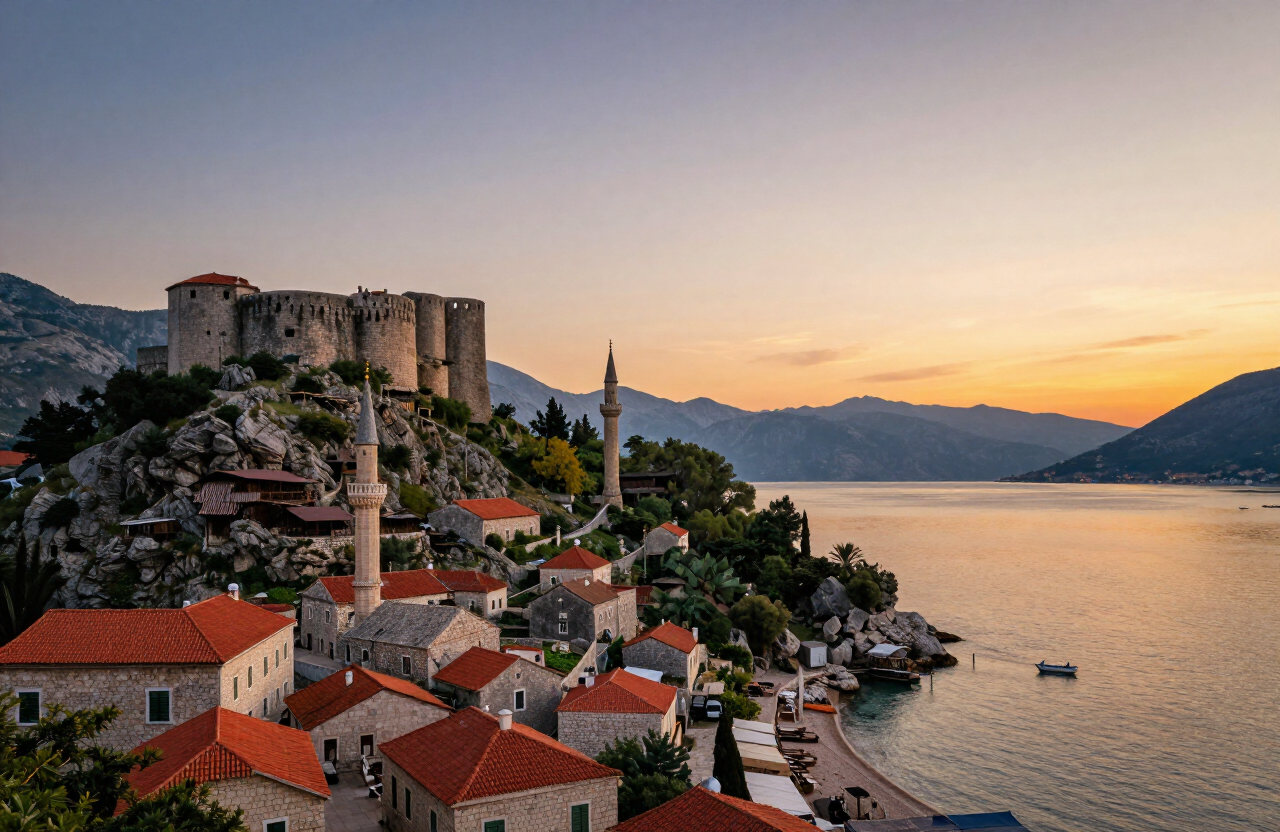
Stari Bar is the historic fortified old town above modern Bar, a walled complex of stone houses, churches, mosques and an aqueduct that was the town of Bar for centuries. This walk moves through the fortress walls and gates, past the remains of the town’s mixed Christian and Muslim places of worship, and out to the aqueduct on the northern side, where the Ottoman-era water system still stands in arches. The site’s story is not the story of one ruler or one period: it passed from medieval Serbian to Venetian and then, from 1571, to Ottoman rule, before the Montenegrin siege of 1877–1878 damaged much of the fortified town and Bar was transferred to Montenegro following the Congress of Berlin. The 1979 Montenegro earthquake then damaged the old town and destroyed sections of the aqueduct before later restoration work. Walking the complex responsibly means reading those layers without collapsing them into a single narrative, and accepting that not every ruin, interior or aqueduct section is open, restored or safe to approach.
HIGHLIGHTS
Moments worth savouring
The fortress walls and gates — the stone curtain that enclosed the hilltown, with its towers and the main gate.
The aqueduct on the northern side — the Ottoman-era water system whose arches still stand, tied directly to the 1877–1878 siege.
The churches and mosque foundations — the remains of the town’s mixed Christian and Muslim places of worship, side by side in the ruins.
The layered history — medieval Serbian, Venetian, Ottoman and Montenegrin rule read across a single walled site.
The view over the coast and the olive groves — the old town above the plain of Bar and its ancient olive groves, with the sea beyond.
WHAT TO EXPECT
Good to know before you go
Stari Bar is a hilltop archaeological complex with uneven stone paths, steps, slopes and exposed ruins, and the aqueduct stands on the northern side of the site, generally visited as part of the wider complex. Not all ruins, interiors or aqueduct sections are open or safe to approach — parts of the structure are fragile, and access to specific sections may be restricted for safety or conservation reasons. Summer heat is a serious consideration: the stone site has little shade, and early morning or late afternoon is far more comfortable than the middle of the day. The terrain is uneven throughout, and the experience is not a step-free or fully accessible one. Visitors should expect to move slowly, watch their footing, and respect barriers and conservation work rather than treating the site as an open ruin to be explored at will.
WHY IT MATTERS
Why it matters
Stari Bar is the place where the deep, layered story of the southern coast is concentrated in a single walled site — medieval, Venetian, Ottoman and Montenegrin — and the aqueduct is the piece that tells the story of the town’s engineering and its siege most directly. For a visitor the heritage walk is the most rewarding way to read that layered history honestly, without presenting the site as belonging to only one period, and to understand why the 1877–1878 siege and the 1979 earthquake each left their own distinct marks. It is the counterpoint to the modern waterfront below: the inland, fortified, multi-period heart of the Bar region.
PRACTICAL INFORMATION
Before you go
MAP & LOCATION
Stari Bar Fortress and Aqueduct Heritage Walk
Stari Bar Fortress and Aqueduct Heritage Walk, Bar, Southern Coast & Ulcinj, Montenegro
ATTRACTIONS NEARBY
Pair it with these sights


MORE EXPERIENCES
More to do in Bar
FOOD & DRINK
Where to eat nearby
Konoba Stari Mlin — traditional Montenegrin dishes on the road up to Stari Bar, a natural stop between the modern town and the old town
Bar waterfront and port restaurants — grilled fish, seafood and Montenegrin home cooking along the promenade and around the marina in modern Bar
Stari Bar cafés and konobas — small family-run places among the restored stone houses of the old town, serving grilled meat, local cheese and wine from the Rumija foothills
Olive-oil producers of Stara Maslina area — tastings and local products (oil, honey, wine) sold directly by growers around Mirovica and the old olive groves
HOTELS & STAYS
Where to stay nearby
Hotel Princess — a four-star resort base on the Bar seafront, with pools and direct promenade access
Stari Bar guesthouses — small stone-house rooms and apartments in and around the old town, quiet and several degrees cooler than the coast in summer
Modern Bar apartments and marina stays — self-catering apartments near the waterfront, port and rail station, practical for arriving by bus or train
Sutomore and Čanj coast — beach resorts and apartment camps a short ride north, a cheaper base within easy reach of Bar by the coastal road or rail line
ITINERARIES
Day-by-day routes
NEARBY DESTINATIONS
Continue the journey

INTERESTS
Explore by what you love
PART OF
Keep exploring
The atlas goes on — more attractions, destinations and stories from every corner of the world.