Landmark
Kotor Old Town
Kotor · Bay of Kotor
QUICK INFORMATION
- CATEGORY
- Landmark
- COUNTRY
- Montenegro
- REGION
- Kotor · Bay of Kotor
- DURATION
- 1–2 days
ABOUT THIS ATTRACTION
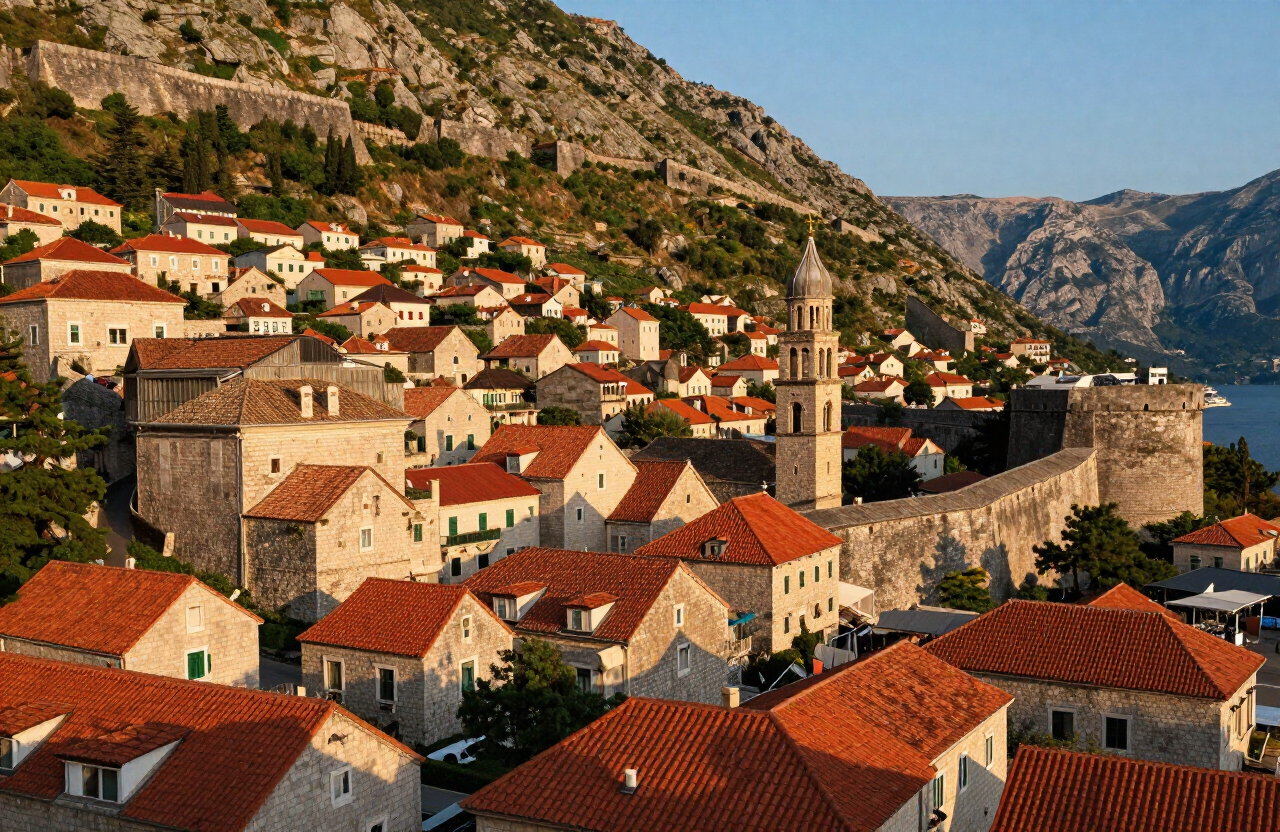
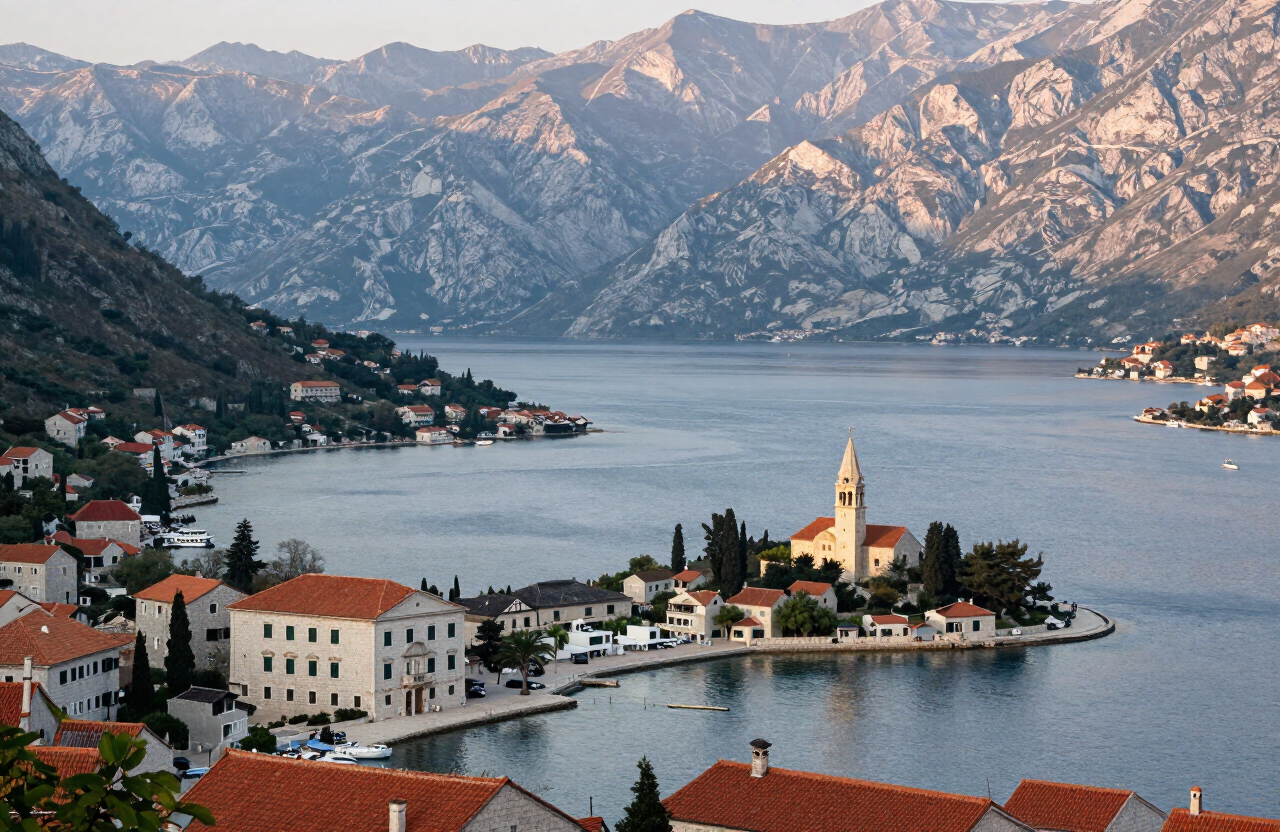
The old town of Kotor is a compact triangle of stone squeezed between the bay and the sheer cliff of Mount Lovćen’s foothills, enclosed on the land side by a river and a curtain of walls that climb straight up the mountainside. Inside, it is a deliberate maze — narrow lanes running at angles to one another, opening onto paved squares, with churches, palaces and the remains of the Venetian administration layered across four centuries of rule. Unlike many Adriatic old towns it was never pulled down and rebuilt in a single style; it accumulated, so Romanesque, Gothic, Renaissance and Baroque sit within a few steps of one another. It is small enough to cross in ten minutes and easy to get lost in for hours, which is the point of it.
HISTORY & BACKGROUND
The story behind it
Kotor stands on the site of a Roman and early Byzantine settlement known as Acruvium, and the town’s basic street plan dates from that late-antique and medieval period. From the late 14th century it was governed by the Republic of Venice, which held the town and the bay for nearly four centuries until 1797, and it is the Venetians who gave Kotor its walls, its palazzi and its character as a fortified Adriatic trading town. After Venice it passed through Austrian, French, Austro-Hungarian and Yugoslav rule. Two great earthquakes, in 1563 and 1979, badly damaged the old town; each time it was rebuilt largely to its earlier form. In 1979 the Natural and Culturo-Historical Region of Kotor was inscribed on the UNESCO World Heritage List, recognising the old town, its ramparts and the surrounding bay as a single cultural landscape.
WHAT TO SEE
What to see here
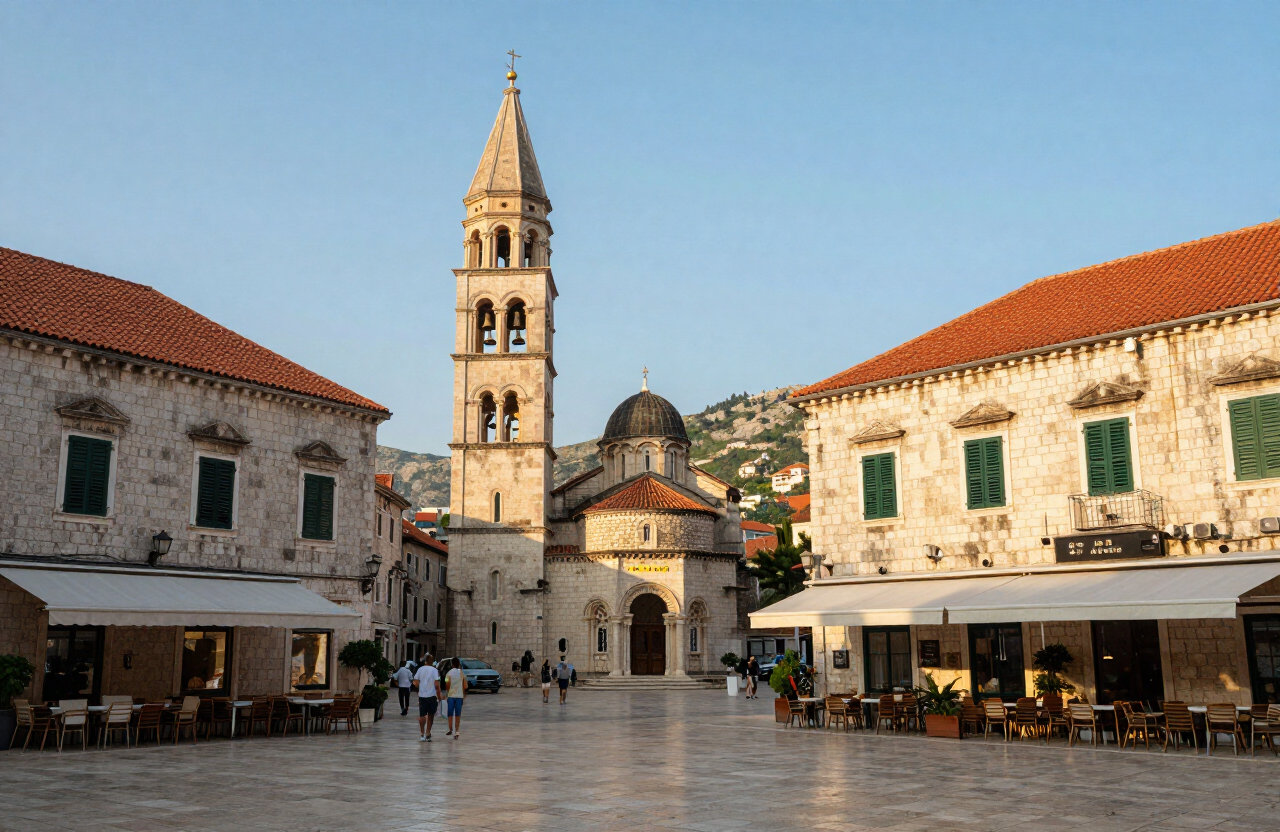
The Flour Square (Trg od brašna) — a triangular square of noble palaces (Pima, Buca, Grgurina) and the 17th-century Beskuća palace, the old town’s most coherent group of Venetian-era façades.
The Sea Gate (Morska vrata) and River Gate (Riječka vrata) — the two surviving town gates, the Sea Gate bearing the date 1555 and a Venetian lion, the River Gate opening toward the Škurda river.
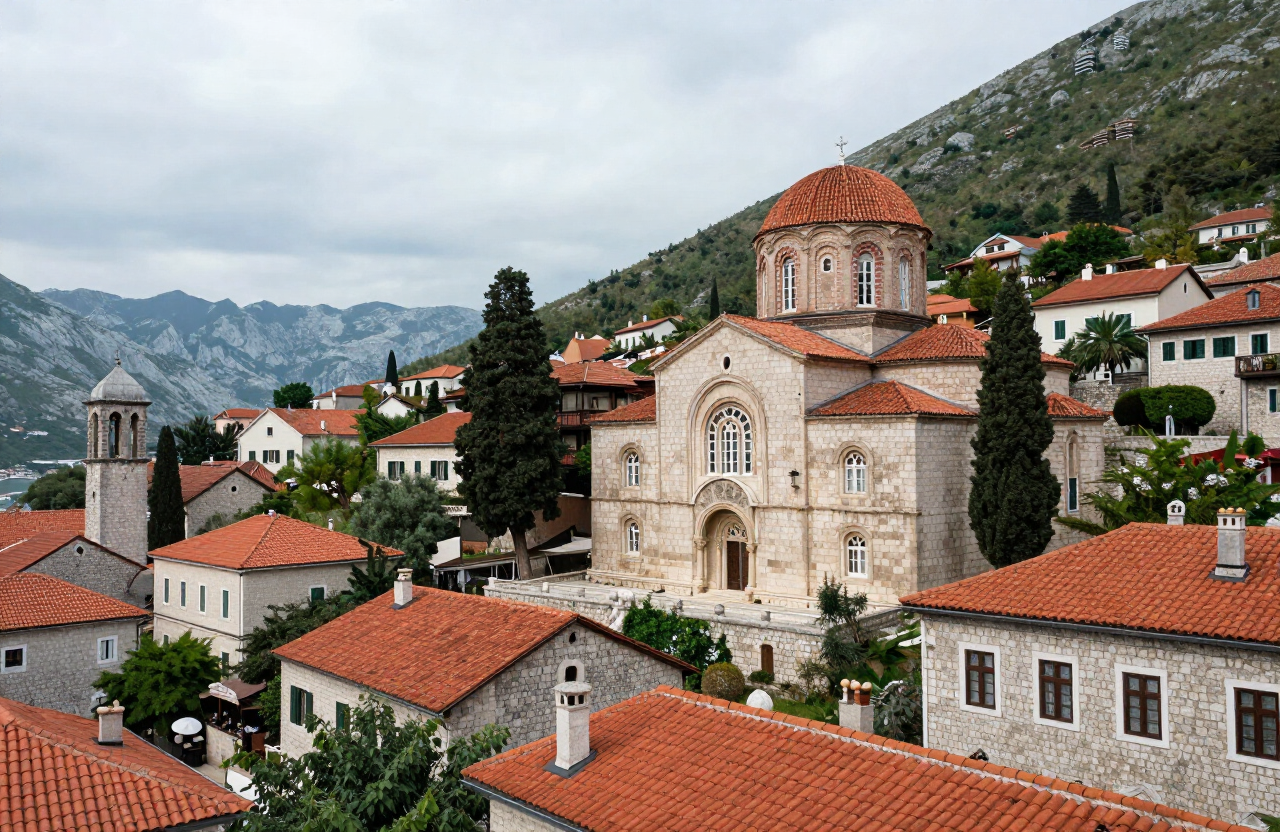
St Luke’s Church and St Nicholas’ Church — a 12th-century Romanesque church and a 20th-century Serbian Orthodox church standing almost side by side, a visible record of Kotor’s mixed Catholic and Orthodox history.
The Maritime Museum — housed in the Grgurina Palace, tracing Kotor’s long seafaring and shipbuilding tradition under Venice and Austria.
The lanes and stair-streets themselves — the old town is best read by wandering; the pattern of alleys, dead ends and sudden squares is the real sight.
WHY IT MATTERS
Why it matters
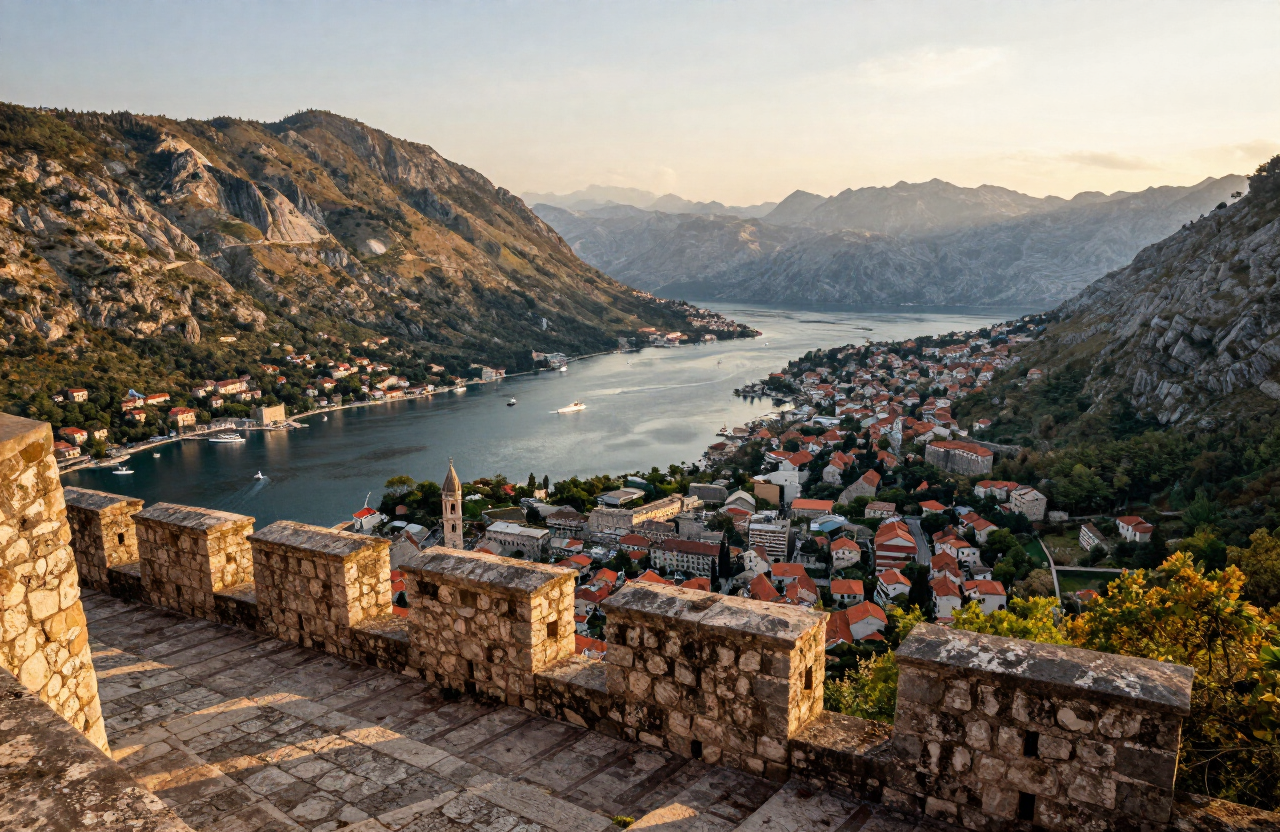
Kotor’s old town matters because it is one of the best-preserved ensembles of Venetian Adriatic town planning on the eastern shore, and because it is inseparable from its setting: the walls that ring it do not stop at the town but climb the cliff above, so the town and its fortifications read as a single structure clinging to the mountain. For a visitor it is also the rare walled town that still functions as a lived-in place — residents, cats, workshops and small shops share the lanes with the crowds — rather than a museum village emptied of daily life.
PRACTICAL INFORMATION
Before you go
THROUGH THE LENS
From the road
MAP & LOCATION
Kotor Old Town
Kotor Old Town, Kotor, Bay of Kotor, Montenegro
42.4247, 18.7711
MORE ATTRACTIONS
More to see in Kotor


THINGS TO DO
Things to do nearby
FOOD & DRINK
Where to eat nearby
Galion — seafood beside the old town walls
Tanja — traditional Montenegrin dishes near the river gate
Old Town konobas — seafood, grilled fish and Montenegrin dishes in the lanes around the cathedral
HOTELS & STAYS
Where to stay nearby
Hotel Astoria — boutique rooms inside the old town
Hostel Old Town — a budget base steps from the walls
Dobrota waterfront stays — quieter rooms and apartments within walking distance or a short local ride of the old town
NEARBY DESTINATIONS
Continue the journey
ROUTES
Routes through here
Kotor Serpentine Panorama — Old Town to Horizont Viewpoint
A careful scenic climb up the historic Kotor–Cetinje serpentine road from Kotor Old Town to the lower panorama point and the higher Horizont viewpoint, with widening views over the bay, Muo, Prčanj and the surrounding mountains.
1 days · challenging
VIEW ROUTEBay of Kotor Heritage Circuit — Kotor, Perast, Herceg Novi and Luštica
A two-day heritage road-trip around the Bay of Kotor — from Kotor Old Town along the northern shore to Perast and Herceg Novi, then back through Tivat and onto the Luštica peninsula toward Rose.
2 days · moderate
VIEW ROUTEPART OF
Keep exploring
The atlas goes on — more attractions, destinations and stories from every corner of the world.