QUICK INFORMATION
- DURATION
- 1 day
- COUNTRY
- Montenegro
- REGION
- Kotor · Bay of Kotor
- CATEGORY
- Cities & Culture
ABOUT THIS ITINERARY
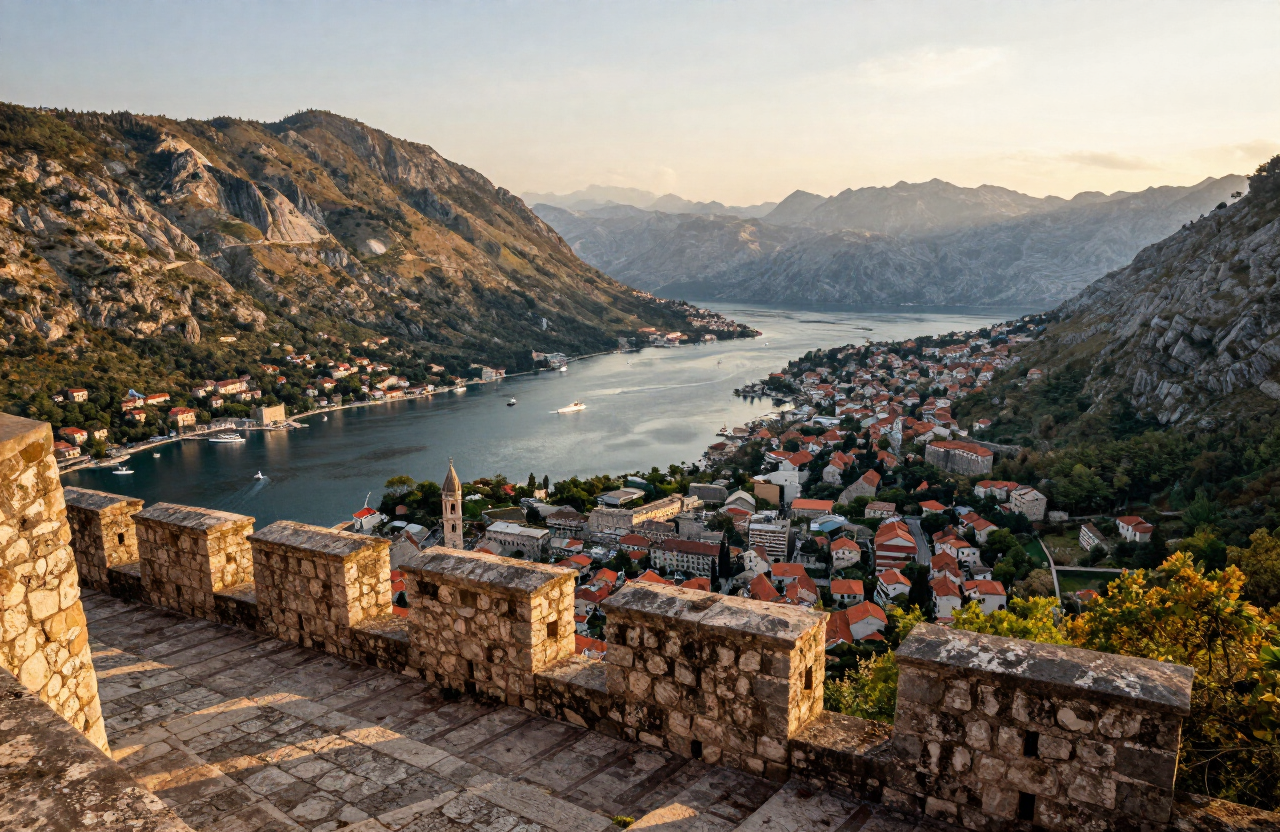
Kotor compresses into a single, well-shaped day. The old town is small enough to cross in ten minutes, the fortress wall climbs straight from behind it, and the bay begins at the town quay — so the whole visit can be done on foot and on the water without ever needing a car. The trick is to take the two views that define Kotor: the high one, from the ramparts above the town, and the water-level one, from a boat out in the bay. This itinerary threads the two together with the old town and its cathedral in between, beginning at sunrise before the heat and the cruise-ship crowds and finishing on the water in the long afternoon.
OVERVIEW
The route at a glance
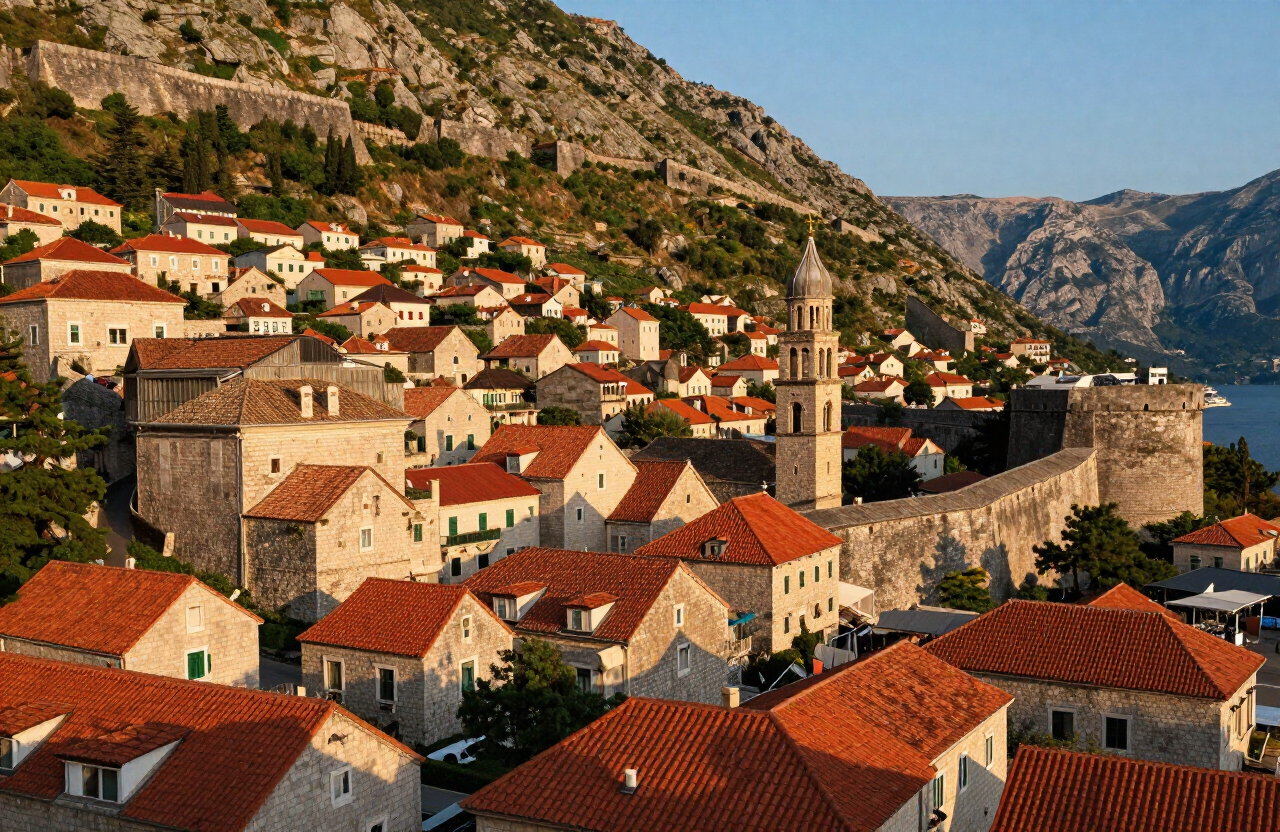
The day follows the two perspectives that make Kotor make sense. You start at sunrise with the wall climb — roughly 1,350 steps up the cliff to the fortress of San Giovanni — while the stone is cool, the light is sharpest and the crowds are still asleep. The descent brings you straight into the old town for a slow wander through its maze of squares, gates and churches, after which St Tryphon Cathedral is the one building that tells the town’s whole history in a single stop and the Maritime Museum, in the Baroque Grgurina Palace, adds the town’s seafaring layer. A lunch in the old town separates the morning on the stone from the afternoon on the water, when a boat cruise from the quay runs out through the bay to the Verige strait and the chapel islands off Perast — the water-level view that completes the one begun on the ramparts.
The times are guidance, not a schedule. The climb is the only fixed point: it has to start early in the warmer months, because the steps are exposed and the midday heat is the real difficulty. Everything else can shift by an hour or more and the day still works. An optional shore-based alternative to the boat cruise is marked for visitors who prefer to stay on land, but the core route is deliberately built around the pairing of the high view and the water view that the bay exists to give.
THE SCHEDULE
Day by day
Kotor in One Day
A walkable day pairing the two views of Kotor — the fortress-wall climb at sunrise and a bay boat cruise in the afternoon — with the old town and St Tryphon Cathedral in between.
- Sunrise
Climb the fortress walls to San Giovanni
1.5–3 hours round tripStart at sunrise, before the heat and the cruise-ship crowds. From behind the old town, near the River Gate, a stairway of roughly 1,350 stone steps switchbacks up the cliff following the Venetian ramparts to the fortress of San Giovanni, about 260 metres above the bay. The first stretch is the steepest; the 15th-century Church of Our Lady of Remedy sits about halfway up and is a natural place to pause and look back over the rooftops. The reward at the summit is the view that defines a visit to Kotor — the walled town laid out below, the bay winding between the mountains, the limestone peaks closing the horizon. An entry fee is charged for the maintained section, bought at the base. Carry water (there is no reliable supply on the route) and wear shoes with grip — the stone is worn smooth and slippery, and the descent is hard on the knees. Take it slowly.
- 09:30
Wander the old town
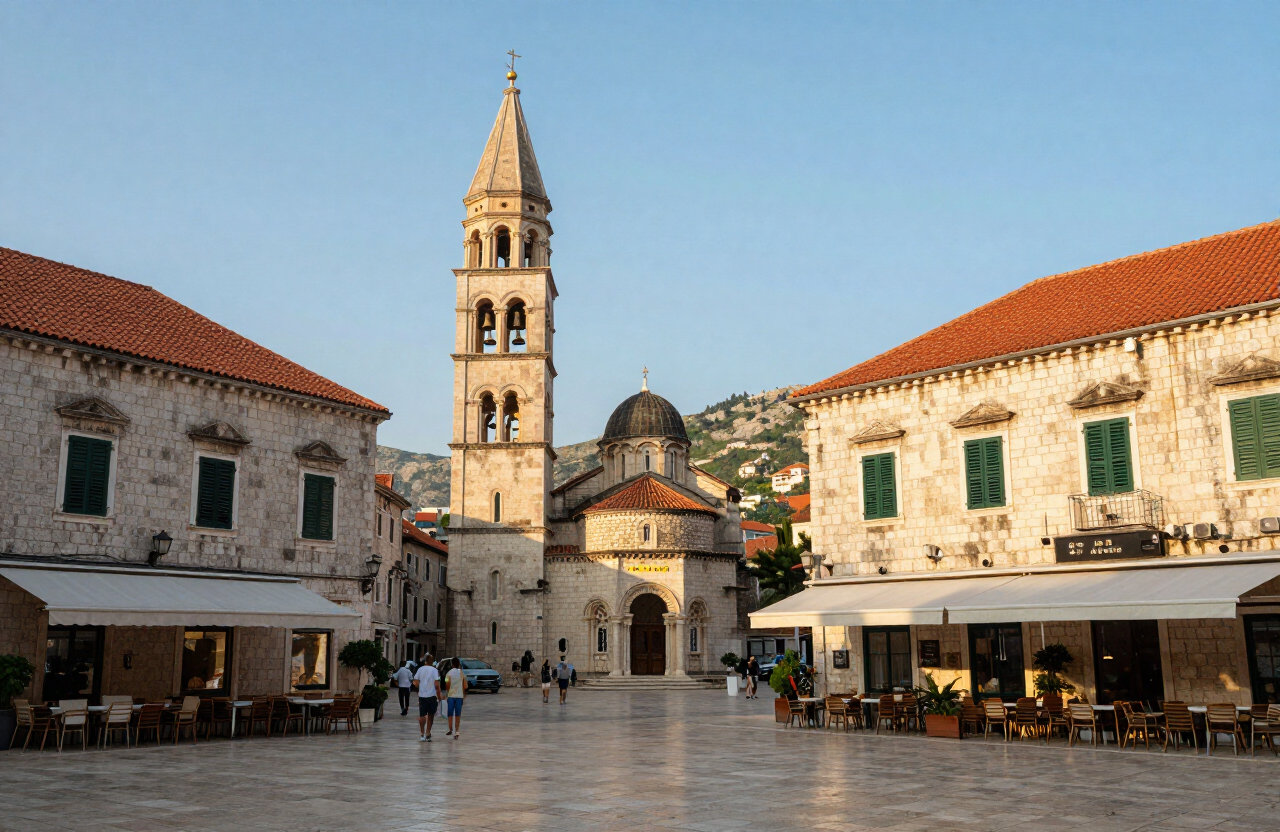
60–90 minAfter the descent, step straight into the old town while it is still quiet. Kotor’s walled core is a deliberate maze of narrow lanes, paved squares and churches that accumulated over four centuries of Venetian rule, so Romanesque, Gothic, Renaissance and Baroque sit within a few steps of one another. Keep the two main squares — Flour Square (Trg od brašna) with its row of noble palaces, and the cathedral square — as landmarks and you will not be lost for long. Pass the Sea Gate and the River Gate, the two surviving town gates, and the near-twin St Luke’s Church and St Nicholas’ Church standing side by side. The old town is freely open at all times with no entrance fee; a paper or offline phone map helps in the narrow lanes where GPS is unreliable.
- Late morning
St Tryphon Cathedral
45 minOn the main cathedral square stands St Tryphon Cathedral, the oldest and most important building in Kotor — begun in 1166 on the site of an earlier church and carrying the town’s whole story in its fabric. The contrast between the 12th-century Romanesque body and the domed Baroque bell towers records the great 1667 earthquake that brought down the originals. Inside, a Baroque vault rises over the older arcades, and the church holds the relics of St Tryphon, Kotor’s patron saint, in a 14th-century silver-gilt reliquary above the main altar, with fragmentary Romanesque frescoes surviving from earlier phases. A small entry fee is usual for the interior and treasury; dress modestly, with shoulders and knees covered. Visit it after wandering the old town, so the building reads as the religious centre of the maze around it.
- Early afternoon
Maritime Museum of Montenegro and Grgurina Palace
60–90 minAfter the cathedral, walk a few minutes to Flour Square (Trg od brašna) and the Grgurina Palace, the finest Baroque residence in the old town, which houses the Maritime Museum of Montenegro. The palace and the museum are two things in one building: the 18th-century merchant house around its courtyard, and the collection inside it that tells the town’s seafaring story — the Bokelian navy, model ships, navigational instruments and the portraits of the captains and merchant families who traded across the Mediterranean under Venice and Austria. It is the interpretive key to the old town around it, the place that explains why a mountain bay became a maritime power. An admission fee is usual; check current opening hours, ticket prices, guided-visit availability, photography rules and interior access directly with the museum before visiting, as these change by season and the palace has steps and uneven stone floors.
- Mid-to-late afternoon
Bay of Kotor boat cruise
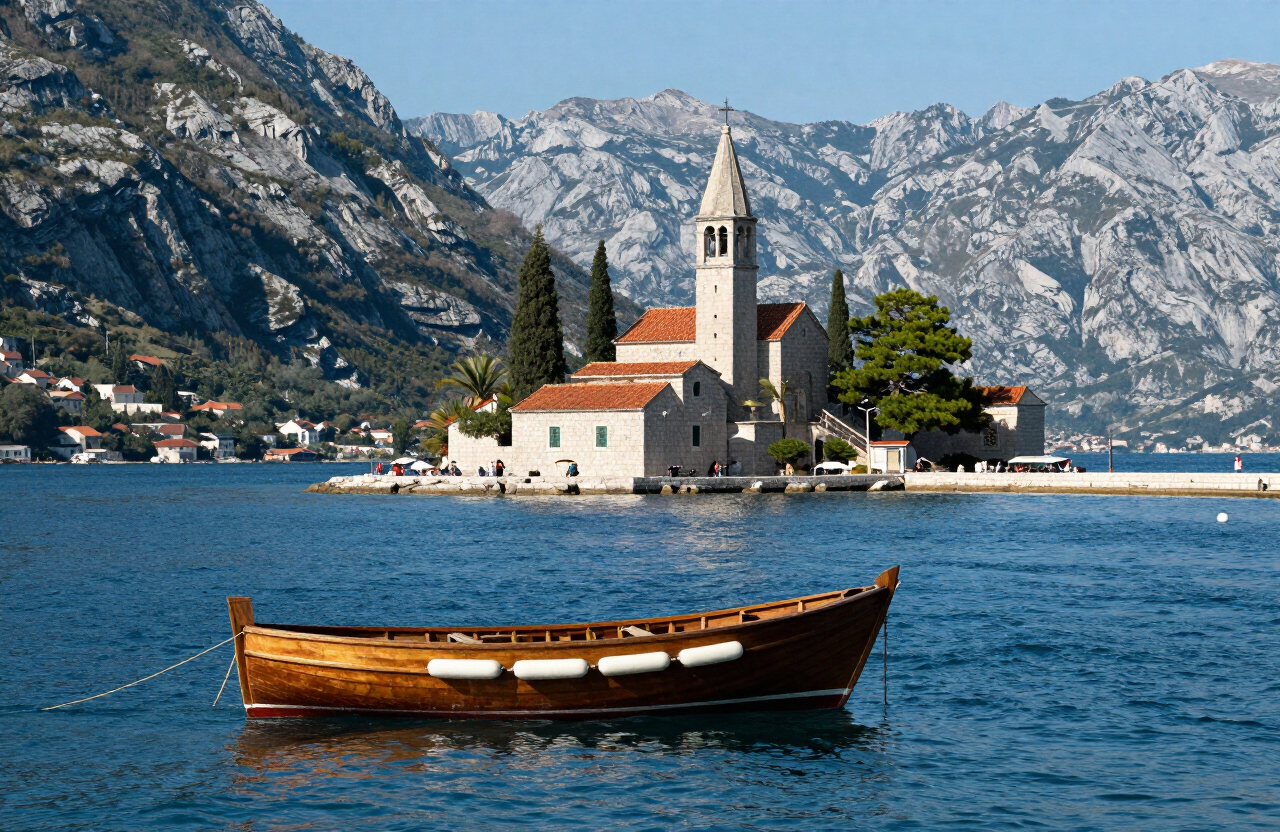
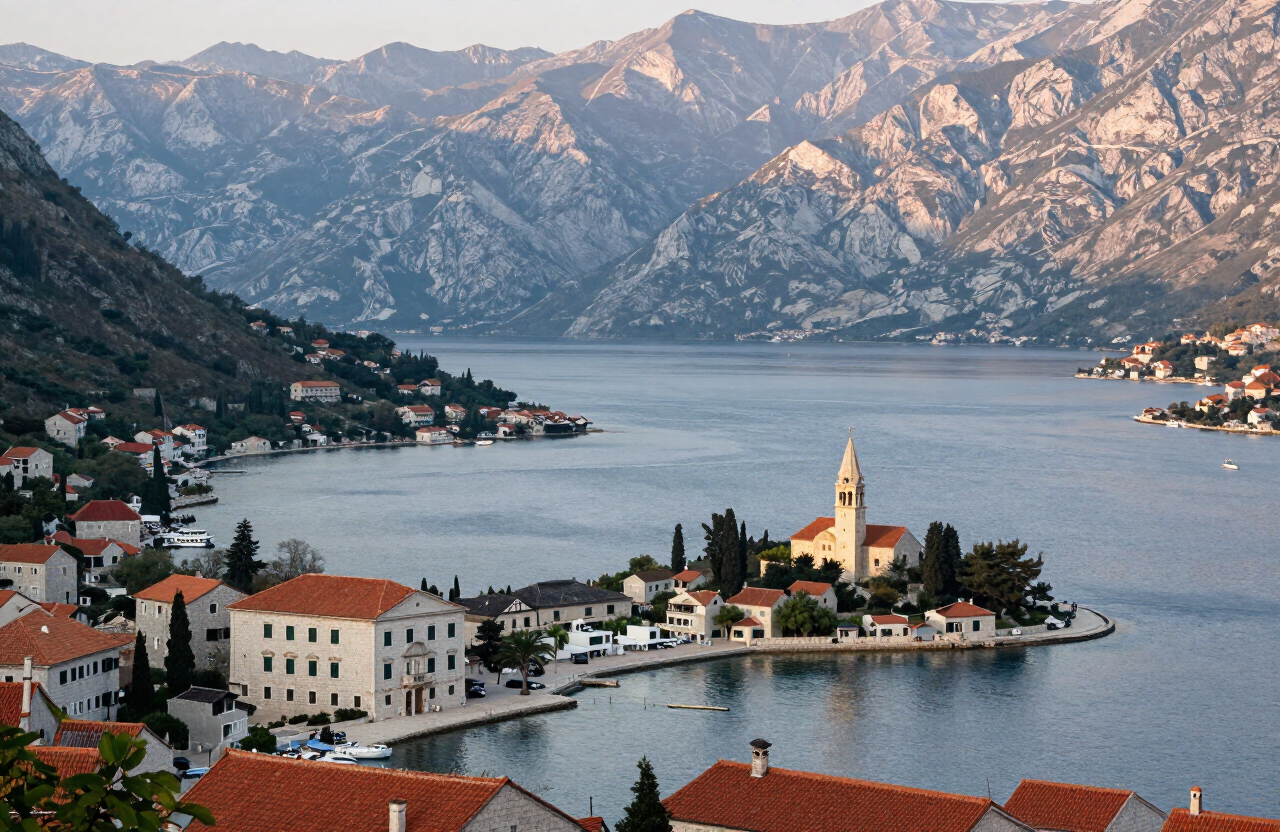
2–4 hoursIn the afternoon take the water view to match the morning’s high one. From the Kotor quay, a short walk from the Sea Gate, small boats run half-day cruises out through the inner basins of the bay — the winding inlet of deep blue water hemmed by sheer limestone mountains, often called Europe’s southernmost fjord. The route typically passes the Verige strait, the bay’s narrowest point, and stops at the two islands off Perast: the natural Sveti Đorđe and the man-made Our Lady of the Rocks, with its 17th-century church and museum, reached by a short boat ride from the waterfront. Many cruises allow time ashore at Perast itself before returning to Kotor, and the approach back to the town by water — the walls and the fortress revealing themselves above the old town — is one of the great arrivals on the Adriatic. Book on the day at the quay; bring sun protection and a little cash for island landing fees. The water is sheltered and the ride is gentle.
Optional stops
- Afternoon
The bay from the shore — if you stay on land
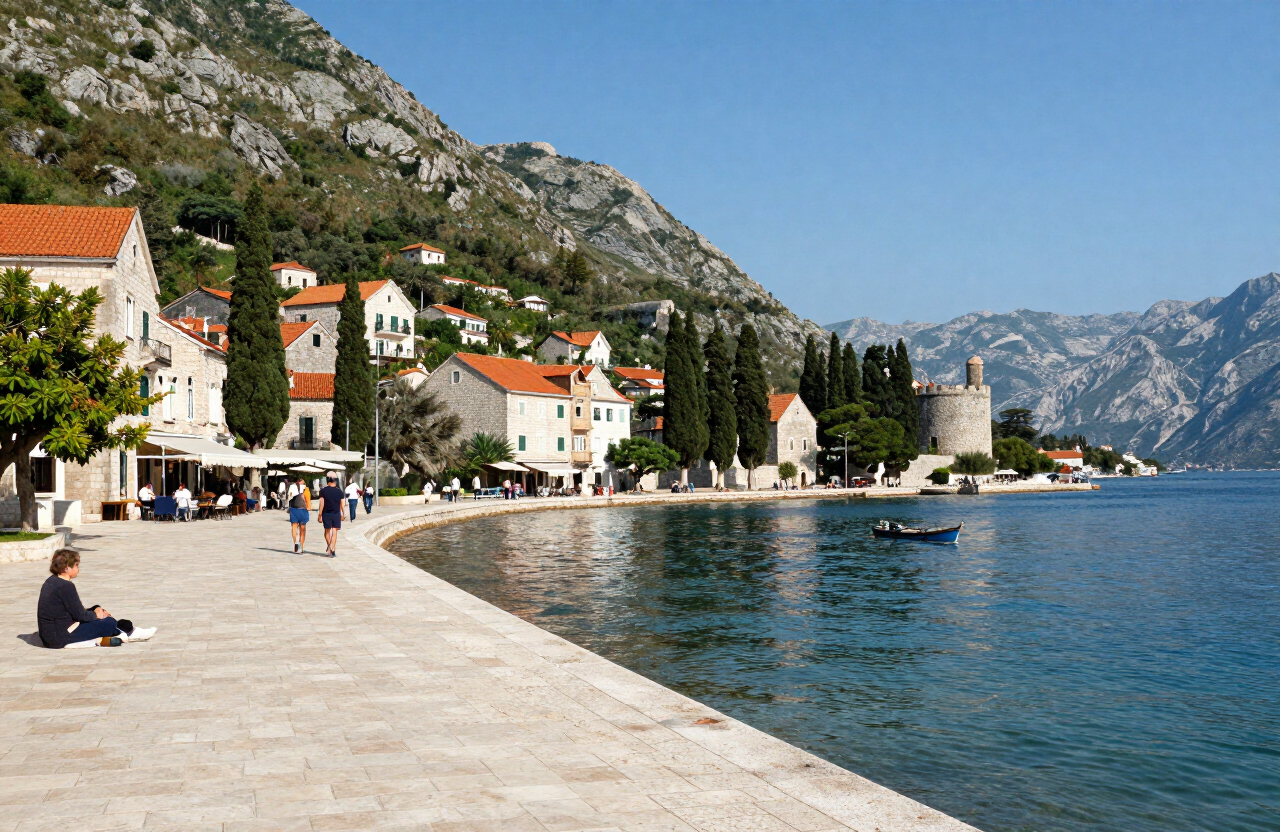
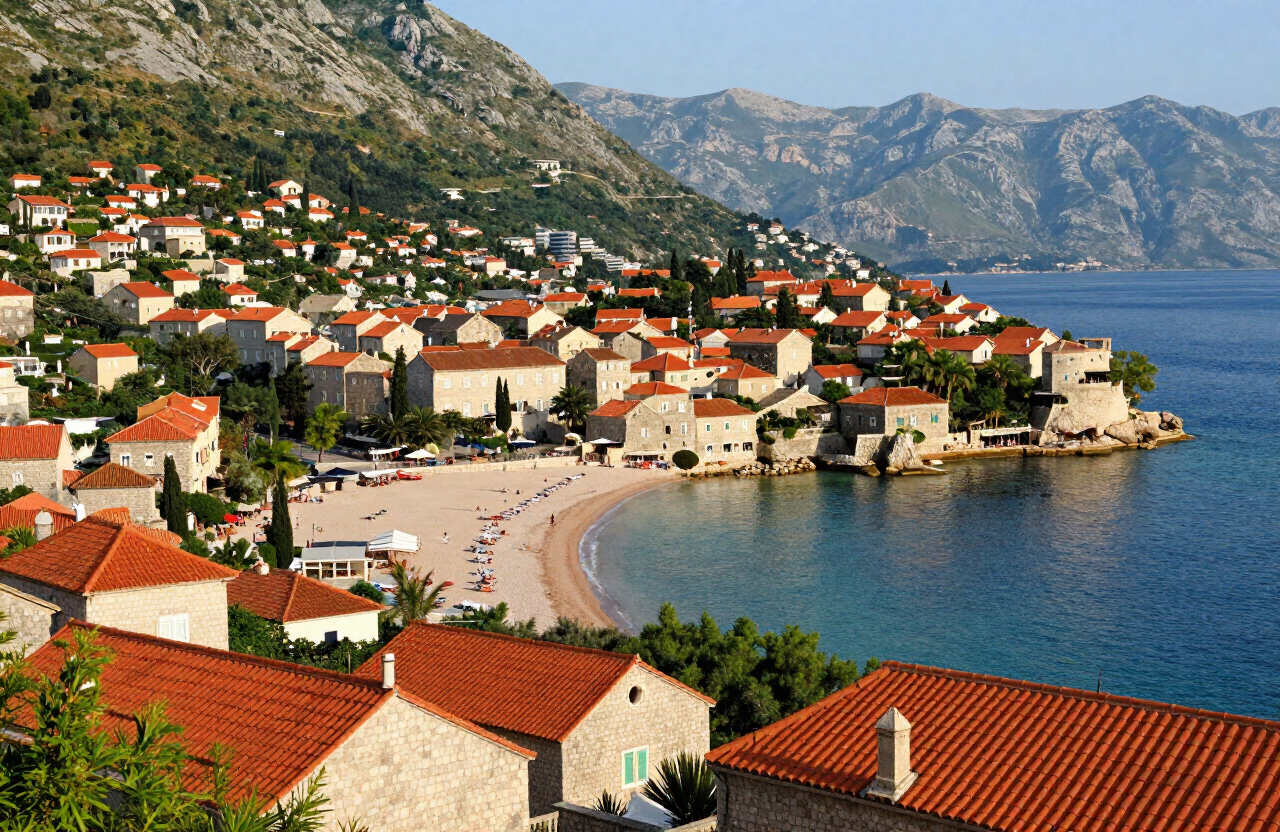
If you prefer not to take to the water, the bay can still be read from the shore. The road that runs around its basins gives the full shoreline drive of mountains dropping straight into the sea, the Verige strait is crossed by a car ferry, and the waterfront in Kotor itself is the place to watch the light move across the limestone walls as the afternoon turns. The water-level understanding that a boat cruise gives is the deeper experience, but the bay is visible from the town in every direction, and a shore-side afternoon is a fair alternative for visitors who would rather not board a boat.
GETTING AROUND
The whole route is on foot and on the water. The old town is compact and pedestrianised, the wall-climb entrance is behind it near the River Gate, and the boat cruise departs from the Kotor quay a short walk from the Sea Gate — no transport is needed once you are in the centre. The old town’s limestone lanes are worn smooth and become very slippery when wet, so shoes with grip matter more than anything else you carry.
EAT & DRINK
Eat a light breakfast before the wall climb, at your accommodation or a café near the Sea Gate — the ascent is best done on a cool, empty stomach. Plan lunch in the old town after the cathedral and the Maritime Museum, before the boat cruise: the town’s eateries include Galion, seafood beside the old town walls, and Tanja, traditional Montenegrin dishes near the river gate. After the cruise, the waterfront and the old town stay open into the evening; eat after you return to shore rather than rushing away from it.
SEASONAL NOTES
When to go
April to June and September to October give the most comfortable walking weather, the sharpest light on the stone and far fewer crowds than high summer. July and August bring cruise-ship crowds and heat — on ship days the old town is busiest from late morning to mid-afternoon, so keep the climb and the old-town wander to the early and late hours and treat the slowest part of the day as a shaded pause or the boat cruise. The wall climb must start early in the warmer months: the steps are exposed and the midday heat is the main difficulty. Daylight varies widely through the year, so check the sunrise and sunset times for the day you visit rather than relying on fixed hours, and carry a phone torch if you descend from the fortress or return from the cruise after dark.
PRACTICAL INFORMATION
Before you go
THROUGH THE LENS
From the road
THE ROUTE ON THE MAP
Stops on the map
ATTRACTIONS ON THIS ROUTE
Sights on the way

EXPERIENCES ON THIS ROUTE
Things to do along the route
FOOD & DRINK
Where to eat nearby
Galion — seafood beside the old town walls
Tanja — traditional Montenegrin dishes near the river gate
Old Town konobas — seafood, grilled fish and Montenegrin dishes in the lanes around the cathedral
HOTELS & STAYS
Where to stay nearby
Hotel Astoria — boutique rooms inside the old town
Hostel Old Town — a budget base steps from the walls
Dobrota waterfront stays — quieter rooms and apartments within walking distance or a short local ride of the old town
NEARBY DESTINATIONS
Continue the journey
INTERESTS
Explore by what you love
ROUTES
Routes through here
Kotor Serpentine Panorama — Old Town to Horizont Viewpoint
A careful scenic climb up the historic Kotor–Cetinje serpentine road from Kotor Old Town to the lower panorama point and the higher Horizont viewpoint, with widening views over the bay, Muo, Prčanj and the surrounding mountains.
1 days · challenging
VIEW ROUTEBay of Kotor Heritage Circuit — Kotor, Perast, Herceg Novi and Luštica
A two-day heritage road-trip around the Bay of Kotor — from Kotor Old Town along the northern shore to Perast and Herceg Novi, then back through Tivat and onto the Luštica peninsula toward Rose.
2 days · moderate
VIEW ROUTEPART OF
Keep exploring
The atlas goes on — more attractions, destinations and stories from every corner of the world.