Landmark
Budva Old Town
Budva · Budva & Central Coast
QUICK INFORMATION
- CATEGORY
- Landmark
- COUNTRY
- Montenegro
- REGION
- Budva · Budva & Central Coast
- DURATION
- 1–2 days
ABOUT THIS ATTRACTION
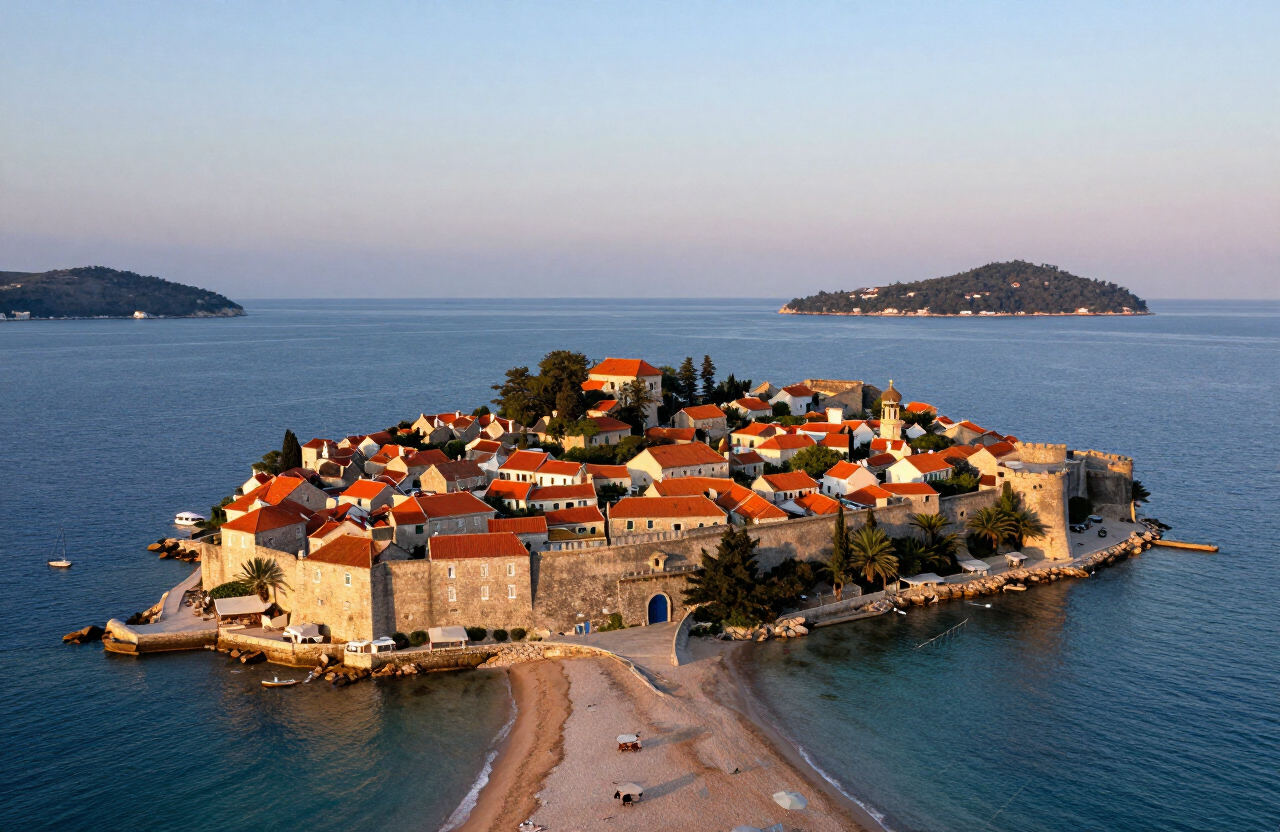
The old town of Budva sits on a small peninsula joined to the mainland by a sandy isthmus, with beaches curving around it on both sides. Inside the Venetian walls it is a compact grid of narrow lanes, stone squares and churches — the 15th-century Church of St John with its tall bell tower, the citadel above the sea, and a cluster of smaller churches and stone houses. It is one of the oldest settlements on the Adriatic, and although the modern resort has grown up around it, the walled peninsula keeps its medieval scale and its stone. The 1979 earthquake badly damaged the old town, and it was rebuilt largely to its original form, so what you see today is a careful restoration rather than a fossil.
HISTORY & BACKGROUND
The story behind it
Budva is one of the oldest towns on the Adriatic, founded as a Greek colony in the 4th century BC and later Roman, Byzantine, Serbian and Venetian. The old town on its peninsula was fortified over many centuries, with the present walls and gates largely dating from the Venetian period. The 1979 earthquake, centred on the Montenegrin coast, badly damaged the old town’s churches and walls, and a long reconstruction returned them to their pre-quake form. In the 20th century Budva grew from a small fortified town into Montenegro’s principal seaside resort, with the modern city spreading along the coast on either side of the old peninsula.
WHAT TO SEE
What to see here
The Venetian walls and gates — the stone curtain that encloses the peninsula, with the Sea Gate and the main square inside.
The Church of St John (Sveti Ivan) — a 15th-century church with a tall bell tower that is the old town’s most visible landmark.
The citadel — the fortress above the sea at the peninsula’s tip, now used for exhibitions and giving a view over the coast.
The smaller churches — Santa Marija in Punta, a 9th-century church, and the Holy Trinity church, among others packed into the small grid.
WHY IT MATTERS
Why it matters
Budva’s old town is the historic core of Montenegro’s busiest resort, and the reason the resort is here at all — a fortified peninsula with beaches on both sides is a rare combination on the Adriatic. For a visitor it is the quiet, stone counterweight to the modern resort around it: walk through the gates and the scale drops to medieval lanes and church towers, a few steps from the beach crowds.
PRACTICAL INFORMATION
Before you go
THROUGH THE LENS
From the road
MAP & LOCATION
Budva Old Town
Budva Old Town, Budva, Budva & Central Coast, Montenegro
42.2786, 18.8371
MORE ATTRACTIONS
More to see in Budva


THINGS TO DO
Things to do nearby
FOOD & DRINK
Where to eat nearby
Jadran — seafood beside the old town walls
Olimp — Mediterranean dining near the marina
Old Town konobas — seafood, grilled fish and Montenegrin dishes in the lanes around the old town
HOTELS & STAYS
Where to stay nearby
Hotel Avala — on a cliff above the old town and beach
Hostel Montenegro — a budget base near the old town
Budva waterfront apartments — quieter rooms and apartments within walking distance or a short local ride of the old town
NEARBY DESTINATIONS
Continue the journey



ROUTES
Routes through here
Budva Riviera Scenic Road — Old Town to Buljarica
A careful one-day scenic run along Montenegro's central coast from Budva Old Town, via Pržno and the Sveti Stefan islet, the Reževići monastery and Petrovac's harbour, to the long beach and coastal plain of Buljarica.
1 days · moderate
VIEW ROUTEPaštrovići Heritage Circuit — Budva, Praskvica, Reževići and Gradište
A realistic two-day heritage road-trip through the Paštrovići coast and its monastery landscape — Budva and the northern sites on Day 1, Reževići, Gradište and Buljarica on Day 2.
2 days · moderate
VIEW ROUTEPART OF
Keep exploring
The atlas goes on — more attractions, destinations and stories from every corner of the world.