THINGS TO DO
Ascend to Trsat for the Gulf View
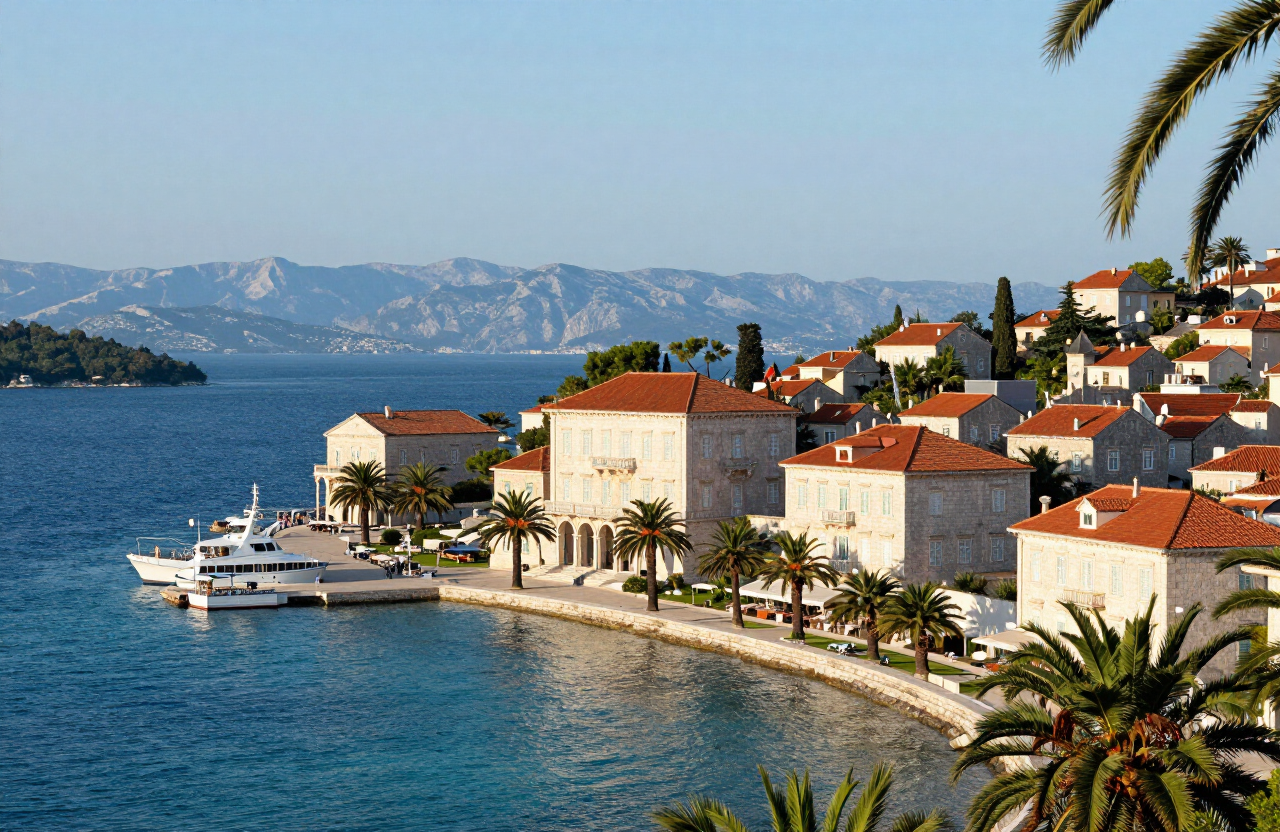
Ascend the Trsat steps or ride up to the castle for the panorama over the city, the harbour and the Kvarner Gulf.
Cities & Culture
Croatia’s principal port and a former European Capital of Culture on the Kvarner Gulf.
Rijeka is Croatia’s third-largest city and its largest port, a working harbour on the Kvarner Gulf with a layered Habsburg, Hungarian and Italian history. Beyond the port it holds a medieval castle above the river, a grand theatre, a lively Korzo promenade and the shrine of Trsat on the hill — and it was a European Capital of Culture in 2020. It is the practical gateway to the Kvarner islands of Krk, Cres and Lošinj, and to the Habsburg Riviera of Opatija just along the coast.
MAP & LOCATION
THROUGH THE LENS
HISTORY & CULTURE
Rijeka grew as a Habsburg free port under joint Austrian and Hungarian influence, and its Italian-speaking Fiume period and the brief D’Annunzio occupation of 1919 are part of its layered identity. After World War II it was joined to Yugoslavia, and it became Croatia’s principal port after independence. The 2020 European Capital of Culture year left a legacy of restored venues and a renewed cultural life in the city centre.
TOP THINGS TO DO
TOP ATTRACTIONS
FOOD & DRINK
Konoba Na Kantunu — harbour-side cooking
Rijeka’s Korzo cafés and bakeries
HOTELS & STAYS
Hotel Continental — central grand hotel
Boutique hotels near the Korzo
ITINERARIES
NATURE & WILDLIFE
Rijeka’s nature is the gulf. The Kvarner Gulf opens in front of the city, with the islands of Krk, Cres and Lošinj across the water, and the Rječina river gorge cuts up behind Trsat into the hills. The Učka Nature Park rises to the west above Opatija, and the coastal path toward Opatija is the greenest walk within reach of the city. Dolphins are occasionally seen in the gulf, and the ferry crossings to the islands are the easiest way to be out on the water.
PLAN YOUR VISIT
Rijeka has its own airport on the island of Krk (connected by the Krk bridge), with seasonal European flights. By car it is about 2 hours from Zagreb via the A6 motorway. Direct buses run from Zagreb, Pula, Zadar and Trieste, and the ferry terminal connects to the Kvarner islands.
The centre is walkable; Trsat is a climb or a short bus ride. Buses and the Krk bridge connect to the islands; Opatija is 15 minutes along the coast by bus or car.
One day covers Trsat, the Korzo and the harbour. A second day is best used for Opatija or a trip to Krk.
Spring and autumn for comfortable city walking; summer for the islands and the coast.
WEATHER
Forecast data from Open-Meteo. Updated regularly.
TRAVEL GUIDES · STORIES
More here soon — the road is still being mapped.
NEARBY DESTINATIONS
INTERESTS
REGIONS
COUNTRIES
MORE TO EXPLORE
The atlas goes on — more destinations, stories and road trips from every corner of the world.