QUICK INFORMATION
- DURATION
- 1 day
- COUNTRY
- Bosnia & Herzegovina
- REGION
- Blagaj · Herzegovina
- CATEGORY
- History & Heritage
ABOUT THIS ITINERARY
Blagaj compresses the themes of Herzegovina — water, karst, Ottoman faith and medieval power — into a single compact site beside the Buna, and one unhurried day is the ideal way to read it. This itinerary follows the geography of the ensemble from the lower reach of the river up to the fortress on the hill: it begins at the Karađoz-beg Bridge below the spring, moves to the Buna spring and the Blagaj tekija at the foot of the cliff, pauses on the riverbank for the classic photograph, and finishes with the steep climb to the ruins of Stjepan-grad above. The riverbank visit is gentle and flat; the fortress climb is steep, exposed and uneven — the two are clearly different undertakings, and the climb is best taken later in the day, out of the midday sun.
OVERVIEW
The route at a glance
The day moves from the lower river to the hilltop. You begin at the Karađoz-beg Bridge, the multi-arched Ottoman stone bridge on the lower reach of the Buna, built before its first documented mention in Karađoz-beg’s 1570 endowment deed. From there the route moves up to the Buna spring, the major karst resurgence where the river emerges from the cliff, and to the Blagaj tekija beside it, the Dervish monastery established around 1520. A riverbank pause gives the classic photograph of the tekija against the cliff from across the Buna, and a long Bosnian coffee is the natural midday rest. The afternoon is the fortress: the steep, exposed climb to the ruins of Stjepan-grad, the medieval Kosača seat, for the panorama over the Buna valley and the Neretva plain.
The times are guidance, not a schedule. The fortress climb is steep, exposed and uneven, with loose stone and little shade, so it is best taken in the cooler hours; shift the order to keep it out of the midday sun. The tekija is an active place of worship — dress modestly and be respectful of prayer.
THE SCHEDULE
Day by day
Blagaj in One Day
A lower-river-to-fortress route — the Karađoz-beg Bridge, the Buna spring, the tekija, a riverbank pause, and the steep climb to Stjepan-grad.
- Morning
Karađoz-beg Bridge
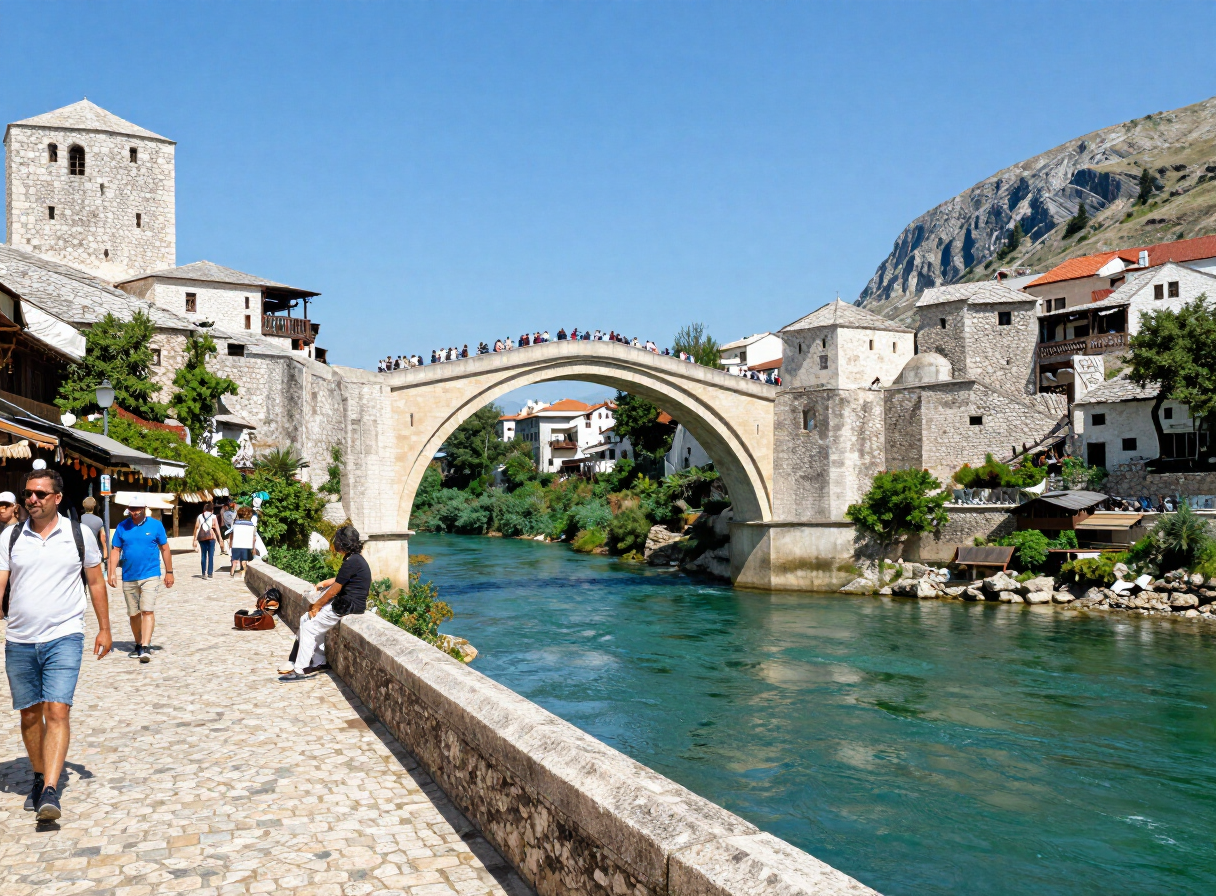
45 minBegin at the Karađoz-beg Bridge, the multi-arched Ottoman stone bridge on the lower reach of the Buna below the spring. It was built before its first documented mention in Karađoz-beg’s 1570 endowment deed — the precise year is not recorded, so do not expect a fixed date on a plaque. Cross it on foot for the view up the Buna toward the cliff, and read the dressed limestone of the Ottoman bridge-building tradition. The bridge is a public crossing, open at all hours, and the lower anchor of the ensemble.
- Late morning
Buna Spring (Vrelo Bune)
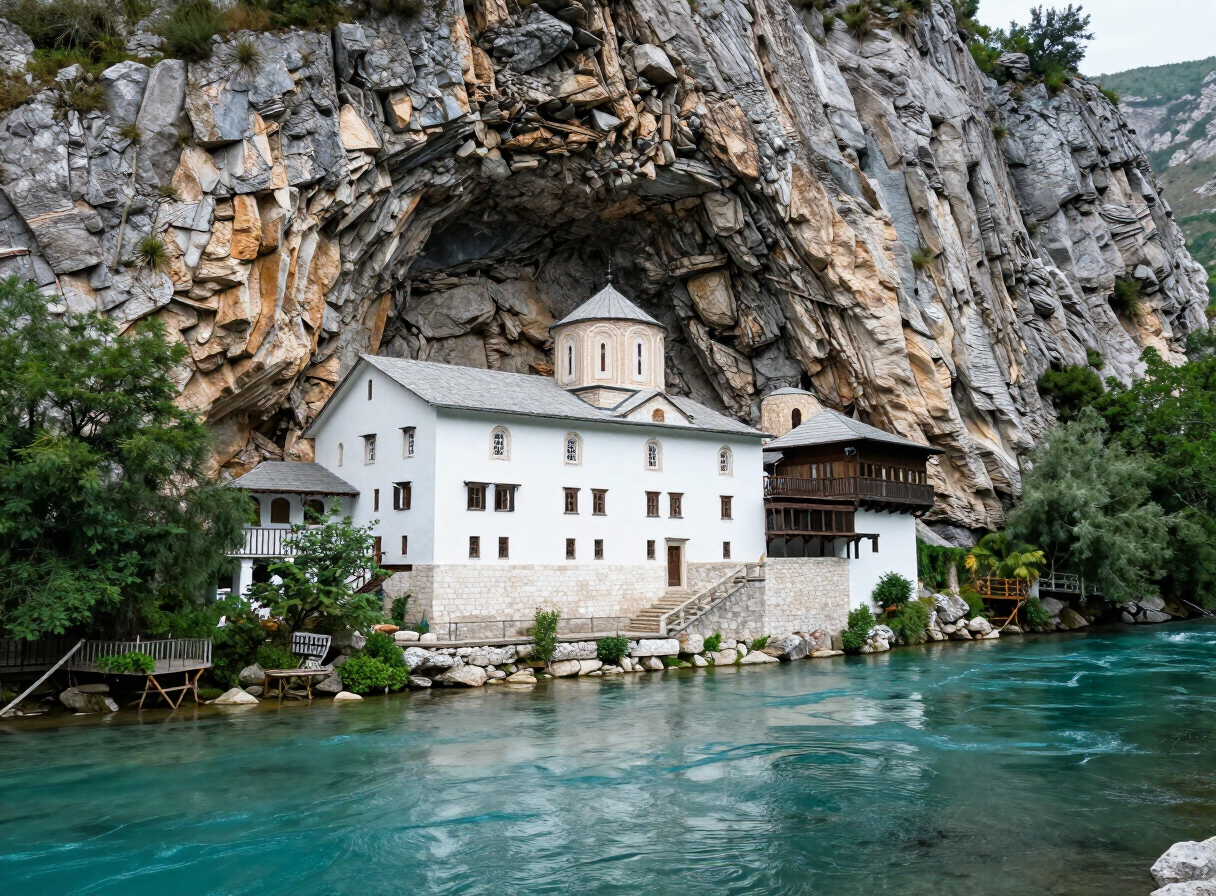
45 minMove up to the Buna spring, the major karst resurgence where the river emerges in full flow from a cavern at the base of the sheer limestone cliff. The sight of a substantial river appearing at once from the rock is the reason Blagaj sits here. View it from the riverbank beside the tekija, where the cliff rises above the water; the flow is fullest in spring after snowmelt and rain. The banks can be damp and uneven, so shoes with grip matter.
- Late morning
Blagaj Tekija
1 hourStep into the Blagaj tekija, the Dervish monastery built into the cliff at the spring, established around 1520 and combining Ottoman and Mediterranean architectural elements. Walk its stone-and-wood interior, its wooden galleries and the turba traditionally connected to Sari Saltuk. It is an active place of worship — dress modestly (shoulders and knees covered, scarves provided), remove shoes where asked, and be respectful of prayer. A small entry fee is usual; check current opening times locally.
- Midday
Riverbank pause and the classic photograph
1 hourPause on the riverbank beneath the cliff for the classic view of the tekija against the limestone wall above the Buna, taken from the opposite bank. The light is best in the morning, when the cliff is lit and the tekija reads clearly against it. Sit for a long Bosnian coffee in the shade before the fortress climb — the riverbank is the coolest place in the Blagaj heat, and the natural midday rest.
- Afternoon
Stjepan-grad Fortress
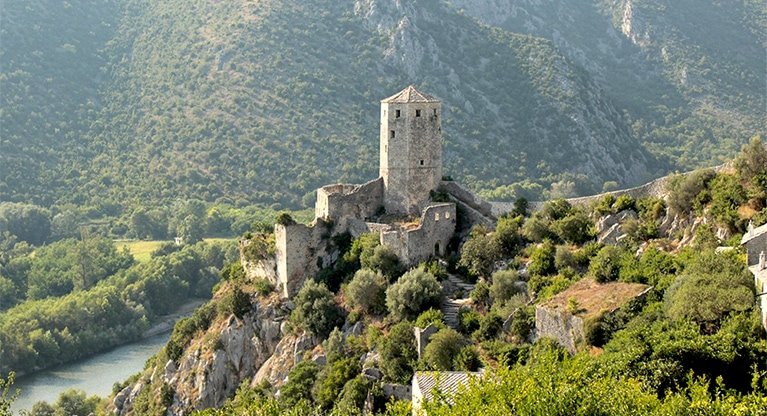
1.5–2 hoursTake the steep, exposed and uneven climb to the ruins of Stjepan-grad on the hilltop above Blagaj, the medieval fortified seat associated with the Kosača lords and the capital of Herzegovina under Stjepan Vukčić Kosača in the 15th century. The ascent is short but steep, on loose stone with little shade; the ruins at the top — walls, towers and building outlines — are open-air and unmaintained in places. The reward is the panorama over the Buna valley, the Neretva plain and the karst, and the sight of the tekija and the spring far below. Take it slowly, wear sturdy shoes, carry water, and keep it out of the midday heat.
GETTING AROUND
The lower part of the day — the bridge, the spring, the tekija and the riverbank — is on foot along the river path, flat and gentle. The fortress climb is a steep, exposed ascent on foot from the village. No transport is needed within the ensemble; a car is useful to reach Blagaj from Mostar and to move between the bridge and the tekija if you prefer.
EAT & DRINK
Plan a riverside lunch or a long coffee at one of the cafés by the tekija and the Buna — river trout and simple Herzegovinian fare are the local specialty, where available. Carry water for the fortress climb, especially in summer. For a wider choice of restaurants, Mostar is only a few kilometres away.
SEASONAL NOTES
When to go
Spring (April to June) gives the fullest Buna spring and the greenest valley, and is one of the most comfortable seasons for the fortress climb. September and October are similarly mild. Summer days are hot with little shade on the climb — keep the fortress ascent for the morning or the late afternoon, and treat the slowest hours around midday as a riverbank-and-coffee pause. Winter is quiet and the cliff is at its most atmospheric, though some facilities may be reduced. Daylight varies widely through the year, so check the sunset time for the day you visit before planning the fortress climb.
PRACTICAL INFORMATION
Before you go
THE ROUTE ON THE MAP
Stops on the map
ATTRACTIONS ON THIS ROUTE
Sights on the way

FOOD & DRINK
Where to eat nearby
River trout and other fresh fish from the Buna, prepared simply — a specialty of the riverside kitchens of Blagaj, where available locally
Grilled meat — ćevapi, pljeskavica and mixed grills, the everyday Herzegovinian mainstay
Herzegovinian dishes — begova čorba, stuffed vegetables, pies (burek, sirnica, zeljanica) and slow-cooked stews
Bosnian coffee served the slow way, the natural pause on any visit to the tekija and the riverbank
HOTELS & STAYS
Where to stay nearby
A small number of guesthouses and restaurants with rooms around Blagaj, within walking distance of the tekija — check current options locally
Mostar, only a few kilometres away, is the practical base for a visit, with the widest range of hotels and guesthouses
Riverside accommodation along the Buna, with the spring and the tekija close at hand, where available
Private rooms and apartments for a self-catering stay, widely available in the Blagaj and Mostar area
NEARBY DESTINATIONS
Continue the journey


INTERESTS
Explore by what you love
PART OF
Keep exploring
The atlas goes on — more attractions, destinations and stories from every corner of the world.