
Walking & Heritage
Explore Kotor’s Maritime Heritage and Waterfront Walls
Kotor · Bay of Kotor
QUICK INFORMATION
- CATEGORY
- Walking & Heritage
- COUNTRY
- Montenegro
- REGION
- Kotor · Bay of Kotor
- DURATION
- 2 to 3 hours at a wandering pace, longer with a full museum visit.
- DIFFICULTY
- An easy, flat walk on worn limestone — no climbing; shoes with grip essential in wet weather.
- BEST TIME
- Year-round; early morning and late afternoon are quietest, especially on cruise-ship days.
ABOUT THIS EXPERIENCE
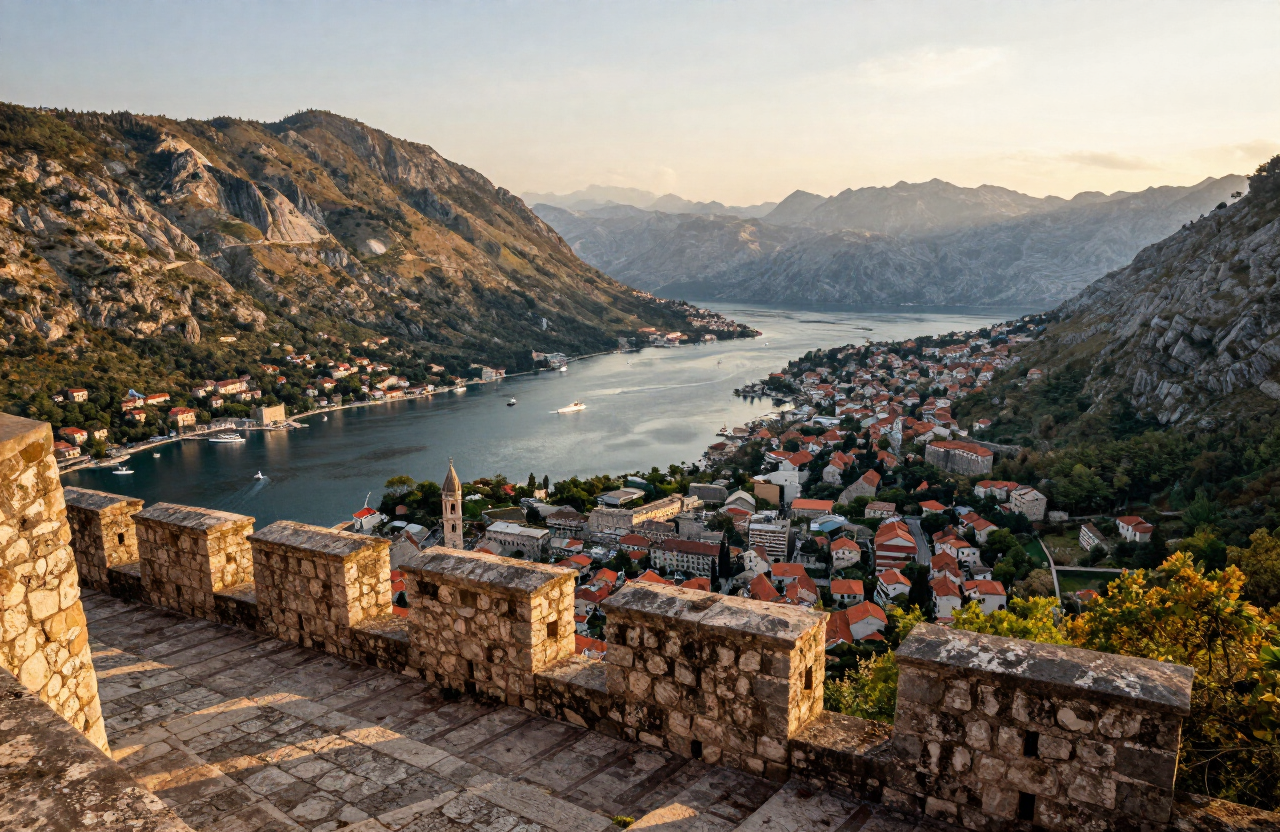
This is the walk that ties together the parts of Kotor most visitors meet only in pieces: the waterfront fortifications, the Sea Gate, the lanes and squares of the old town, and the Maritime Museum in the Grgurina Palace. It begins down at the water, at Kampana Tower where the walls meet the bay and the Škurda river, and threads the lower defensive line through the Sea Gate into the maze of the old town, ending at the Maritime Museum where the town’s seafaring story is told in the finest of its Baroque palaces. It is a street-level complement to the fortress climb above: where the wall climb gives the high view and the military scale of the fortifications, this walk gives the human and commercial side — the harbour, the gates, the merchant palaces and the museum that holds the evidence of the bay’s life on the sea.
WHAT YOU’LL EXPERIENCE
What you’ll experience
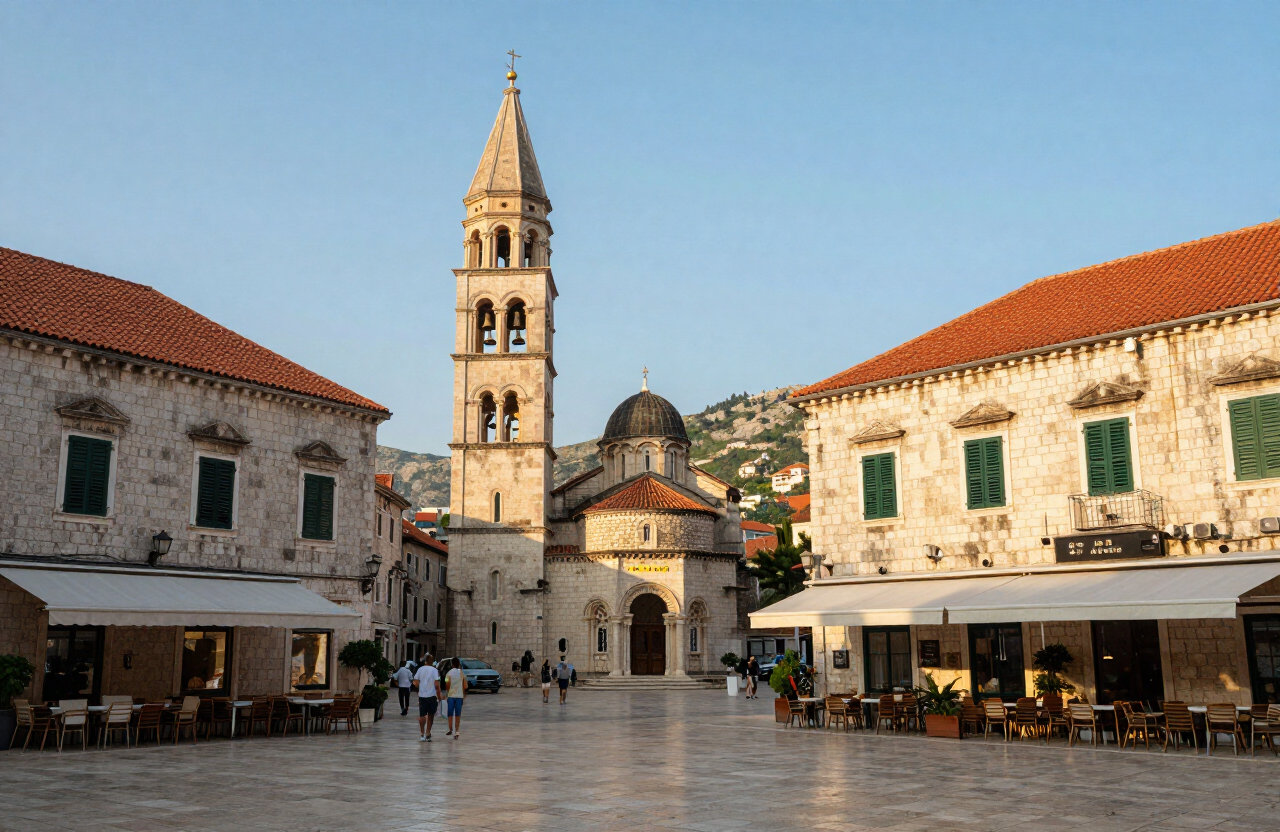
You start at the waterfront near Kampana Tower, the seaward corner of the walls where the bay meets the Škurda, and read the lower defensive line from the harbour before passing through the Sea Gate (Morska vrata) into the old town. Inside, the route winds through the lanes to Flour Square (Trg od brašna) with its row of noble palaces — Pima, Buca, Grgurina — and the near-twin St Luke’s Church and St Nicholas’ Church standing side by side. The walk ends at the Maritime Museum in the Grgurina Palace, where the Bokelian navy, the shipyards, the navigational instruments and the portraits of the bay’s captains explain how a town folded into a mountain bay became a maritime power. The whole route is on foot and within the compact old town and its waterfront.
THE EXPERIENCE IN DETAIL
What it’s really like
HIGHLIGHTS
Moments worth savouring
Kampana Tower and the waterfront walls — the seaward corner of Kotor’s defences where the bay meets the Škurda river, the lower anchor of the system that climbs to San Giovanni.
The Sea Gate (Morska vrata) — the 1555 town gate bearing a Venetian lion, the principal arrival into the old town from the harbour.
Flour Square (Trg od brašna) and its noble palaces — the Pima, Buca and Grgurina palaces, the old town’s most coherent group of Venetian-era façades.
St Luke’s Church and St Nicholas’ Church — a 12th-century Romanesque church and a 20th-century Serbian Orthodox church standing side by side, a record of Kotor’s mixed Catholic and Orthodox history.
The Maritime Museum in the Grgurina Palace — the Bokelian navy, model ships, navigational instruments and the merchant families who ran the bay’s trade under Venice and Austria.
WHAT TO EXPECT
Good to know before you go
The walk is on foot through the pedestrian old town and along the waterfront, with no climbing beyond the gentle slopes of the lanes. The stone is worn smooth and becomes very slippery when wet, so shoes with grip matter. Outside the pedestrian core, near the harbour and the roads, there is traffic and there are crossings to manage. The Maritime Museum has controlled access — an admission fee is usual, and current opening hours, ticket prices, guided-visit availability and photography rules should be checked directly with the museum before visiting. The old town contains active religious and residential spaces, so dress modestly near churches and respect residents’ privacy in the lanes. The waterfront has open edges, and barriers around restoration areas and restricted wall sections must be respected; interior access to towers and ramparts is not guaranteed. On cruise-ship days the old town is busy from late morning to mid-afternoon, so an early or late start is quieter.
WHY IT MATTERS
Why it matters
This walk matters because it gathers the maritime and defensive threads of Kotor into a single route at street level, where most visitors otherwise meet them only as scattered sights. The fortress climb shows the military ambition of the walls; this walk shows what those walls were protecting — a harbour, a sea gate, merchant palaces and a museum full of the instruments and ships that made the bay’s living. For a visitor who has only half a day and is not climbing to San Giovanni, it is the most complete single reading of the old town and its waterfront.
PRACTICAL INFORMATION
Before you go
THROUGH THE LENS
From the road

MAP & LOCATION
Explore Kotor’s Maritime Heritage and Waterfront Walls
Explore Kotor’s Maritime Heritage and Waterfront Walls, Kotor, Bay of Kotor, Montenegro
42.4256, 18.7689
ATTRACTIONS NEARBY
Pair it with these sights

MORE EXPERIENCES
More to do in Kotor
FOOD & DRINK
Where to eat nearby
Galion — seafood beside the old town walls
Tanja — traditional Montenegrin dishes near the river gate
Old Town konobas — seafood, grilled fish and Montenegrin dishes in the lanes around the cathedral
HOTELS & STAYS
Where to stay nearby
Hotel Astoria — boutique rooms inside the old town
Hostel Old Town — a budget base steps from the walls
Dobrota waterfront stays — quieter rooms and apartments within walking distance or a short local ride of the old town
NEARBY DESTINATIONS
Continue the journey
INTERESTS
Explore by what you love
PART OF
Keep exploring
The atlas goes on — more attractions, destinations and stories from every corner of the world.