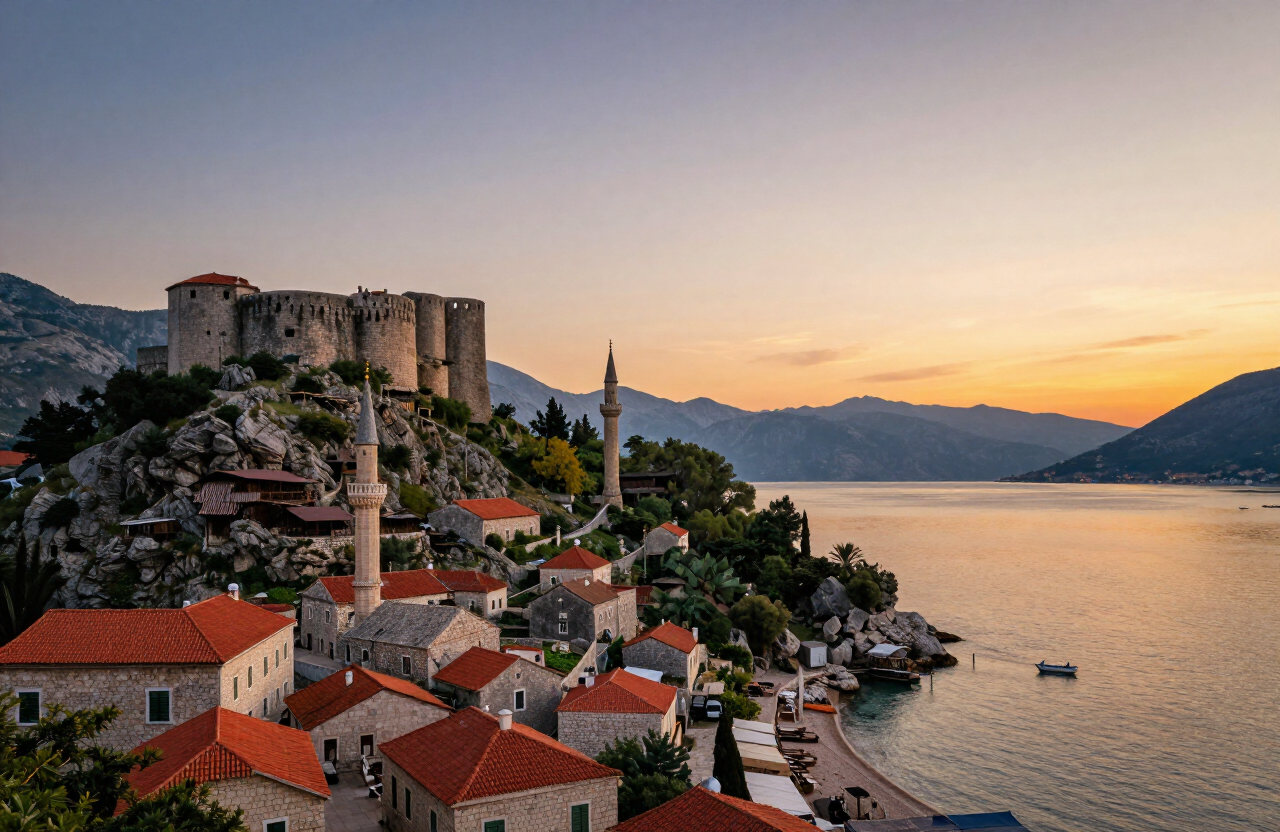
Museum and Medieval Heritage
Ulcinj Museum Complex and Balšić Tower
Ulcinj · Southern Coast & Ulcinj
QUICK INFORMATION
- CATEGORY
- Museum and Medieval Heritage
- COUNTRY
- Montenegro
- REGION
- Ulcinj · Southern Coast & Ulcinj
- DURATION
- 2–3 days
ABOUT THIS ATTRACTION
The Ulcinj Museum Complex sits inside the fortress old town on the headland, gathering several of the old town’s historic buildings into a single museum context — most notably the former church-mosque building and the Balšić Tower. It is the place where Ulcinj’s long, layered past becomes legible: a settlement founded as a Greek colony, then Roman, Byzantine, medieval Serbian and Venetian, and finally for centuries Ottoman, each phase leaving stone and structure behind. The former church-mosque is a building whose religious identity changed with the town — built as a church, later used as a mosque — and it is now part of the museum context rather than an active place of worship. The Balšić Tower, the old town’s most prominent medieval fortification, is traditionally associated with the Balšići dynasty that ruled this part of the coast in the late medieval period and later received Ottoman alterations. Together they make the museum complex the best single stop for understanding how Ulcinj became the town it is. Ulcinj Old Town is on Montenegro’s UNESCO Tentative List — it is not an inscribed UNESCO World Heritage Site, and that distinction should be kept in mind.
HISTORY & BACKGROUND
The story behind it
Ulcinj is one of the oldest settlements on the Adriatic, founded as a Greek colony named Ulcionion and later Roman, Byzantine, Serbian and Venetian before falling to the Ottomans in 1571. The headland was fortified and refortified across each of these phases, and the buildings that now form the museum complex carry the marks of several of them. The former church-mosque building reflects the town’s religious transitions: constructed as a church in an earlier Christian phase, it was converted to a mosque under Ottoman rule, a pattern common to many conquered Adriatic towns. The Balšić Tower is traditionally associated with the Balšići (Balšić) dynasty, the late-medieval lords of Zeta who held Ulcinj before the Ottoman conquest, and it later received Ottoman alterations and additions as the headland’s defences were updated. In the modern era these buildings were brought into a museum context to present the town’s archaeological, medieval, Venetian and Ottoman heritage together. Ulcinj Old Town is included on Montenegro’s UNESCO Tentative List; it is not an inscribed World Heritage Site.
WHAT TO SEE
What to see here
The former church-mosque building — a structure whose religious identity changed with the town, now part of the museum context. It should not be described as an active church or mosque.
The Balšić Tower — the old town’s principal medieval fortification, traditionally associated with the Balšići dynasty and later altered under the Ottomans.
The archaeological, medieval, Venetian and Ottoman layers — the museum complex is the place to read Ulcinj’s successive phases of settlement and rule in one setting.
The headland setting — the complex sits within the fortress old town above the sea, part of the same walled headland as the walls, the Pasha’s Mosque and the slave-market square.
WHY IT MATTERS
Why it matters
The museum complex is the single best place to understand Ulcinj as a layered town rather than only a fortress and a beach. The former church-mosque and the Balšić Tower compress centuries of religious, dynastic and military change into a short walk, and they make the town’s archaeological, medieval, Venetian and Ottoman phases legible in a way the standing walls alone cannot. For a visitor it is the interpretive key to the rest of the old town — the place that explains why the headland looks and feels the way it does. Ulcinj Old Town is on Montenegro’s UNESCO Tentative List, not an inscribed World Heritage Site.
PRACTICAL INFORMATION
Before you go
MAP & LOCATION
Ulcinj Museum Complex and Balšić Tower
Ulcinj Museum Complex and Balšić Tower, Ulcinj, Southern Coast & Ulcinj, Montenegro
MORE ATTRACTIONS
More to see in Ulcinj


FOOD & DRINK
Where to eat nearby
Konoba Liman — fish beside the old town harbour
Ada Bojana river restaurants — stilted fish restaurants on the Bojana, reached by boat or bridge
Old Town harbour cafés — seafood, grilled fish and Albanian-Montenegrin dishes along the waterfront below the walls
HOTELS & STAYS
Where to stay nearby
Hotel Palata Venezia — inside the old town walls
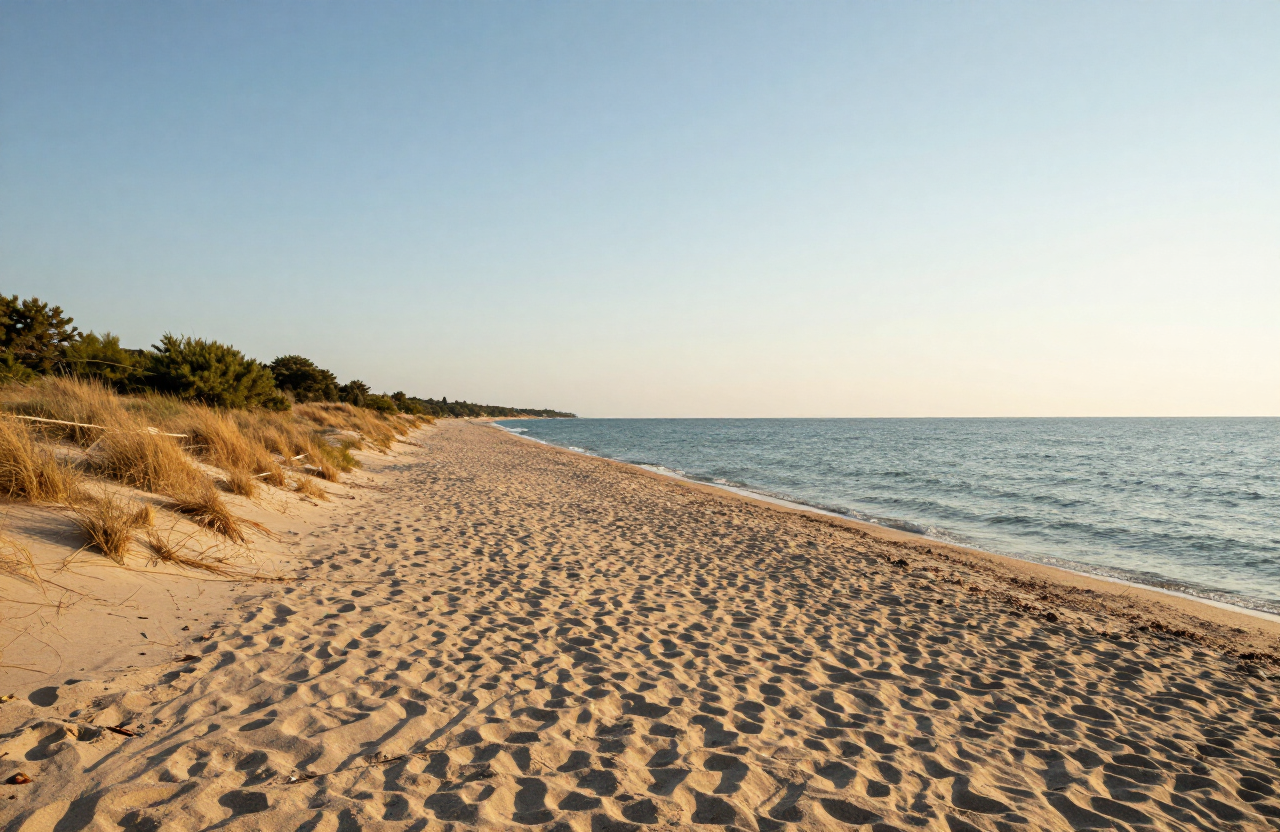
Velika Plaža beach clubs and apartments — closer to the long sandy beach south of town
Ulcinj waterfront apartments — quieter rooms and apartments within walking distance or a short local ride of the old town
ITINERARIES
Day-by-day routes
NEARBY DESTINATIONS
Continue the journey


PART OF
Keep exploring
The atlas goes on — more attractions, destinations and stories from every corner of the world.