THINGS TO DO
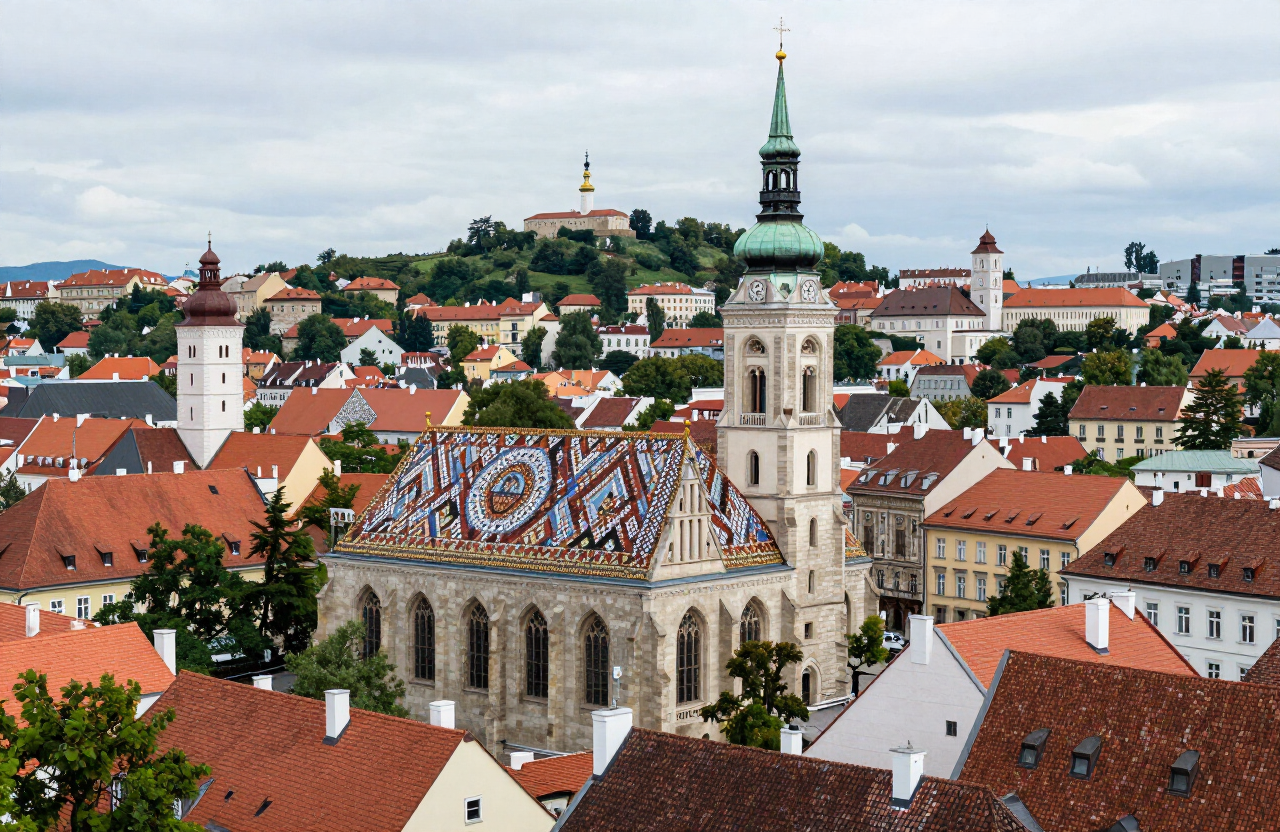
Walk the Upper Town and the Funicular
Ride the funicular up to the Upper Town and walk the medieval hills — St Mark’s, the Stone Gate and the Lotrščak Tower.
Cities & Culture
Croatia’s capital — a Central European city of spires, markets and café life.
Zagreb is Croatia’s capital and largest city, a Central European capital of green hills, church spires, outdoor markets and a slow café life that bridges the Habsburg east and the Mediterranean. The old town splits into the medieval Gradec and Kaptol hills above the Stone Gate and the cathedral, and the lower town is a grid of Habsburg squares, museums and parks. It is the cultural and political centre of the country and the natural first stop on any Croatian trip.
MAP & LOCATION
THROUGH THE LENS
HISTORY & CULTURE
Zagreb grew from two medieval hill settlements — Gradec, the craftsmen’s town, and Kaptol, the bishop’s town — that were joined in the 19th century by the lower town as Croatia’s capital under the Habsburgs. The lower town was laid out as a grid of squares and parks in the Lenuci horseshoe, and the city became the political and cultural centre of the Croatian national revival. It became the capital of independent Croatia in 1991 and is now the country’s political, cultural and economic centre.
TOP THINGS TO DO
TOP ATTRACTIONS
FOOD & DRINK
Vinodol — Croatian cooking near the centre
Tkalčićeva’s cafés and bistros
HOTELS & STAYS
Hotel Esplanade — grand hotel near the station
Boutique hotels in the lower town
ITINERARIES
NATURE & WILDLIFE
Zagreb is a green capital. The lower town is built around the Lenuci horseshoe of eight connected parks and squares, and Mount Medvednica rises directly behind the city with hiking trails, the Sljeme summit and a cable car to the top. Maksimir, the city’s great 18th-century park, holds a zoo and old oak forest, and the Sava river runs along the southern edge of the city. The hills around the capital are the wine country of Zagorje and the walking country of Samobor, both within a short drive.
PLAN YOUR VISIT
Zagreb is Croatia’s main transport hub. The airport is about 20 minutes from the centre by bus or taxi, with year-round flights across Europe. By train and bus it is connected to all the major Croatian cities and to Ljubljana, Vienna, Budapest and Belgrade. By car it is about 2 hours to Rijeka and the Kvarner, 2.5 to Plitvice and 4.5 to Dubrovnik.
The centre is walkable; trams cover the wider city and the funicular links the lower town to the Upper Town. Day trips to Samobor, Zagorje and Plitvice are easy by bus or car.
Two days cover the Upper Town, the lower-town squares, the museums and the café life. Add a day for a trip to Samobor or Zagorje.
Spring and autumn for comfortable city walking; December for the Advent market; summer is quieter as locals head for the coast.
WEATHER
Forecast data from Open-Meteo. Updated regularly.
TRAVEL GUIDES · STORIES
More here soon — the road is still being mapped.
NEARBY DESTINATIONS
INTERESTS
REGIONS
COUNTRIES
MORE TO EXPLORE
The atlas goes on — more destinations, stories and road trips from every corner of the world.