
Walking & Architecture
Walk from Baščaršija to the Austro-Hungarian centre
Sarajevo · Sarajevo & Olympic Mountains
QUICK INFORMATION
- CATEGORY
- Walking & Architecture
- COUNTRY
- Bosnia & Herzegovina
- REGION
- Sarajevo · Sarajevo & Olympic Mountains
- DURATION
- The walk itself takes about ten minutes each way; allow an hour or more with stops, coffee and looking.
- DIFFICULTY
- An easy, level walk on paved and cobbled streets — no effort or equipment required.
- BEST TIME
- Year-round, any time of day; mornings are quietest in the bazaar and late afternoons bring out the café terraces of the Habsburg streets.
ABOUT THIS EXPERIENCE
Nowhere else in Europe do two empires sit so close together. In Sarajevo you can stand in the Ottoman bazaar, among minarets, coppersmiths and 16th-century trade lanes, and see the church towers of the Austro-Hungarian city a few hundred metres to the west. The walk between them — out of Baščaršija, along Ferhadija and into the grid of Habsburg façades — takes about ten minutes at a stroll, and in that short distance the architecture, the street plan, the shopfronts and even the pace of the cafés change around you. It is the single best way to understand why Sarajevo is called the place where East meets West, and it costs nothing but attention.
WHAT YOU’LL EXPERIENCE
What you’ll experience
You start at the Sebilj in the middle of the bazaar, among cobbled lanes and the smell of coffee and grill smoke. Walking west, the lanes pass the Gazi Husrev-beg Mosque and the bezistans, and then the quarter opens onto Ferhadija — the pedestrian street that was the bazaar’s western gate and is now the seam between the two cities. Within a few minutes the cobbles give way to paving, the low Ottoman shopfronts to secessionist façades, and the first church towers appear above the roofs. Near the western edge of the old town, a marker on the pavement records the “Sarajevo meeting of cultures” — the point where, in a single step, the Ottoman city ends and the Habsburg one begins. The walk ends among the banks, patisseries and café terraces of the Austro-Hungarian centre, with the whole transition behind you in less than a quarter of an hour.
THE EXPERIENCE IN DETAIL
What it’s really like
Sarajevo’s two halves are the work of two administrations five centuries apart. The Ottomans founded the city in the 1460s and built it as they built all their towns: organically, around a bazaar, with narrow lanes, mosques, hammams and covered markets. When Austria-Hungary took over Bosnia in 1878, its administrators did the opposite: they laid a grid of straight streets west of the old town, lined them with civic buildings, churches and apartment blocks in the styles of central Europe, and gave the new city a National Museum and a City Hall.
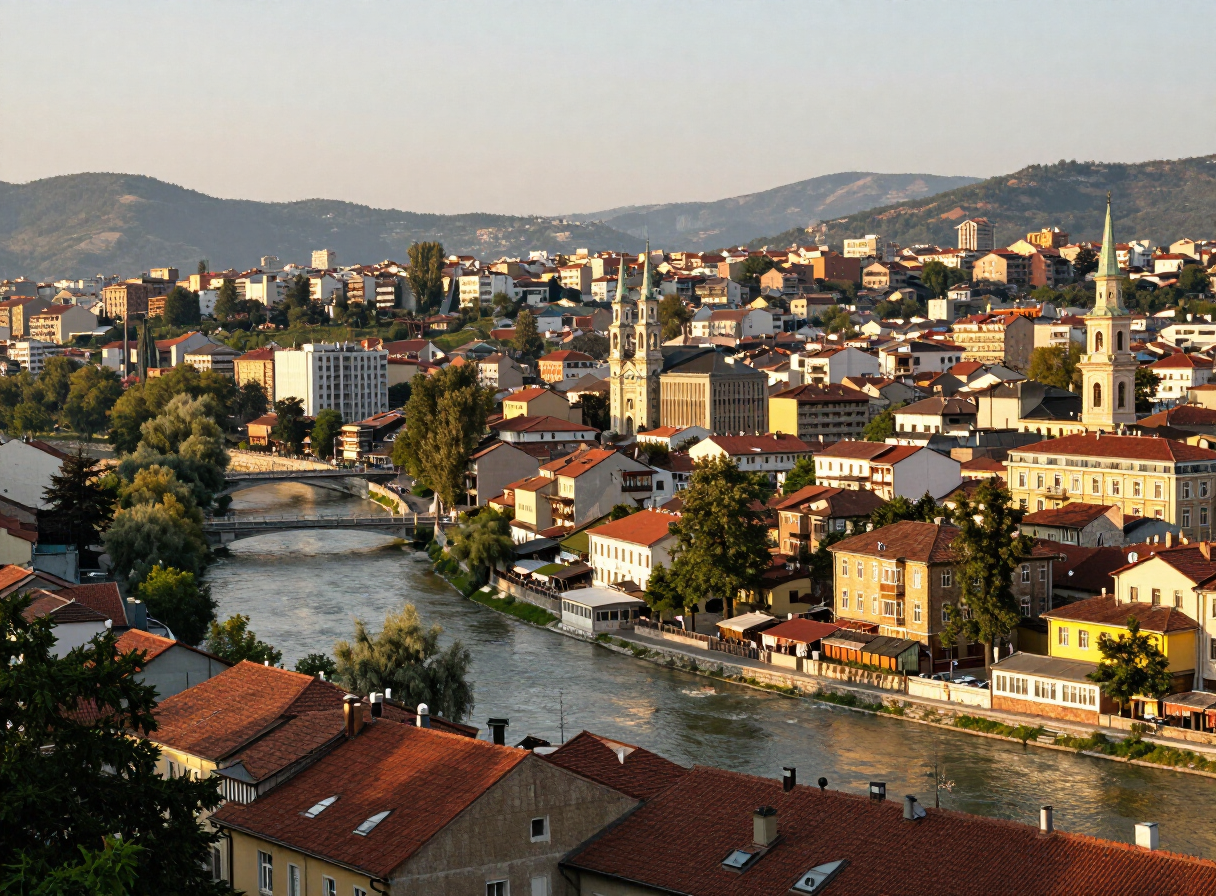
The border between the two is visible on the pavement. Near the western edge of the old town, the “Sarajevo meeting of cultures” marker on Ferhadija records the spot where, walking west, the Ottoman city becomes the Habsburg one. East of it: coppersmiths, ćevabdžinice, minarets and the Sebilj. West of it: the Orthodox cathedral and the Sacred Heart Cathedral, patisseries, pharmacies and façades that would not look out of place in Vienna. The walk between them is short, level and free, and it is the clearest single lesson in the city’s history that Sarajevo offers.
The transition is not a museum piece — both halves are living quarters. The bazaar still trades as it always has, and the Habsburg streets still hold the city’s banks, cafés and evening promenade. Walking from one to the other, and then back, is how Sarajevo is meant to be seen: not as two districts but as one city that changed empire in the middle and kept both.
HIGHLIGHTS
Moments worth savouring
A short, level walk that crosses from the Ottoman bazaar to the Austro-Hungarian city in about ten minutes — the whole “East meets West” of Sarajevo on one street.
The change of texture underfoot and overhead — cobbles to paving, minarets to church towers, low shopfronts to secessionist façades.
The “Sarajevo meeting of cultures” marker on Ferhadija — the spot where, in a single step, the Ottoman city becomes the Habsburg one.
The Orthodox cathedral and the Sacred Heart Cathedral, both within a few minutes of the old bazaar.
Ferhadija itself — the pedestrian seam between the two cities, lined with cafés, patisseries and shopfronts.
A free walk with no ticket, no guide and no fixed route — start at the Sebilj and walk west until the architecture changes.
WHAT TO EXPECT
Good to know before you go
The walk is flat, paved and short — comfortable shoes are enough, though the cobbles in the bazaar are worn and can be slippery when wet. Both halves are public streets, open at all hours and busy through the day; the bazaar is at its liveliest in the morning and around lunch, the Habsburg streets in the late afternoon and evening when the café terraces fill. There is nothing to book and nothing to pay — the experience is the street itself. Allow time to stop: a coffee in the bazaar before setting out, and a look into the cathedrals (checking their current opening arrangements locally) makes the transition read even more clearly. The whole distance is a few hundred metres, so the walk fits easily between other sights on either side of it.
WHY IT MATTERS
Why it matters
Every visitor to Sarajevo hears that the city is “where East meets West”, and this walk is what that phrase actually means. The two halves of the city are not metaphors — they are two built environments, five centuries and two empires apart, standing side by side along one street. To walk from the Sebilj to the cathedral towers and feel the city change around you in ten minutes does more to explain Sarajevo than any museum panel, and it is the one experience that makes every other sight in the city easier to place.
PRACTICAL INFORMATION
Before you go
THROUGH THE LENS
From the road


MAP & LOCATION
Walk from Baščaršija to the Austro-Hungarian centre
Walk from Baščaršija to the Austro-Hungarian centre, Sarajevo, Sarajevo & Olympic Mountains, Bosnia & Herzegovina
43.8585, 18.4270
ATTRACTIONS NEARBY
Pair it with these sights


MORE EXPERIENCES
More to do in Sarajevo


FOOD & DRINK
Where to eat nearby
Željo — the city’s most famous ćevapi, no-frills and perfect
Dveri — cosy cellar restaurant with modern Bosnian plates
Inat Kuća — traditional dishes in the defiant “House of Spite”
HOTELS & STAYS
Where to stay nearby
Hotel Europe — the grande dame, open since 1882
Isa Begov Hamam Hotel — Ottoman charm beside the river
Hostel Franz Ferdinand — stylish budget base in the centre
ITINERARIES
Day-by-day routes


INTERESTS
Explore by what you love
PART OF
Keep exploring
The atlas goes on — more attractions, destinations and stories from every corner of the world.