
Scenic & Viewpoints
Walk the Miljacka embankments at dusk
Sarajevo · Sarajevo & Olympic Mountains
QUICK INFORMATION
- CATEGORY
- Scenic & Viewpoints
- COUNTRY
- Bosnia & Herzegovina
- REGION
- Sarajevo · Sarajevo & Olympic Mountains
- DURATION
- Allow 45 minutes to an hour or more — most of it walking and watching the light. The walk can be as short or long as you like.
- DIFFICULTY
- An easy, flat paved walk along the river — no effort or equipment required.
- BEST TIME
- Year-round, in the last hour before sunset. Clear or partly cloudy evenings give the strongest colour; check the local sunset time for the day.
ABOUT THIS EXPERIENCE
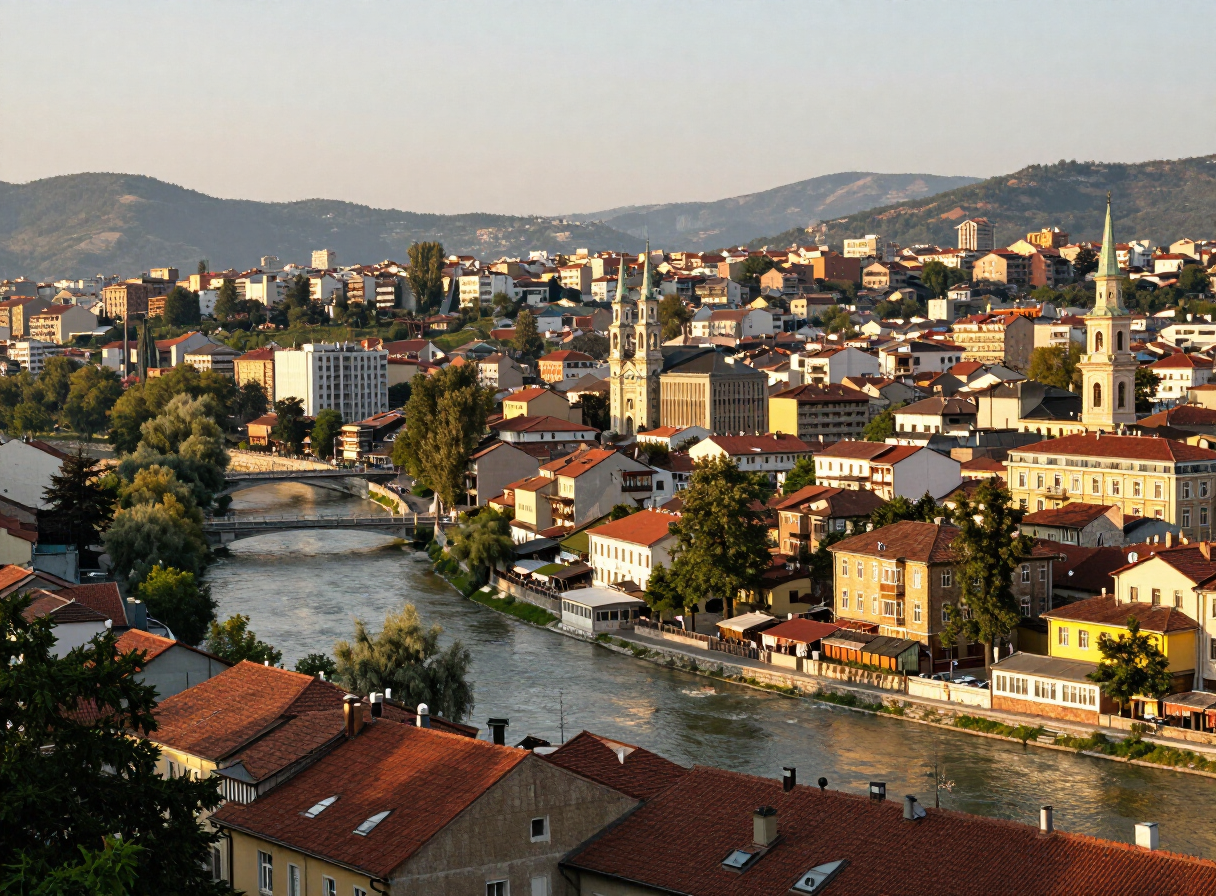
The Miljacka is the river that runs through the middle of Sarajevo, and its embankments are the city’s most natural evening walk. From the old town westward, a chain of bridges — Ottoman, Austro-Hungarian, modern — crosses the water between minarets on one bank and Habsburg façades on the other, and as the sun drops the stone warms, the river darkens, and the city settles into its evening light. Walking the Miljacka at dusk is the simplest way to see Sarajevo as a single composition: a valley city stretched along its river, with the mountains closing the skyline at either end.
WHAT YOU’LL EXPERIENCE
What you’ll experience
You start near the old town — around the Latin Bridge or further east toward Baščaršija — and walk west along either embankment as the afternoon softens. The river is narrow and quick, lined with stone walls and crossed every few hundred metres by a bridge of a different era: the Ottoman Latin Bridge, the Austro-Hungarian bridges, the modern footbridges. On the south bank the minarets and rooftops of the old town rise; on the north bank the disciplined façades of the Austro-Hungarian centre face them across the water. As the light drops the stone of the bridges and buildings warms in colour, the river reflects the sky, and the street lamps and bridge lights come on. You can walk as far as you like and turn back, or cross and return on the other bank. There is nothing to queue for and nothing to buy — it is a walk and a looking.
THE EXPERIENCE IN DETAIL
What it’s really like
The Miljacka rises in the mountains east of Sarajevo and flows westward through the narrow valley in which the city was built, joining the Bosna further downstream. It is not a broad river — in the city centre it is a fast, shallow stream confined between stone embankments — but it is the axis the city was built along, and almost every period of Sarajevo’s history left a bridge across it. The result is a riverside walk that reads like a timeline: Ottoman stone arches beside Austro-Hungarian iron and concrete, with the minarets of the old town to the east and the civic buildings of the Habsburg centre to the west.
What makes the embankments work at dusk is the light and the geometry of the valley. Sarajevo sits in a narrow east–west corridor between hills, so the late sun drops behind the western end of the city and sends low, warm light along the river, catching the stone of the bridges and the facades while the river surface darkens. The minarets and church towers that share the skyline are silhouetted against the sky, and the contrast between the warm stone and the darkening water is the image most visitors carry away. As the light goes, the bridge lamps and the riverside cafés come on, and the walk shifts from a viewpoint to an evening promenade.
The experience is distinct from visiting any single sight on the river. The Latin Bridge, the Sebilj and Vijećnica each sit on the Miljacka, but the embankment walk is the way to see how they connect — how the Ottoman east and the Habsburg west face each other across the water, and how the whole city is held in its valley. It costs nothing, needs no plan, and is available every evening of the year.
HIGHLIGHTS
Moments worth savouring
A riverside walk along the Miljacka, the river Sarajevo was built along, with bridges from every era of the city’s history.
Ottoman stone arches beside Austro-Hungarian iron and modern footbridges — a timeline of the city read in a single walk.
The late light sends warm colour along the stone while the river darkens, with minarets and church towers silhouetted on the skyline.
The minarets of the old town on one bank and the Habsburg façades of the centre on the other, facing each other across the water.
A free, unplanned evening walk available every day of the year — nothing to queue for and nothing to buy.
The simplest way to see Sarajevo as a single composition: a valley city stretched along its river between its mountains.
WHAT TO EXPECT
Good to know before you go
The embankments are public walkways open at all times; the walk is flat and easy, and you can go as far as you like and return on either bank. Around dusk the riverside is usually busy with locals walking, jogging and sitting at the cafés, but it never feels crowded. The light changes quickly in the last hour before the sun drops behind the western hills, so arriving a little early gives time to settle on a stretch before the colour peaks; after dark the bridge lamps and riverside lights come on for a second, quieter moment. Bring what you need for the walk back in the dark — a phone torch is usually enough — and check the weather, as cloud changes what the light does more than anything else. The surface is paved and level throughout.
WHY IT MATTERS
Why it matters
Sarajevo is usually visited sight by sight — the Sebilj, the Latin Bridge, Vijećnica — but the city only makes full sense as a single place when you see how its pieces sit along the river that runs through them. The Miljacka embankment walk at dusk is the way to do that: it costs nothing, needs no guide, and turns a list of monuments into one held picture of a city in its valley. For a visitor it is the calmest, most repeatable experience in Sarajevo, and the one that makes the rest of the city click into place.
PRACTICAL INFORMATION
Before you go
THROUGH THE LENS
From the road


MAP & LOCATION
Walk the Miljacka embankments at dusk
Walk the Miljacka embankments at dusk, Sarajevo, Sarajevo & Olympic Mountains, Bosnia & Herzegovina
43.8569, 18.4210
ATTRACTIONS NEARBY
Pair it with these sights


MORE EXPERIENCES
More to do in Sarajevo


FOOD & DRINK
Where to eat nearby
Željo — the city’s most famous ćevapi, no-frills and perfect
Dveri — cosy cellar restaurant with modern Bosnian plates
Inat Kuća — traditional dishes in the defiant “House of Spite”
HOTELS & STAYS
Where to stay nearby
Hotel Europe — the grande dame, open since 1882
Isa Begov Hamam Hotel — Ottoman charm beside the river
Hostel Franz Ferdinand — stylish budget base in the centre
ITINERARIES
Day-by-day routes


INTERESTS
Explore by what you love
PART OF
Keep exploring
The atlas goes on — more attractions, destinations and stories from every corner of the world.