
QUICK INFORMATION
- DURATION
- 2 days
- COUNTRY
- Bosnia & Herzegovina
- REGION
- Sarajevo · Sarajevo & Olympic Mountains
- CATEGORY
- Cities & Culture
ABOUT THIS ITINERARY
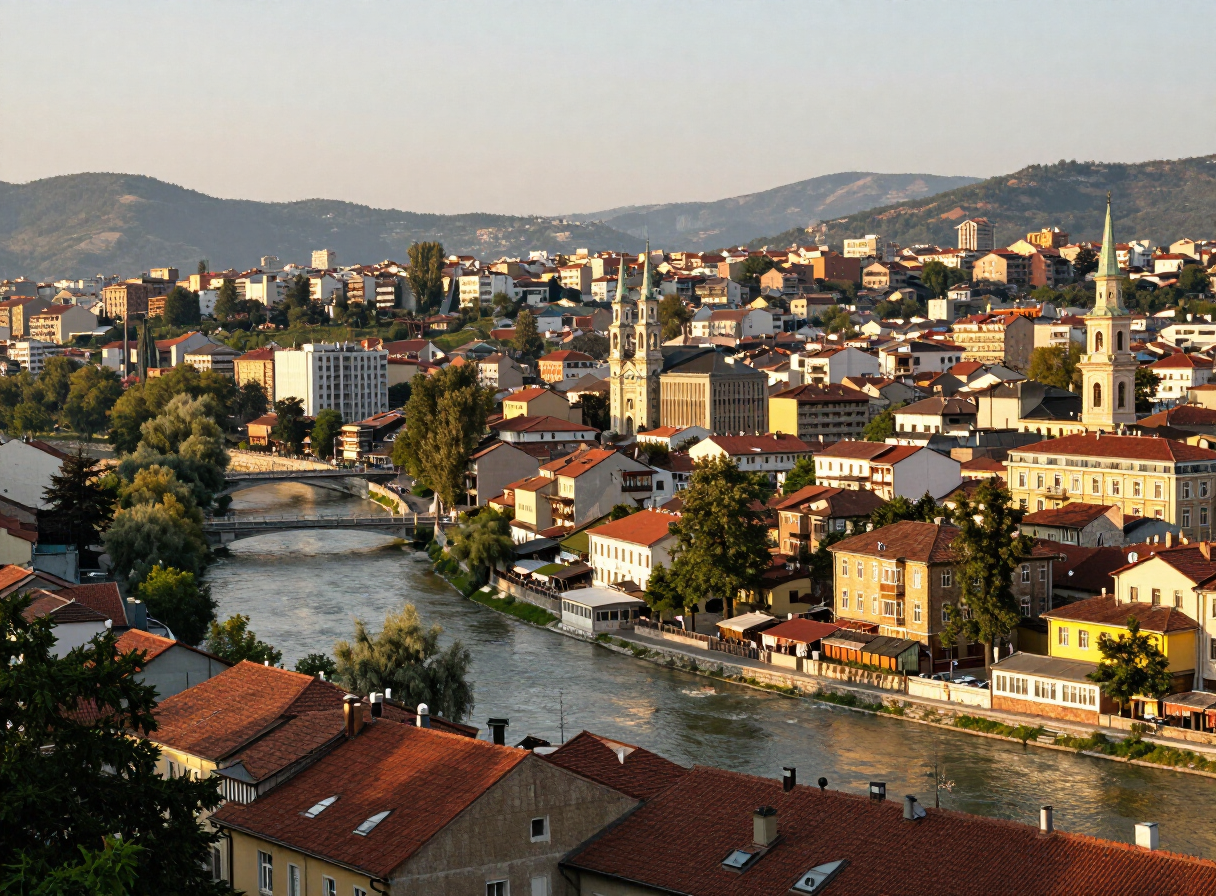
Two days is the natural length for Sarajevo. The first day belongs to the walkable strip along the Miljacka, where the Ottoman east and the Austro-Hungarian west sit a few hundred metres apart — the bazaar, the mosque, the City Hall, the bridge where the 20th century began, and the slow transition between empires. The second day slows down and widens out: the great National Museum and the small, humane War Childhood Museum in the centre, a Bosnian coffee taken the slow way, and one carefully chosen trip beyond the centre — the springs of Vrelo Bosne at the foot of the mountains, the Trebević cable car above the city, or the Tunnel of Hope near the airport. The two days are paced so nothing needs rushing, and the second day’s outer stop is deliberately conditional — it depends on transport and time, and is never presented as a walking route from the centre.
OVERVIEW
The route at a glance
Day 1 is a walking day and stays almost entirely on the flat valley floor. It begins in Baščaršija before the crowds, steps into the Gazi Husrev-beg Mosque at the quarter’s heart, follows the Miljacka to the rebuilt Vijećnica and the Latin Bridge, eats ćevapi where the queue is longest, then walks the short transition from the Ottoman bazaar into the Austro-Hungarian city — the ten minutes in which Sarajevo changes empire. The day closes at river level with the Miljacka embankments at dusk.
Day 2 is a museum and city-edge day. The National Museum’s pavilions and botanical garden take the morning; the War Childhood Museum, small and best read slowly, takes the early afternoon; a Bosnian coffee is the pause between them. The late afternoon is deliberately conditional: Vrelo Bosne, the spring park at the foot of Igman and Bjelašnica, is the outer-city option and depends on transport — the tram toward Ilidža and the Great Alley — while the Trebević cable car, rising from the edge of the old town, is the in-city alternative, and the Tunnel of Hope museum near the airport is the option for visitors who want the siege layer instead. These are marked as choices, not a route: they are not within walking distance of each other, and the day is planned so the central museums stand on their own if none of the outer options fits.
THE SCHEDULE
Day by day
The walkable historic centre
The Ottoman bazaar, the 16th-century mosque, the reborn City Hall, the 1914 bridge, ćevapi, the walk between empires and the Miljacka at dusk.
- 08:30
Begin in Baščaršija & Sebilj
45–60 minStart early, before the bazaar fills. Baščaršija is the Ottoman heart of Sarajevo — a lattice of narrow stone lanes organised by the old guild system, with the carved wooden Sebilj fountain at its centre. In the first hour the square is quiet enough to hear the coppersmiths hammering in Kazandžiluk, and the call to prayer carries over the rooftops. Wander the lanes, watch a coffee set being raised by hand, and let the bazaar orient you before the crowds arrive.
- 09:30
Gazi Husrev-beg Mosque
45 minA minute’s walk into the bazaar stands the Gazi Husrev-beg Mosque, built in 1531–32 and the spiritual centre of old Sarajevo. Step into the single-domed prayer hall with its renewed Ottoman decoration, then sit in the shaded courtyard by the šadrvan fountain. The founder’s endowments — the madrasa, the library and the clock tower — stand around it, and together they explain how the whole quarter was built. Dress modestly; scarves are provided, and the mosque closes briefly at prayer times.
- Late morning
Vijećnica — the reborn City Hall
45 minWalk a few minutes east along the Miljacka to Vijećnica, the neo-Moorish City Hall completed in 1896, burned in the 1992 shelling and rebuilt by 2014. The striped facade is best from the riverside, but the highlight is inside: the painted entrance hall and staircase, restored to their 1890s appearance, and the memorial to the library lost in the fire. It is the building that tells Sarajevo’s 20th century — Austro-Hungarian showpiece, national library, wartime ruin, patient recovery — in one place.
- Around noon
Latin Bridge — where 1914 began
30 minTurn west along the Miljacka embankment to the Latin Bridge, a low Ottoman stone arch where, on 28 June 1914, Gavrilo Princip fired the shots that killed Archduke Franz Ferdinand and set the First World War in motion. A plaque and the small Museum of the Assassination mark the corner at the bridge’s north end. The bridge is unremarkable as architecture, but standing at the corner is the most direct way to touch the hinge of modern European history.
- Lunch
Ćevapi, the slow way
45 minHead back into the bazaar for the city’s everyday dish. Find a tiny ćevabdžinica where the queue is longest, order by the piece — a half or full portion of ćevapi in a warm lepinja with raw onion and kajmak — and eat standing at the counter or on a stool while the grill smokes behind you. It is cheap, fast and the meal most locals will tell you to try first. A glass of yogurt or a Bosnian coffee is the usual accompaniment.
- Mid-afternoon
The walk between empires
60–90 minWalk the transition the day has been building toward: out of the bazaar onto Ferhadija, the pedestrian seam where — in a single step at the “Sarajevo meeting of cultures” marker — the Ottoman city becomes the Habsburg one. The cobbles give way to paving, the minarets to the towers of the Orthodox and Sacred Heart cathedrals, the low shopfronts to secessionist façades. It takes about ten minutes at a stroll and explains the city better than any museum panel; take it slowly, with a stop in a café or patisserie along the way.
- Before sunset
The Miljacka embankments at dusk
45–60 minFinish at river level. The Miljacka embankments are Sarajevo’s natural evening walk — a chain of Ottoman, Austro-Hungarian and modern bridges between minarets on one bank and Habsburg façades on the other. In the last hour before the sun drops behind the western hills the stone warms, the river darkens, and the bridge lamps come on. Walk as far as you like and return on either bank; it costs nothing and turns the day’s separate sights into one held picture of the city.
Optional stops
Yellow Fortress & Vratnik viewpoint — if your legs are willing
60–90 minConditional on energy and weather: the Yellow Fortress (Žuta tabija) crowns the Vratnik old town above the Miljacka, a steep but short climb east of the bazaar that rewards you with the clearest single overview of the city’s east–west valley. The approach is steep and the ground around the bastion is uneven, so treat it as a choice rather than a fixture — and behave respectfully around the memorial space near Kovači on the way up.
GETTING AROUND
The whole day is on foot along the flat Miljacka valley — no stop is more than a few minutes’ walk from another, and nothing needs a vehicle. Trams run along the river if you want to shorten any stretch. Only the optional Yellow Fortress climb is steep; everything else is level.
EAT & DRINK
Begin with a light breakfast at your accommodation or a café near the bazaar. Plan ćevapi in the old town for lunch, follow the walk between empires with a coffee or a patisserie stop on the Habsburg side, and eat in the evening after the Miljacka walk — the old town and the streets just west of it stay open after sunset.
Museums and the city’s edge
The National Museum, the War Childhood Museum and a Bosnian coffee in the centre, with one conditional afternoon trip — Vrelo Bosne, the Trebević cable car or the Tunnel of Hope.
- 09:30
National Museum of Bosnia and Herzegovina
2–3 hoursGive the country’s oldest museum the whole morning. Founded in 1888, it holds archaeology, ethnology and natural history in four historic pavilions around a botanical garden — the deep prehistory, the medieval kingdoms, the folk cultures and the landscape of Bosnia and Herzegovina gathered under one roof. Move slowly between the pavilions, rest in the garden, and if the Sarajevo Haggadah matters to you, confirm its current display directly with the museum before visiting rather than assuming it will be exhibited.
- 13:00
War Childhood Museum
About an hourAfter lunch, visit the small, humane War Childhood Museum — personal objects and first-person stories of childhood affected by war, presented without spectacle. It is best experienced slowly: read the story attached to each object rather than moving through quickly, and allow time to absorb it. Confirm current exhibitions and visiting arrangements directly with the museum before travelling.
- Mid-afternoon
Bosnian coffee, the slow way
45 minTake the pause the day is built around. Order a Bosnian coffee in a café in or near the bazaar — a džezva, a fildžan, a sugar lump, a glass of water — and drink it the way the city does: sitting down, unhurried, with nowhere to be. After two museums it is the right tempo for the afternoon, and it is the ritual that belongs equally to both halves of the city.
Optional stops
Vrelo Bosne — the outer-city option (conditional on transport)
Half a dayThe springs of the Bosna lie at the foot of Igman and Bjelašnica on the western edge of Sarajevo — NOT within walking distance of the centre, so treat this as a planned half-day trip, not a stop on a walking route. The usual approach is the tram toward Ilidža at the western end of the line, then the Great Alley of trees to the springs on foot or by the local rides offered along it — confirm current transport and any admission arrangements locally before setting out. Once there, the clear streams, ponds and parkland are the calmest, greenest contrast the city offers.
Trebević Cable Car — the in-city alternative
2 hoursIf you would rather stay above the city than leave it, take the cable car from the edge of the old town to the ridge of Trebević — the panorama of the whole valley, the abandoned 1984 Olympic bobsled track below the ridge, and the walking paths above. It is reachable on foot from the centre, so it is the natural alternative when transport or time rules out Vrelo Bosne. Operating hours and the last ascent vary by season and weather — check current times before going.
Tunnel of Hope — the siege-layer alternative
Half a dayIf the 20th-century thread of the two days is the one you want to complete, spend the late afternoon at the Tunnel of Hope museum in Butmir near the airport — the preserved section of the hand-dug 1993 tunnel that was besieged Sarajevo’s only link to the outside world. Like Vrelo Bosne it is outside the centre and reached by taxi or vehicle, so allow travel time each way and check current opening hours before travelling. It pairs naturally with the War Childhood Museum visited earlier in the day.
GETTING AROUND
The morning museums and the coffee pause are all in or near the centre — the National Museum is a short tram ride or walk west of the old town, and everything else is within the walkable strip. The afternoon is a CHOICE, not a route: Vrelo Bosne is reached via the tram toward Ilidža and the Great Alley; the Trebević cable car starts at the edge of the old town; the Tunnel of Hope is reached by taxi or vehicle toward the airport. The three outer options are not within walking distance of each other — pick one, and confirm current transport and access arrangements locally before setting out.
EAT & DRINK
Breakfast at your accommodation or a café near the bazaar. Lunch between the museums — the cafés and small restaurants of the central streets are close to both. Take the Bosnian coffee as the mid-afternoon ritual, and keep the evening free in the old town: after any of the afternoon options you will arrive back in the centre around or after dusk, in time for a slow dinner.
SEASONAL NOTES
When to go
May to June and September give the most comfortable walking weather for both days and the best light on the stone. July and August are warm — shift Day 1’s walk earlier and treat the middle of the day as a coffee-and-shade pause, and prefer the museums of Day 2 at midday. December to February are cold and short on daylight: the museum day carries the weight, the cable car and the Olympic mountains come into their own for snow, and the dusk walk moves earlier in the afternoon. Whatever the season, check the day’s forecast and current access to each sight directly before setting out — hours, transport and arrangements vary through the year.
PRACTICAL INFORMATION
Before you go
THROUGH THE LENS
From the road


THE ROUTE ON THE MAP
Stops on the map
ATTRACTIONS ON THIS ROUTE
Sights on the way


EXPERIENCES ON THIS ROUTE
Things to do along the route

MORE ITINERARIES
Other routes from Sarajevo
FOOD & DRINK
Where to eat nearby
Željo — the city’s most famous ćevapi, no-frills and perfect
Dveri — cosy cellar restaurant with modern Bosnian plates
Inat Kuća — traditional dishes in the defiant “House of Spite”
HOTELS & STAYS
Where to stay nearby
Hotel Europe — the grande dame, open since 1882
Isa Begov Hamam Hotel — Ottoman charm beside the river
Hostel Franz Ferdinand — stylish budget base in the centre


INTERESTS
Explore by what you love
ROUTES
Routes through here
Mostar to Sarajevo via the Neretva Canyon
A classic Balkan ride north up the Neretva canyon — river, cliffs and forest from Mostar to Sarajevo.
130 km · 3 h · moderate
VIEW ROUTEBoračko Lake Ride — Sarajevo to Boračko Jezero via Konjic
A short Herzegovina escape: from Sarajevo over the Tarčin plateau to Konjic, then up the wooded Borač valley to the glacial green amphitheatre of Boračko jezero below Prenj.
82 km
VIEW ROUTETrebević Summit from Pogledine
An out-and-back ascent from Pogledine past Trebević’s Olympic bobsleigh track and forest paths to the Sofe summit area above Sarajevo.
16 km · 5.8 h · moderate
VIEW ROUTESkakavac Waterfall Loop
A forest loop from the Skakavac protected-area entrance to the viewpoint and foot of Sarajevo’s 98-metre waterfall.
9 km · 3.9 h · moderate
VIEW ROUTEPART OF
Keep exploring
The atlas goes on — more attractions, destinations and stories from every corner of the world.