
QUICK INFORMATION
- DURATION
- 1 day
- COUNTRY
- Bosnia & Herzegovina
- REGION
- Sarajevo · Sarajevo & Olympic Mountains
- CATEGORY
- Cities & Culture
ABOUT THIS ITINERARY
Sarajevo is a city that rewards a single slow day. Almost everything that matters sits within a walkable strip along the Miljacka, where the Ottoman east meets the Austro-Hungarian west in the space of a few hundred metres. This itinerary threads the essential layers into one loop: the bazaar and its mosque, the rebuilt City Hall, the bridge where the 20th century began, a plate of ćevapi eaten where the queue is longest, a cable car to the mountain that frames the skyline, and a quiet riverside walk as the light drops. Nothing needs rushing — the times are guidance, and the day leaves room for coffee, wandering and sitting.
OVERVIEW
The route at a glance
The route follows the grain of the city rather than a checklist. You begin in Baščaršija while the cobblestones are still empty and the hammering of the coppersmiths is the loudest sound, then step into the Gazi Husrev-beg Mosque at the quarter’s heart. A short walk east along the Miljacka brings the flamboyant Vijećnica, the City Hall rebuilt after the siege; from there you turn west along the river to the Latin Bridge and the corner where the First World War began. A ćevapi lunch in the bazaar is the natural midday pause, after which the cable car lifts you from the edge of the old town to the ridge of Trebević for the panorama, the Olympic bobsled track and a breath of mountain air. The day closes back at river level, walking the Miljacka embankments as the stone warms and the bridge lamps come on.
The whole loop is on foot except the cable car, and no stop is more than a few minutes’ walk from another. Two optional stops are marked for visitors who want the siege layer — the Tunnel of Hope museum at Butmir, or a guided siege walk — but both lie outside the centre and are better saved for a second day; the core itinerary stands without them.
THE SCHEDULE
Day by day
Sarajevo in One Day
A walkable loop through the capital — Ottoman bazaar, mosque, City Hall, the 1914 bridge, ćevapi, a cable car to Trebević and a riverside dusk.
- 08:30
Begin in Baščaršija & Sebilj
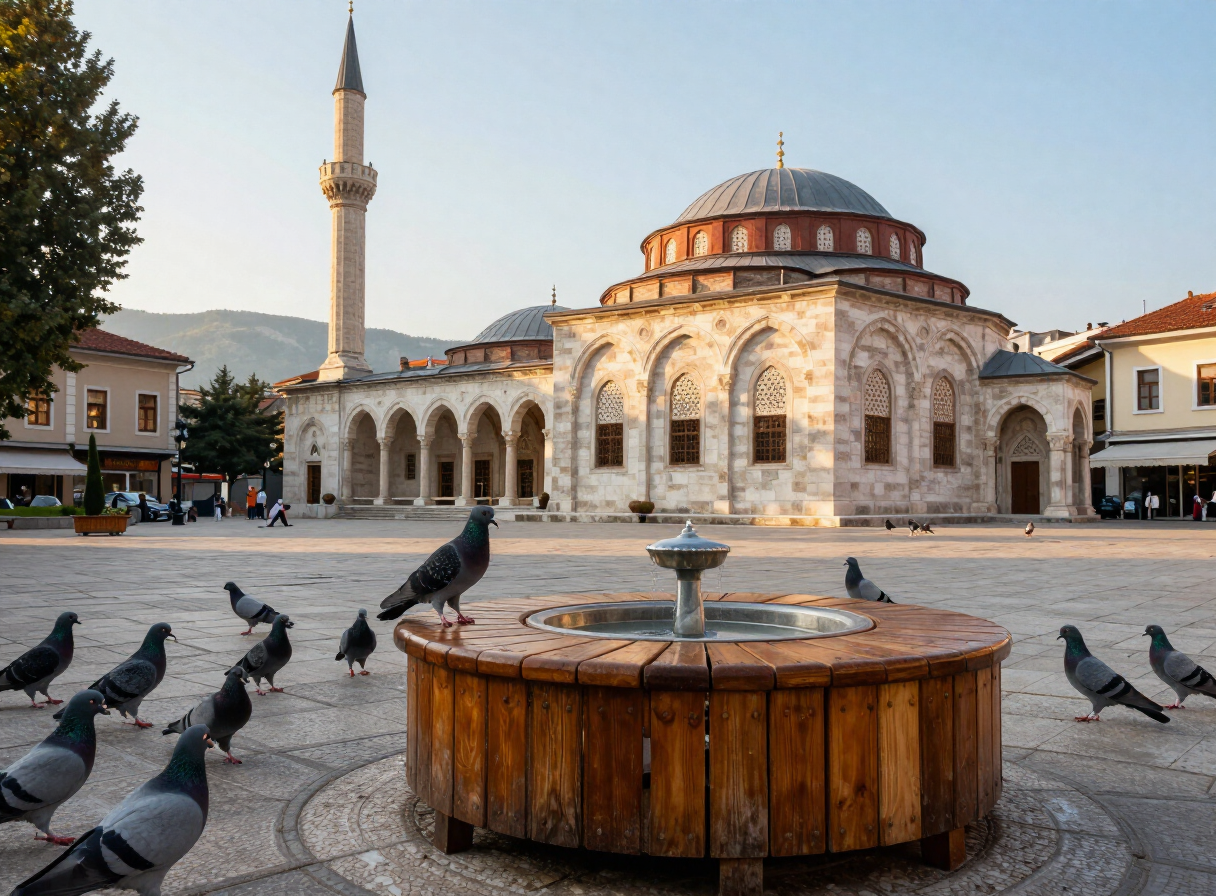
45–60 minStart early, before the bazaar fills. Baščaršija is the Ottoman heart of Sarajevo — a lattice of narrow stone lanes organised by the old guild system, with the carved wooden Sebilj fountain at its centre. In the first hour the square is quiet enough to hear the coppersmiths hammering in Kazandžiluk, the coppersmiths’ lane, and the call to prayer carries over the rooftops. Wander the lanes, watch a coffee set being raised by hand, and let the bazaar orient you before the crowds arrive.
- 09:30
Gazi Husrev-beg Mosque
45 minA minute’s walk into the bazaar stands the Gazi Husrev-beg Mosque, built in 1531–32 and the spiritual centre of old Sarajevo. Step into the single-domed prayer hall with its renewed Ottoman decoration, then sit in the shaded courtyard by the šadrvan fountain. The founder’s endowments — the madrasa, the library and the clock tower — stand around it, and together they explain how the whole quarter was built. Dress modestly; scarves are provided, and the mosque closes briefly at prayer times.
- Late morning
Vijećnica — the reborn City Hall
45 minWalk a few minutes east along the Miljacka to Vijećnica, the neo-Moorish City Hall completed in 1896, burned in the 1992 shelling and rebuilt by 2014. The striped facade is best from the riverside, but the highlight is inside: the painted entrance hall and staircase, restored to their 1890s appearance, and the memorial to the library lost in the fire. It is the building that tells Sarajevo’s 20th century — Austro-Hungarian showpiece, national library, wartime ruin, patient recovery — in one place.
- Around noon
Latin Bridge — where 1914 began
30 minTurn west along the Miljacka embankment to the Latin Bridge, a low Ottoman stone arch where, on 28 June 1914, Gavrilo Princip fired the shots that killed Archduke Franz Ferdinand and set the First World War in motion. A plaque and the small Museum of the Assassination mark the corner at the bridge’s north end. The bridge is unremarkable as architecture, but standing at the corner is the most direct way to touch the hinge of modern European history.
- Lunch
Ćevapi, the slow way
45 minHead back into the bazaar for the city’s everyday dish. Find a tiny ćevabdžinica where the queue is longest, order by the piece — a half or full portion of ćevapi in a warm lepinja with raw onion and kajmak — and eat standing at the counter or on a stool while the grill smokes behind you. It is cheap, fast and the meal most locals will tell you to try first. A glass of yogurt or a Bosnian coffee is the usual accompaniment.
- Mid-afternoon
Trebević Cable Car & the Olympic mountain
2 hoursFrom the edge of the old town, the Trebević cable car lifts you to the ridge above the city in about ten minutes, opening the panorama of Sarajevo folded into its valley. First built for the 1984 Winter Olympics, destroyed in the siege and rebuilt in 2018, it is the easiest way to see the city from above. Walk from the upper station to the abandoned concrete bobsled track — a strange Olympic and wartime relic — and along the ridge paths before descending. Clear days are essential for the view.
- Before sunset
The Miljacka embankments at dusk
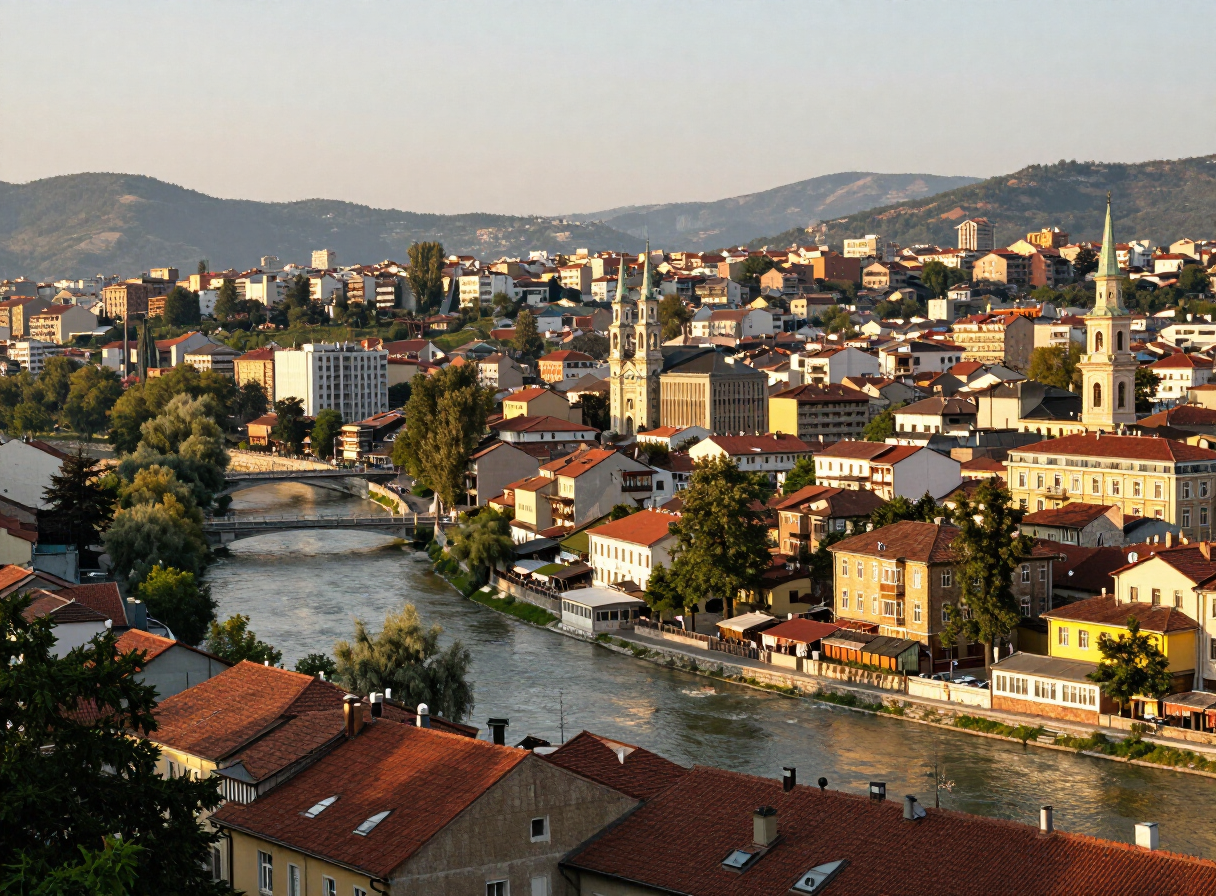
45–60 minFinish at river level. The Miljacka embankments are Sarajevo’s natural evening walk — a chain of Ottoman, Austro-Hungarian and modern bridges between minarets on one bank and Habsburg façades on the other. In the last hour before the sun drops behind the western hills the stone warms, the river darkens, and the bridge lamps come on. Walk as far as you like and return on either bank; it costs nothing and turns the day’s separate sights into one held picture of the city.
Optional stops
Tunnel of Hope — the siege lifeline
Half a dayFor the siege layer, visit the Tunnel of Hope museum in Butmir near the airport — the preserved section of the hand-dug 1993 tunnel that was besieged Sarajevo’s only link to the outside world. It is outside the centre, reached by taxi or vehicle, so allow travel time each way and pair it with a second day rather than crowding the one-day loop. The museum is sobering and essential for understanding the city’s most recent chapter.
A guided siege walk — if you have a second day
A few hoursThe most meaningful way to understand the 1992–95 siege is to walk the city with a local who lived through it — the front-line streets, the sniper alleys and the Sarajevo Roses set into the pavement. Walks are run by local guides and small operators; book ahead and check what each includes. Save it for a second day, since the Tunnel of Hope and the city-centre siege routes together take a full morning or more.
GETTING AROUND
The whole route is on foot except the Trebević cable car, and almost entirely flat along the Miljacka valley — no stop is more than a few minutes’ walk from another. The lower cable-car station is a short walk east of Baščaršija. Trams run along the river if you want to shorten any stretch, and taxis are useful for reaching the Tunnel of Hope in Butmir on a second day.
EAT & DRINK
Begin with a light breakfast at your accommodation or a café near the bazaar. Plan ćevapi in the old town for lunch, and follow it with a Bosnian coffee — the midday pause the city runs on. For the evening, the old town and the streets just west of it stay open after sunset; eat after the Miljacka walk rather than rushing away from it.
SEASONAL NOTES
When to go
Summer days (July and August) are warm and busy — treat the slowest hours around midday as a coffee-and-shade pause, and save the riverside dusk for the long, late evening. May to June and September give the most comfortable walking weather and softer light on the stone. December to February is cold and short on daylight, but the cable car and the Olympic mountains come into their own for snow. Daylight varies widely through the year, so check the sunset time for the day you visit instead of relying on a fixed hour.
PRACTICAL INFORMATION
Before you go
THROUGH THE LENS
From the road


THE ROUTE ON THE MAP
Stops on the map
ATTRACTIONS ON THIS ROUTE
Sights on the way


EXPERIENCES ON THIS ROUTE
Things to do along the route


MORE ITINERARIES
Other routes from Sarajevo
FOOD & DRINK
Where to eat nearby
Željo — the city’s most famous ćevapi, no-frills and perfect
Dveri — cosy cellar restaurant with modern Bosnian plates
Inat Kuća — traditional dishes in the defiant “House of Spite”
HOTELS & STAYS
Where to stay nearby
Hotel Europe — the grande dame, open since 1882
Isa Begov Hamam Hotel — Ottoman charm beside the river
Hostel Franz Ferdinand — stylish budget base in the centre


INTERESTS
Explore by what you love
ROUTES
Routes through here
Mostar to Sarajevo via the Neretva Canyon
A classic Balkan ride north up the Neretva canyon — river, cliffs and forest from Mostar to Sarajevo.
130 km · 3 h · moderate
VIEW ROUTETrebević Summit from Pogledine
An out-and-back ascent from Pogledine past Trebević’s Olympic bobsleigh track and forest paths to the Sofe summit area above Sarajevo.
15.8 km · 5.8 h · moderate
VIEW ROUTESkakavac Waterfall Loop
A forest loop from the Skakavac protected-area entrance to the viewpoint and foot of Sarajevo’s 98-metre waterfall.
9.2 km · 3.9 h · moderate
VIEW ROUTEPART OF
Keep exploring
The atlas goes on — more attractions, destinations and stories from every corner of the world.